Book Review: “The Lady Queen: the Notorious Reign of Joanna I, Queen of Naples, Jerusalem, and Sicily” by Nancy Goldstone

Joanna of Naples book cover

I don’t know for certain if George RR Martin found inspiration for his “Game of Thrones” books from this era in history or not but it certainly appears that he did. There are many elements in this story that mimic what I’ve watched in the TV show. Needless to say, this history in this book is more than mesmerizing.

The story of the reign of Joanna is complicated and has its roots going back to Charles of Anjou, the brother of the saintly King Louis IX of France. He was not satisfied with being the brother of a King and sought a kingdom for himself. He managed to get a papal grant to the Kingdom of Sicily in 1262 and then earned it by conquest in 1266. He was later expelled but still claimed power over the peninsular possessions of the kingdom and made his capital at Naples. Because of this he is usually styled as the King of Naples after 1282 and so are his successors. His grandson, Robert the Wise ruled the kingdom from 1309 to 1343 and due to various reasons, some maybe not so legitimate, his granddaughter Joanna succeeded him.
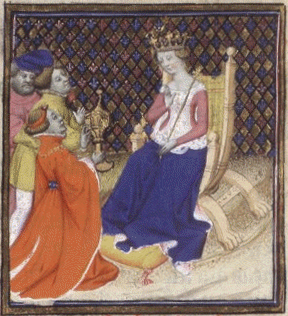
Joanna I, Queen of Naples, Jerusalem and Sicily

Joanna I, Queen of Naples, Jerusalem and Sicily

Joanna spent her early years in the care of her grandfather and grandmother at the Neapolitan court, learning from these masters. Goldstone goes into the early history of Joanna’s family leading up to her birth and years at court as a child. I find the history of Italy and all its various kingdoms and alliances a little confusing due to not being familiar with this era. But Goldstone is really masterful in explaining the history making this a really enjoyable read. While I had heard the terms Guelph and Ghibelline, they were unclear to me. But Gold stone straightens this out by giving definitions and clarifying how they were parties who were loyal to the Pope and the Holy Roman Emperor.

Joanna marries four times, each husband being more dreadful than the last until the final one, Otto of Brunswick who supported her. It’s a pity she didn’t marry him first. She had children but none of them survived past childhood. The lack of an heir and her sex make her reign perilous and open to conquest. She was a supporter of the Pope in Avignon but he was constantly threatening interdict or excommunication and to take away her powers as Queen and give them to one of his legates. Her relatives were the bane of her existence. Her first husband was murdered by the feuding factions of her court and she basically never lived this down for the rest of her life, even though she was found completely innocent of the crime. Her husband’s relatives, the royal Hungarians, used the murder as an excuse for many years to try to take Joanna’s throne from her.

I can’t recommend this book enough. It reads like a novel and Goldstone’s writing is clear and laced with humor. This is history at its best and most notorious, horrifying and fun at the same time.

Book Review: “Edward the Elder 899-924” edited by N.J. Higham and D.H. Hill

Edward the Elder cover

There is a real dearth of primary sources for historians to work with regarding the reign of the Anglo-Saxon King Edward the Elder, first son of King Alfred the Great. This is a real shame because Edward did much to build the English state during his twenty-four year reign. He led many successful campaigns against the Vikings and had control over much of southern and middle of England. His influence also touched Wales and the north. He had three wives, a large family and prickly relations with the church. This book is an attempt to shed some light on the reign of this important and critical ruler.

This volume was published in 2001 and is a compendium of papers which were presented at a conference at the University of Manchester, organized by the Manchester Center for Anglo-Saxon Studies in 1999 in recognition of the eleventh centenary of Edward the Elders accession to the throne of Wessex upon his father’s death. A variety of scholars have written individual chapters using such diverse sources as coins and textiles, literature and archaeology. If the reader is familiar with Anglo-Saxon studies, some of these names will be very recognizable.

While some of the papers contained in this volume are well written and readable, some of them are not. A number of the subjects are interesting and some are esoteric and pedantic. It would depend on the reader’s preference and purpose in reading the book as to whether the chapters are useful or not. Regardless, the book brings awareness to many aspects of Edward’s reign. Personally, I enjoyed the introduction by Nick Higham on Edward’s reputation and the papers on Edward’s relationship with the church. Barbara Yorke’s chapter on Edward as Atheling was most interesting. She went into how his father worked to make him the candidate to succeed him and to protect Edward’s position. Simon Keynes has a great chapter which serves as a survey of Edward’s reign. There are specialty chapters on the coinage of Edward, how the Irish viewed West Saxon dynastic practices, the Danelaw, the shiring of Mercia, York, and an interesting chapter on the embroideries from the tomb of St. Cuthbert in Durham Cathedral. It is believed that Edward’s second wife Aelflaed commissioned these embroideries.

There are other interesting chapters here on Edward’s large family, his own marriages and how he married his daughters to men on the continent and a whole chapter on his niece Aelfwynn. Aelfwynn was the daughter of Edward’s elder sister Aethelflaed, the Lady of Mercia. When Aethelflaed died, Edward exiled Aelfwynn and basically took over the kingdom of Mercia. I found these chapters on the family relations the most interesting and in sync with my own personal research. Whether the reader of this volume is an advanced historian, undergraduate or a general reader, there is something of interest for everyone. This book will serve as the closest to a biography as we can expect until someone writes a definitive work on Edward.

Book Review: “The Perkin Warbeck Conspiracy 1491-1499” by Ian Arthurson

perkin warbeck book cover

In the course of doing some research on Lady Katherine Gordon, the Scottish noblewoman who married Perkin Warbeck, the pretender to the English throne, I came across a reference to “The Perkin Warbeck Conspiracy 1491-1499” by Ian Arthurson. I was very lucky a book seller in close-by Colorado Springs had a used copy of the book and received it quickly in the mail. While I knew the basic story of Warbeck, I certainly wasn’t versed in all the details.

Arthurson has done considerable and impeccable research on this subject and written books and articles about it. The book begins with Warbeck’s confession which is certainly unsatisfactory but Arthurson says it appears to be sincere and shouldn’t be doubted. While it is far from the complete story of what occurred, it is very telling. Arthurson continues by filling in the gaps of the confession, beginning with Warbeck’s origins in the city of Tournai in what is now Belgium.

In the nineteenth century, James Gairdner found information in the Tournai archives about Warbeck, his parentage and his family. Warbeck clearly was not a Plantagenet. Arthurson includes the family tree of the Werbecques of Tournai. Perkin’s grandfather Diercq was a boat builder and Perkin’s father Jehan was a pilot. The family was entrepreneurs who held town offices and even higher posts; they associated with princely courts and were well educated. Perkin was not the son of a lowly boatman but from the governing classes of Tournai (guilds).

Warbeck left home when he was relatively young, becoming a merchants assistant. This allowed him to travel very far, associating with many people and princes. He spent a considerable amount of time at the court of the Portuguese king. Later, he was taken to Ireland by his Breton master Pregent Meno. This is where the origins of the pretender conspiracy begin.

The Irish has accepted an earlier pretender named Lambert Simnel in an attempt to dethrone the new Tudor (Lancaster) king of England, Henry VII. In 1487, Simnel had actually been crowned at Christ Church Cathedral in Dublin as King Edward VI. So Ireland was ripe with conspiracies. While Warbeck was in Ireland, he was mistaken for the young Edward, Earl of Warwick, son of George Plantagenet, Duke of Clarence and brother of King Edward IV. Warbeck denied he was Warwick. Some people said Warbeck was an illegitimate son of King Richard III. Again Warbeck denied this. Eventually, it was decided Warbeck was Richard, Duke of York, second son of King Edward IV, who supposedly was murdered in the Tower of London. Warbeck denied this too but eventually was persuaded to go along. There was rebellion in Ireland in York’s name with Warbeck as the focus. Due to ineptitude and a lack of funds, it took some time to quell this rebellion but eventually it died down.

Warbeck made his way to France where he was in March 1492 when King Henry VII attacked France. Warbeck was forced to flee, going to the court of Margaret, Dowager Duchess of Burgundy. Margaret would have been Richard, Duke of York’s aunt. Margaret took up Warbeck’s cause and he was even accepted as the real Duke of York by Maximillian I, Holy Roman Emperor. All of this plays into the politics and diplomacy of the time. Arthurson goes on to explain the players in the Warbeck conspiracy, the battles, who funded him, who supported him, who raised troops and supplied ships, who was executed because of the rebellions and who was pardoned. Arthurson is fair and honest in his assessment of all the players from the kings and emperors all the way down to the lowliest conspirator.

Arthurson cites all the sources from the era, fiction and non-fiction. He is very convincing in his assessment of Perkin Warbeck as a supreme actor. He must have been to carry out this persona for eight years. Whether those who supported him believed him to be Richard, Duke of York is immaterial as the rebellions and conspiracies happened anyway. Warbeck was able to carry off his role of pretender with incomparable ability and ease. This book reads like a detective story and I enjoyed it very much. If you want to know the truth about Perkin Warbeck, this is the book.

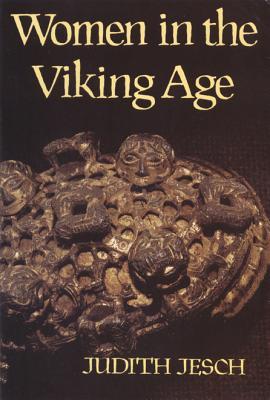
Book Review: “Women in the Viking Age” by Judith Jesch

women in the viking age cover

In a continuation of my personal study of the history of the Vikings, I picked up “Women in the Viking Age” by Judith Jesch. Dr. Jesch is Reader in Viking Studies at the University of Nottingham, England and the author of numerous studies of the Viking Age and Old Norse literature. This book is a very thorough examination of the role of women in various contexts.

Jesch begins with the evidence of archaeology, especially what’s found in graves. Women’s graves can be identified by the objects found in them such as jewelry and bits of clothing, domestic utensils such as implements used in weaving cloth, combs, needles, knives, shears, some cooking equipment and agricultural implements such as sickles. There have been many studies of graves and grave goods and Jesch cites these in her analysis. Her next chapter explains how women appear in runic inscriptions. Many women were commissioners of runes stones and women are mentioned in the inscriptions. Jesch mentions all the stones involving women commemorating the dead in Denmark, Sweden, Norway and the Isle of Man.

Jesch talks about female colonists and the evidence of place names, especially in England and Iceland. She relates all the references of Viking women in foreign sources including written sources by foreigners who visited Scandinavia. She gives a list of these sources which include Arabic texts. In addition she mentions the women who were written about in sources such as the “Anglo-Saxon Chronicle”, “Russian primary chronicle”, different Frankish annals, and the “Annals of Ulster” and “Vita Findani” of Ireland.

By far the largest chapter in “Women in the Viking Age” chronicles how women appear in art, myth and poetry. This is the heart of the book. Jesch recounts how women appear in the Oseberg tapestry which was found in the Oseberg burial ship, a grave holding the bodies of two women who seem to have been wealthy and had great influence. Other depictions of women appear in mythological scenes carved on picture-stones.

The next section of the chapter goes into women’s roles in various Norse myths and legends. This was by far my favorite part of the book. First Jesch recounts the sources for the myths and legends, the “Poetic Edda” and the “Prose Edda” which were written down in the thirteenth century in Iceland. Here she talks about the goddesses in the Norse pantheon, women as objects of desire, warrior women and gives examples of women in Eddic poetry.

The next section deals with women in skaldic poetry. These are poems invented by Scandinavian and Icelandic court poets for kings and usually have descriptive historical content, praise for kings, and tales of battles and deeds of the king’s career, epitaphs and genealogies. As Jesch points out there are many women in these poems. These women are shown cheering on their men, listening to their tales of battles and exploration, women’s suffering and even romance. Jesch explains the meter and wording of the poems which have strict syllabic rules and she gives many illustrations in Old Norse with English translations. She tells us there may have been some women skalds and about the audience for these poems.

The books ends with a summary of the types of Viking women encountered throughout history and how the introduction of Christianity affected the lives of some women. The book contains many illustrations depicting women in runic stones, picture-stones and also pictures of grave goods found in female graves. There is an extensive bibliography to facilitate further study. This is an authoritative book on the subject of women in the Viking Age and I highly recommend it.

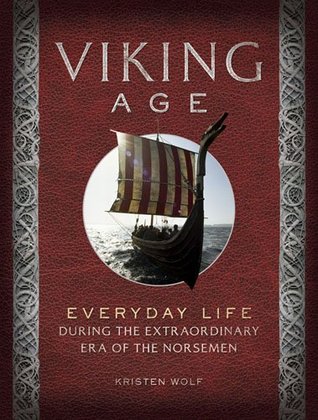
Book Review: “Viking Age: Everyday Life During the Extraordinary Era of the Norsemen” by Kirsten Wolf

Viking age life book cover

Lately I’ve been in search of good books regarding the Vikings and the Viking Age, especially about their everyday life and most especially about viking women. From the title, this book seemed to fit the bill. I had recently read and reviewed “Everyday Life in the Viking Age” by Jacqueline Simpson which was written in the late sixties. I was eager to compare what the two authors had to say on the topic and if there were any changes.

Interestingly, Wolf’s book confirmed everything in Simpson’s book. I was delighted when the first chapter dwelt mostly on women and their role in Viking Age society. Wolf was very specific in describing domestic life, marriage, kinship, childbirth, children and old age. Next is a chapter on economic life and Wolf tells us a great deal about Viking Age trade. The section on the trading centers (emporia) was very appealing. In the chapter on intellectual life, she goes into great detail about language and writing which was very technical and little hard to understand but Wolf’s specialty is Scandinavian languages. The other sections on education, literature, science and health and medicine are fascinating.

I really liked the section on material life. Here Wolf describes Viking Age housing, domestic furnishings, men’s and women’s clothing, and food and drink. Wolf describes the different styles of visual art, i.e. Broa, Jelling, Mammen, Borre, etc. And of course there is the requisite segment on Viking Age ships and other types of boats as well as how the vikings traveled by sea and by land. This is really the heart of the book and the most enjoyable chapter.

The chapter on political life explains the social structure of society, from slaves up to the aristocracy. Wolf talks about the process of unification broken down by country, Denmark, Sweden, Norway. I especially liked the history sections of this chapter, giving short paragraphs on how the Vikings colonized different areas of the world. Wolf gives a breakdown of the law codes, warfare and weapons.

The final chapters are devoted to recreational life, religion, myths, death and burial practices. She has a brief explanation of how the Scandinavian countries were Christianized. There are many beautiful illustrations. Overall, I found the book to be enlightening and pleasurable read. I would highly recommend it. This book is one in a series by Sterling Publishing Company regarding the everyday life of ancient historical cultures, the others being Greece, Egypt and the Middle Ages.

Book Review: “In the Wake of the Plague: The Black Death & the World it Made” by Norman Cantor

in the wake of the plague 6

The Black Death and all its consequences on Western Europe and the world is always a popular and intriguing subject. The topic was of interest and the book had been on the New York Times bestseller list so I had high hopes when I saw this book on the shelf at the bookstore.

It turned out “In the Wake of the Plague” does not relate an overall view of the magnitude of the results of the Black Death as expected. The first part of the book gives the bio-medical context of the plague. Cantor describes the symptoms of the illness and then goes into the possibility of its origin. He doesn’t believe it was just fleas from rats that spread the disease. Several specialists have put forth the theory there may have been an outbreak of anthrax or some other type of cattle murrain and people may have ingested tainted meat. Cantor subscribes to these theories.

The next chapters are devoted to the demise of specific individuals and what the outcome of their deaths meant. His first personality is Princess Joan, daughter of King Edward III of England. She was on her way to Spain to marry the heir to the throne of Castile and stopped off at Bordeaux in France. Because it was a port of trade, the plague had arrived and Joan soon succumbed to the disease. The marriage was a part of King Edward’s imperial ambitions. The plague decimated the manpower needed to continue Edward’s war in France, the war known as the Hundred Years War. Cantor argues this kept the kings of England from taking the throne of France.

Another person of consequence for Cantor was Thomas Bradwardine, the personal confessor to King Edward III and Archbishop of Canterbury appointee in 1349. He traveled to Avignon to receive the blessing of the pope and then returned to England for the ceremony to consecrate him as Archbishop. Two days later, Bradwardine came down with a fever and five days later he was dead. Bradwardine was eminent intellectual who had written treatises on velocity and theology. Cantor argues that with his death, the study and practices of science were set back by many years.

Other chapters are dedicated to the effects of the plague on land rights and assets for lords and peasants and men and women of property. Cantor explains the labor shortage created by all the deaths and how the survivors could command more for their labor. There are chapters on the how the plague was considered a Jewish conspiracy leading to many deaths and on the theories of how the plague was disseminated by cosmic dust, serpents and how it originated in Africa.

All of Cantor’s information is very interesting however his explanations are pretty esoteric and his writing is quirky. The time frame is not linear either. So while the subject matter is of use, it’s not an easy read. I would recommend this book if the reader is already versed in the history of the Black Death and its consequences.

Book Review: “Everyday Life in the Viking Age” by Jacqueline Simpson

Everyday Life in the Viking Age

Back in the late sixties, Dorset Press put out a series of books about everyday life in different cultures, mostly in ancient times. Included in this series was a book about everyday life in the Viking Age by Jacqueline Simpson. Dr. Simpson is a researcher and author on folklore and legend from the United Kingdom. She studied English Literature and Medieval Icelandic at Bedford College, University of London and has served as Editor, Secretary and President of the Folklore Society. The time frame of this book is from the eighth to the mid-eleventh centuries and covers the expansion of the peoples of Scandinavia and their life at sea, at home and in their colonies.

As her sources, Simpson uses the abundance of early Scandinavian and Icelandic literature that exists paired with archaeological discoveries such as the excavated settlements of Jarlshof, Oseberg, Hedeby, Gokstad and others. The books starts out with an explanation of who the Vikings were and the sources for their history. Simpson gives an overview of the expansion of the Vikings and then discusses their life on land and at sea. She has chapters on the merchants, weapons and warriors, the family and society, their games, arts, poetry, religious practices and funerary rites. An interesting point she makes regarding the funerary rites it that the sending of a burning ship out to sea is fairly rare and was only used by the upper echelons of society.

Perhaps the best feature of this book is the plethora of photos and drawings that are included. For many of the historical points given, there is a corresponding illustration. There are numerous representations of gods and their stories, depictions of rune stones, photos and drawings of everyday implements and tools. She gives a detailed explanation of how the formidable Viking ships were built, what their dimensions were and how they used oars and sails. There are portrayals of Viking clothing and floor plans of their housing. I really enjoyed the description of animal husbandry and how the merchant colonies operated.

Dr. Simpson’s writing is imminently readable. The illustrations are priceless and there is an excellent section of suggestions for further reading. Reading this book along with Jonathan Clements “A Brief History of the Vikings” is a great introduction into Viking history. I learned a lot from this book and highly recommend it.

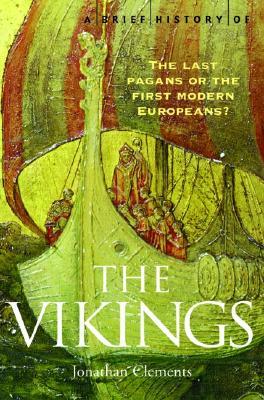
Book Review: “A Brief History of the Vikings” by Jonathan Clements

brief history vikings

Due to testing my family DNA, I discovered my paternal ancestry is Nordic Viking. To go along with this, the History Channel began airing a series called “Vikings” which I have thoroughly enjoyed, by the way! This made me want to know more so I began by reading “A Brief History of the Vikings: The Last Pagans or the First Modern Europeans?” by Jonathan Clements.

While this is not a definitive history of the Vikings, it’s a great introduction. Clements writes with an easy style, injecting subtle humor into the stories. He begins with a short rundown of the Viking people before the great Viking Age with a chapter on the myths and legends of Scandinavia. This includes an explanation of what is known of their religious practices and those of the people in the surrounding geographic area. He then moves on to the late eighth century when some of the raids began on England, Ireland, the Highlands of Scotland and other islands. Clements also tells us about the history of Iceland and the colonies there.

There are several reasons given for the diaspora of the Scandinavian peoples during the Viking Age. Most importantly has to be trade. The Vikings were in search of trade and especially silver. This led them to the Middle East where they traded with the Muslims for vast amounts of silver. But after the mines stopped producing the metal, they had other motivations for sailing to other locales. Clements points out there were family feuds among the men that drove them to conquer others. The Vikings also went in search of more land to farm and raise livestock.

They sailed their well-constructed ships to many geographical places: England, Scotland, Ireland, northern France, Iceland, the Faroe Islands, Greenland and even North America. My favorite stories are of those who came to North America and about Hrolf the Walker, also known as Rolf or Rollo, who founded the Normandy dukedom in France and was an ancestor of William the Conqueror. Being American, I was always taught that Christopher Columbus was the first person to “discover” America. Clements gives a nice rundown of the many explorers and colonizers who viewed or touched on the shores of North America. Some stayed for short periods of time and some took lumber and brought it back to Greenland and Scandinavia. And of course they encountered the “Skraelings”, or Native Americans, much to their discomfort. This was my favorite part of the book.

The pinnacle of the Viking Age according to Clements was the life of Harald Hardada (the Ruthless). He had many adventures. Whether they were true or fanciful exaggerations doesn’t really matter because it still makes for a good story. This book is a great foundation for those who want to know more about the Vikings. There are some nice photos in the book and a great appendix. There are lists of Rulers During the Viking Age along with family trees and maps. And of course, there is an excellent bibliography for those who are interesting in exploring more. I recommend this book and will keep it in my library for further reference.

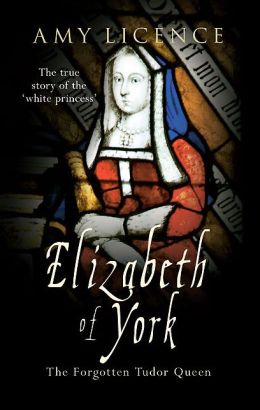
Book Review: Elizabeth of York: The Forgotten Tudor Queen by Amy License

Elizabeth of York book cover

Because of the TV show “The Tudors” which aired recently, there had been an increased interest in this fascinating dynasty of English kings. Consequently, there has been an upsurge in the number of books written on the dynasty itself, as well as the many historical figures from the era. While it has been common knowledge among historians that there is very little detailed information on the life of Elizabeth of York, mother of King Henry VIII, this hasn’t stopped a couple of authors from writing biographies of her.

Alison Weir recently released her biography “Elizabeth of York: A Tudor Queen and Her World” and Amy License also penned a work on her life. License is prolific and popular writer of books, articles and blog posts about women’s and children’s issues in Tudor and medieval England. She also has appeared on television and radio in England talking about these topics.

Elizabeth of York: The Forgotten Tudor Queen unfortunately has very little information about Elizabeth herself. However, License’s style is unique in that she views her subjects from a family and feminist perspective. There is a lot of information and detail about how women lived during this era. There is some good information on Elizabeth’s mother Elizabeth Wydeville. I learned Elizabeth of York enjoyed a very close knit family, seeing her parents often and having very loving relationships with her siblings. License also has good explanations for the politics of the War of the Roses and how Elizabeth’s husband Henry Tudor dealt with the myriad of pretenders to his throne.

So while there is not as much detailed information about Elizabeth in License’s book as there is in Weir’s, it is still a worthwhile read because of License’s distinctive feminist point of view and there are also some great pictures in the book. I would recommend this book to anyone interested in Tudor women.

Book Review: Margaret Beaufort: Mother of the Tudor Dynasty by Elizabeth Norton

Margaret Beaufort book cover

I had heard all the usual things about Margaret Beaufort. She was married very young, had a child and was never able to conceive again, connived and conspired to put her son Henry on the throne of England and she was the mother-in-law from hell. I had no idea if any of this was true or not and wanted to learn more. When I heard Elizabeth Norton had written a biography of Margaret, I ordered my copy and settled down to read it.

Norton’s writing style is very linear and chronological. It really made reading the book flow. And to my surprise, I found Margaret to be a very sympathetic character. Her early childhood was marred by the apparent suicide of her father but she was sincerely close to her mother and her step-sisters and brothers. She received a more than adequate education, unusual at the time for a woman. Margaret’s value as an heiress and good match was recognized early. Margaret was contracted to marry at the age of nine but this marriage was never consummated and was eventually annulled.

Margaret was associated with the House of Lancaster but managed to negotiate the landmine that was the War of the Roses very adeptly. King Henry VI gave Margaret to his half-brother Edmund Tudor in marriage and it was with him she had her son Henry to whom she devoted her entire life. When Edmund died young, Margaret was astute enough to find another husband and protector. She was forced to marry again when her third husband died after suffering wounds in battle. During all the ups and downs of the different kings on the throne between Lancaster and York, Margaret was flexible and agreeable and managed to carry on with her comfortable life until Richard III took the throne.

Margaret was certainly guilty of conspiring to elevate her son to the throne. At one point she was attainted by the government, lost all her wealth and land holdings and suffered house arrest. But her fourth husband Thomas, Lord Stanley, allowed her to continue to communicate with her son who was in France. Eventually Henry Tudor was successful in bringing forces to England and winning the Battle of Bosworth in 1485. Margaret was now able to live her life as a free and independent woman and greatly enjoyed a high position at court. She was also a generous supporter of charity and university education.

And perhaps she wasn’t the mother-in-law from hell after all. The evidence from this book and from other biographies of Margaret’s daughter-in-law, Elizabeth of York all suggest the women probably got along quite well. That’s not to say they didn’t disagree on occasion. But there appears to have been some family unity. Norton has certainly done her research and her writing style makes this an informative and pleasant read. Norton also includes a transcription of all the surviving letters written by Margaret herself. I enjoyed the book very much and came to admire Margaret Beaufort as the formidable survivor that she was.