Book Review: “Edward the Elder 899-924” edited by N.J. Higham and D.H. Hill

Edward the Elder cover

There is a real dearth of primary sources for historians to work with regarding the reign of the Anglo-Saxon King Edward the Elder, first son of King Alfred the Great. This is a real shame because Edward did much to build the English state during his twenty-four year reign. He led many successful campaigns against the Vikings and had control over much of southern and middle of England. His influence also touched Wales and the north. He had three wives, a large family and prickly relations with the church. This book is an attempt to shed some light on the reign of this important and critical ruler.

This volume was published in 2001 and is a compendium of papers which were presented at a conference at the University of Manchester, organized by the Manchester Center for Anglo-Saxon Studies in 1999 in recognition of the eleventh centenary of Edward the Elders accession to the throne of Wessex upon his father’s death. A variety of scholars have written individual chapters using such diverse sources as coins and textiles, literature and archaeology. If the reader is familiar with Anglo-Saxon studies, some of these names will be very recognizable.

While some of the papers contained in this volume are well written and readable, some of them are not. A number of the subjects are interesting and some are esoteric and pedantic. It would depend on the reader’s preference and purpose in reading the book as to whether the chapters are useful or not. Regardless, the book brings awareness to many aspects of Edward’s reign. Personally, I enjoyed the introduction by Nick Higham on Edward’s reputation and the papers on Edward’s relationship with the church. Barbara Yorke’s chapter on Edward as Atheling was most interesting. She went into how his father worked to make him the candidate to succeed him and to protect Edward’s position. Simon Keynes has a great chapter which serves as a survey of Edward’s reign. There are specialty chapters on the coinage of Edward, how the Irish viewed West Saxon dynastic practices, the Danelaw, the shiring of Mercia, York, and an interesting chapter on the embroideries from the tomb of St. Cuthbert in Durham Cathedral. It is believed that Edward’s second wife Aelflaed commissioned these embroideries.

There are other interesting chapters here on Edward’s large family, his own marriages and how he married his daughters to men on the continent and a whole chapter on his niece Aelfwynn. Aelfwynn was the daughter of Edward’s elder sister Aethelflaed, the Lady of Mercia. When Aethelflaed died, Edward exiled Aelfwynn and basically took over the kingdom of Mercia. I found these chapters on the family relations the most interesting and in sync with my own personal research. Whether the reader of this volume is an advanced historian, undergraduate or a general reader, there is something of interest for everyone. This book will serve as the closest to a biography as we can expect until someone writes a definitive work on Edward.

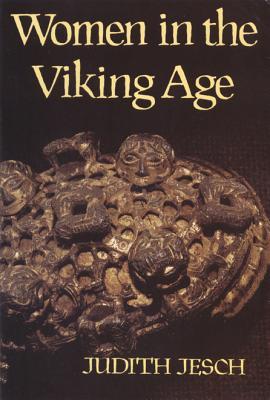
Book Review: “Women in the Viking Age” by Judith Jesch

women in the viking age cover

In a continuation of my personal study of the history of the Vikings, I picked up “Women in the Viking Age” by Judith Jesch. Dr. Jesch is Reader in Viking Studies at the University of Nottingham, England and the author of numerous studies of the Viking Age and Old Norse literature. This book is a very thorough examination of the role of women in various contexts.

Jesch begins with the evidence of archaeology, especially what’s found in graves. Women’s graves can be identified by the objects found in them such as jewelry and bits of clothing, domestic utensils such as implements used in weaving cloth, combs, needles, knives, shears, some cooking equipment and agricultural implements such as sickles. There have been many studies of graves and grave goods and Jesch cites these in her analysis. Her next chapter explains how women appear in runic inscriptions. Many women were commissioners of runes stones and women are mentioned in the inscriptions. Jesch mentions all the stones involving women commemorating the dead in Denmark, Sweden, Norway and the Isle of Man.

Jesch talks about female colonists and the evidence of place names, especially in England and Iceland. She relates all the references of Viking women in foreign sources including written sources by foreigners who visited Scandinavia. She gives a list of these sources which include Arabic texts. In addition she mentions the women who were written about in sources such as the “Anglo-Saxon Chronicle”, “Russian primary chronicle”, different Frankish annals, and the “Annals of Ulster” and “Vita Findani” of Ireland.

By far the largest chapter in “Women in the Viking Age” chronicles how women appear in art, myth and poetry. This is the heart of the book. Jesch recounts how women appear in the Oseberg tapestry which was found in the Oseberg burial ship, a grave holding the bodies of two women who seem to have been wealthy and had great influence. Other depictions of women appear in mythological scenes carved on picture-stones.

The next section of the chapter goes into women’s roles in various Norse myths and legends. This was by far my favorite part of the book. First Jesch recounts the sources for the myths and legends, the “Poetic Edda” and the “Prose Edda” which were written down in the thirteenth century in Iceland. Here she talks about the goddesses in the Norse pantheon, women as objects of desire, warrior women and gives examples of women in Eddic poetry.

The next section deals with women in skaldic poetry. These are poems invented by Scandinavian and Icelandic court poets for kings and usually have descriptive historical content, praise for kings, and tales of battles and deeds of the king’s career, epitaphs and genealogies. As Jesch points out there are many women in these poems. These women are shown cheering on their men, listening to their tales of battles and exploration, women’s suffering and even romance. Jesch explains the meter and wording of the poems which have strict syllabic rules and she gives many illustrations in Old Norse with English translations. She tells us there may have been some women skalds and about the audience for these poems.

The books ends with a summary of the types of Viking women encountered throughout history and how the introduction of Christianity affected the lives of some women. The book contains many illustrations depicting women in runic stones, picture-stones and also pictures of grave goods found in female graves. There is an extensive bibliography to facilitate further study. This is an authoritative book on the subject of women in the Viking Age and I highly recommend it.

Book Review: “In the Wake of the Plague: The Black Death & the World it Made” by Norman Cantor

in the wake of the plague 6

The Black Death and all its consequences on Western Europe and the world is always a popular and intriguing subject. The topic was of interest and the book had been on the New York Times bestseller list so I had high hopes when I saw this book on the shelf at the bookstore.

It turned out “In the Wake of the Plague” does not relate an overall view of the magnitude of the results of the Black Death as expected. The first part of the book gives the bio-medical context of the plague. Cantor describes the symptoms of the illness and then goes into the possibility of its origin. He doesn’t believe it was just fleas from rats that spread the disease. Several specialists have put forth the theory there may have been an outbreak of anthrax or some other type of cattle murrain and people may have ingested tainted meat. Cantor subscribes to these theories.

The next chapters are devoted to the demise of specific individuals and what the outcome of their deaths meant. His first personality is Princess Joan, daughter of King Edward III of England. She was on her way to Spain to marry the heir to the throne of Castile and stopped off at Bordeaux in France. Because it was a port of trade, the plague had arrived and Joan soon succumbed to the disease. The marriage was a part of King Edward’s imperial ambitions. The plague decimated the manpower needed to continue Edward’s war in France, the war known as the Hundred Years War. Cantor argues this kept the kings of England from taking the throne of France.

Another person of consequence for Cantor was Thomas Bradwardine, the personal confessor to King Edward III and Archbishop of Canterbury appointee in 1349. He traveled to Avignon to receive the blessing of the pope and then returned to England for the ceremony to consecrate him as Archbishop. Two days later, Bradwardine came down with a fever and five days later he was dead. Bradwardine was eminent intellectual who had written treatises on velocity and theology. Cantor argues that with his death, the study and practices of science were set back by many years.

Other chapters are dedicated to the effects of the plague on land rights and assets for lords and peasants and men and women of property. Cantor explains the labor shortage created by all the deaths and how the survivors could command more for their labor. There are chapters on the how the plague was considered a Jewish conspiracy leading to many deaths and on the theories of how the plague was disseminated by cosmic dust, serpents and how it originated in Africa.

All of Cantor’s information is very interesting however his explanations are pretty esoteric and his writing is quirky. The time frame is not linear either. So while the subject matter is of use, it’s not an easy read. I would recommend this book if the reader is already versed in the history of the Black Death and its consequences.