Book Review: “The Seymours of Wolf Hall: A Tudor Family Story” by David Loades

The Seymours of Wolf Hall book cover

It seems the Seymour family is more interesting than they appear on the surface. Most who know Tudor history are familiar with Jane Seymour, third wife of King Henry VIII and mother of King Edward VI. Others may have heard of Jane’s brothers, the dour Lord Protector Edward, Duke of Somerset and the swashbuckling Thomas, Baron Seymour of Sudeley and Lord Admiral. This book goes into even more depth about the family.

The introduction and initial chapter traces the Seymour ancestry back to France and how they migrated to England. I found the information on Jane’s father Sir John Seymour to be of great interest. He was a man of means and had ties to the court but didn’t spend much time there, choosing to live in Wiltshire and tend to business at home. Edward and Thomas were introduced to court and had valid careers in the navy, as gentlemen of the court and in Edward’s case as a successful soldier.

There are chapters in the book dedicated to Jane, Edward, Thomas and other siblings. Something I found most interesting was how Henry VIII really took a liking to Edward and rewarded him. He was very much part of the inner circle of the King. In addition to being the uncle of Edward VI, this is how he earned his important place on the council to rule England during Edward’s minority after Henry’s death. Loades also clarifies the reasons for Edward’s downfall. Thomas is by far the most attention-grabbing figure in the family. Mercurial and indiscreet, he seems to have set in motion all the mechanisms for his own downfall. The last part of the book traces the descendants of Edward Seymour and his wife Anne Stanhope down to the present day.

I’ve never read anything by Loades before and he certainly has the credentials of a competent historian. He puts his own spin on all aspects of this family which I found new and refreshing. Because of this, I recommend this book. My only quibble is the format of the book. It seems the author penned the book and sent the manuscript to the publisher and it was published straight from that. The paragraphs all run together and there are some grammatical and punctuation errors. Most egregiously, there is no index for the book. The publisher could have engaged the services of an editor to correct these errors but it doesn’t detract from the history as presented by the author.

Book Review: “The Sisters Who Would Be Queen: A Tudor Tragedy” by Leanda de Lisle

The Sisters Who Would Be Queen book cover

Several years ago I read a fascinating biography of Lady Jane Grey, known as the Nine Days Queen. It was written by Eric Ives and the subtitle of the book was “A Tudor Mystery”. So little is known about Jane who was a key personality in the Tudor era. I knew even less about Jane’s sisters Katherine and Mary. So when I found this book I was intrigued.

Since Ives has written a complete work on Jane, this book doesn’t really give much additional information about her. However, the information on Katherine and Mary here gives a complete picture of their lives. All these women were technically in line to inherit the throne of England based on the will of King Henry VIII and then the revisions made by King Edward VI. Edward really put these women in the spotlight, essentially putting their lives in danger, especially Jane.

Jane was used as pawn by John Dudley, Duke of Northumberland. Just before King Edward died, Northumberland married Jane to his own son Guildford. When Edward finally died, Northumberland had Jane and his son proclaimed Queen and King. This state of affairs only lasted about ten days, until Edward’s sister Princess Mary proclaimed herself Queen and forced Jane and Guildford to become prisoners in the Tower. Jane was beheaded a few months later.

Katherine’s story is for me the most fascinating. She managed to marry a Seymour in secret without the Queen’s permission. Even more interesting, she managed to have a son. After this, Queen Elizabeth I had Katherine held prisoner in the Tower along with her husband. They were allowed to see each other while incarcerated and Katherine managed to have another son! This led to the couple being separated and Katherine died an unfortunate death a few years later. De Lisle discloses in this book that there is a first-hand account of Katherine’s death and as it’s written here, it’s very emotional reading.

The last sister Mary managed to live the most conventional life of the three women but that’s putting it mildly. She was born deformed and was a very small person. But this probably saved her life because she wasn’t seen as a serious threat to the throne because of it. She married without the Queen’s permission like her sister and was also separated from her husband. He eventually died and Mary was able to carve out a living for herself as a comfortable widow.

All this makes for a fascinating story and de Lisle does a good job here recounting the lives of the three women. I have to admit her grammar and syntax drove me a little batty and sometimes she had me wondering if I was reading historical fiction or not. But it’s a pleasant book and I would recommend it if you are interested in the subject.

Book Review: “Sister Queens: Katherine of Aragon and Juana, Queen of Castile” by Julia Fox

Sister Queens book cover

In the never-ending quest to discover if Juana of Castile was really mad or not, I picked up a copy of this book to read. Having read plenty of biographies of Katherine of Aragon, I wasn’t as interested in this part of the story but Fox does present Katherine in a slightly different light which is always refreshing. But I have to confess, as I was reading the beginning of this book I became a little annoyed. It’s not really a serious biography of these two women at all.

My recent reading has been of more thoughtful biographies and analyses of history such as Bethany Aram’s “Juana the Mad” so Fox’s book seemed on the simplistic side. It reads more like historical fiction. However, that being said, the deeper I got into the book, the better I liked it. There are some great descriptions of certain events in Tudor history with some wonderful detail, essentially bringing the events to life. The recounting of the death of Katherine is really moving.

There could have been a lot more about Juana in this book but I understand why there isn’t. Juana’s time in public life was short having spent the majority of her later years in custody. And we don’t really know that much about how she actually felt or what is accurate according to the chroniclers who wrote according to their own personal agendas. I think Fox is more than fair to Juana in being somewhat neutral and not describing her as a raging lunatic.

After saying all this, I’m still going to recommend this book because Katherine and Juana are still captivating historical characters. Tudor history lovers will find it interesting and those who want to learn a little more about the sisters’ upbringing in Spain and basic facts about Juana will enjoy it.

Book Review: “Wicked Women of Tudor England: Queens, Aristocrats, Commoners” by Retha M Warnicke

Wicked Women book cover

Such an intriguing title for a book! This is one of a series of eighteen books under the heading “Queenship and Power” published by Palgrave Macmillan and edited by professionals from all over the world. Retha M. Warnicke is a professor of History in the School of Historical, Philosophical, and Religious Studies at Arizona State University. She has written numerous books on Tudor England.

I was looking for a biography of Anne Stanhope, the wife of Edward Seymour, Duke of Somerset and Lord Protector during the reign of King Edward VI and this book came up in a search. There is a chapter about her and she has a reputation for being somewhat of a shrew and for having some kind of feud with Queen Katherine Parr. She was accused of trying to take precedence over the Queen Dowager at social functions and of taking Parr’s jewelry. It was even rumored she had caused her husband to commit fratricide.

I’m not sure exactly what I was expecting from this book. It is actually an academic historical argument about how six women of the Tudor era gained wicked reputations. Warnicke takes each woman and reviews the historical records, literature and chronicles where they are described as “wicked”. She follows this with the known historical facts about their lives. In some cases she describes her own personal theories about the women.

Two of the chapters deal with Anne Boleyn and Katherine Howard, the two queens of King Henry VIII who were executed. I was a little frustrated with Warnicke’s arguments about them. In the case of Anne Boleyn, her theory is that she was considered wicked and executed because she miscarried a deformed fetus. Really? By the time Anne was arrested, there had been plenty of preparation and political machinations for charges against her. And Henry’s eye had already strayed to Jane Seymour.

For Katherine Howard, Warnicke argues she was the victim of sexual predators. I don’t think this is in dispute. She also argues that Katherine Howard denied she had sexual relations with Thomas Culpeper. Even if she didn’t, just the fact that she met with him surreptitiously was a mistake. I’m thinking if there was even the semblance of impropriety she was in trouble. If she became pregnant, there would be questions concerning the legitimacy of the child to inherit the throne. Maybe she wasn’t wicked but her behavior certainly didn’t help her own cause.

In the chapter on Anne Stanhope, Warnicke presents the evidence that yes, there may have been a personal controversy between her and Katherine Parr but this isn’t what resulted in Thomas Seymour’s execution. She argues that the Duchess’ inability to deliver favors for those who sought help from her husband caused anger and resentment against her, creating a wicked reputation. Certainly the historical facts about the rest of her life create the impression that she was in good standing with society and maintained a good reputation with her contemporaries.

The other chapters tell us about Lettice Knollys, the second wife of Queen Elizabeth I’s favorite Robert Dudley, Earl of Leicester and the two wives of Sir Thomas More. It is remarkable that Lettice’s wicked reputation is based on a letter confirming the marriage ceremony between her and Leicester that mentions she wore a loose fitting gown. This has been taken to mean she had premarital sex and was pregnant at the time of her marriage. Loose fitting gowns were commonplace at that time. The obstreperous reputation of the two wives of Sir Thomas is based on rather flimsy interpretations on the writings of More’s great friend the humanist Desiderius Erasmus and others. These two chapters were very interesting.

Some of the biographical information and her arguments are thought-provoking. But this is a work of academic argument, not a breezy read. The writing can be confusing so it requires patience and attention and some knowledge of the women and the era. I’m going to recommend this book with these caveats.

Book Review: “The Hundred Years War: A People’s History” by David Green

Green's hundred years war cover

As much as I love English and French medieval history, my knowledge of the Hundred Years War is minimal. I found this book in the bookstore and loved the concept of viewing the war from the people’s perspective. The book appears to be a selection of lectures Green has given regarding different aspects of the war and there is some repetition in some sections. But overall, I was pleasantly surprised.

The first chapter is an overview of the highlights of the war starting with the events leading up to King Edward III’s claim to the French throne. The war begins with raids and guerilla methods and then develops into battles (Poitiers, Crecy, and Agincourt), sieges and occupations. Other chapters address the mentality of the era such as chivalry and how it influenced the tactics of the conflict and the taking and ransoming of prisoners of war. There is some good information on how the introduction of artillery influenced military operations.

Green gives us great information on how the war affected different classes of people. Chapters are devoted to knights and nobles, the peasantry, the church and the clergy, soldiers and women. I especially enjoyed the section on women. One of the most interesting chapters is about the madness of kings. The proceedings of the war were influenced by the mental illness of two kings, Charles VI of France and Henry VI of England. There were also men who tried to broker peace which Green discusses.

In addition, Green tells us about the mechanics of occupation and how the war helped create national identities. I like how he explains what happened for both nations. The hardback edition of the book I have includes family trees for the Plantagenets, the Valois and the Lancastrians. There are maps of France denoting raids and occupied areas as well as a section of black and white photos depicting important people of the war. Green’s writing is a little academic but easy to read. I would highly recommend this book for those interested in medieval warfare and its history.

Book Review: “Queen’s Mate” by Pauline Matarasso

blue queens mate book cover

The full title of this book is “Queen’s Mate: Three women of power in France on the eve of the Renaissance”. I have to confess I almost didn’t buy this book. My research in to Anne of France, the unofficial regent of her brother King Charles VIII led me to this title. There is no full biography of her in English, however every source I did have for her mentioned this book. The other two women Matarasso writes about are Anne of Brittany and Louise of Savoy.

This work intrigued me but in looking for a copy of the book, it appeared it was out of print and the only copies available were used and very expensive. But I came into possession of some gift cards for Barnes and Noble and decided to use them to purchase the book. Boy am I glad I did! This is one of the best women’s biographies I’ve read in a long time. The book is so rich in detail on the lives of Anne of France and Anne of Brittany. Matarasso obviously did her research.

The first quarter of the book is dedicated to Anne of France. There is a lot of good detail about her reign as regent, especially about the “Mad War” and the War of the Breton Succession. Matarasso explains how Anne of France skillfully and diplomatically managed these conflicts which ended with the marriage of Anne of Brittany to King Charles VIII. Anne of France then retired from public life but still kept her hand in the government of the kingdom as well as her own duchy of Bourbon. I found a lot of good material here to write an article about her.

The majority of the book is about Anne of Brittany. I love all the details about Anne of Brittany’s chaotic childhood and her three marriages. Matarasso’s description of Anne’s two husband’s exploits in trying to conquer Italy are great. There is a great description of the scene of a visit to the French court by Juana of Castile and her husband Philip of Burgundy. Matarasso tells us about the castles Anne lived in, about her many pregnancies and all of her virtues as well as her faults.

There is really only a passing mention of Louise of Savoy here. Matarasso gives us some detail about her childhood. She was brought up under the guardianship of Anne of France and married a minor nobleman. The book ends with the accession of her son to the throne of France as King Francis I and Louise had a huge role in her son’s government so that piece is missing from this book. Matarasso explains there really is no complete biography of Louise. That may have changed since this book was written in 2001 but I know of no biography of her in English.  (I have since found a biography of her written by Dorothy Moulton Mayer.  See the review here.)

Since I received my copy of the book I found out it was published by Ashgate Publishing Company and the book is available from them on their website, although it is still expensive. But if you have an interest in these women and the period and you have the funds, I strongly recommend it. The writing is breezy, fun and keeps your interest. I couldn’t put it down.

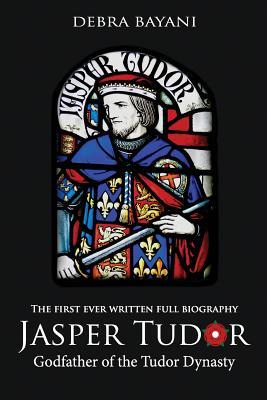
Book Review: “Jasper Tudor: Godfather of the Tudor Dynasty” by Debra Bayani

Jaspertudorbookcover

Jasper Tudor was the half-brother of King Henry VI of England and the uncle of King Henry VII. For his entire life, he was loyal to the Lancastrian cause during the Wars of the Roses. His support of his nephew was pivotal in the emergence of the Tudor dynasty. Before now there has not been a comprehensive biography of this enigmatic figure.

Debra Bayani had an incredible journey researching and writing this book. She says in the preface she learned about Jasper while reading an historical novel and was amazed to learn there had been no biography written about him. She immediately began doing research, traveling to Wales to find sources. She says it was not her intention to write his definitive biography but I think she has come pretty close.

It is clear in reading Bayani’s work she has gone to incredible lengths to get as much information as possible. There is great detail on the estates and incomes Jasper was rewarded for his loyalty to the Lancastrian kings as well as his whereabouts and travels. The wheel of fortune had wild turns for him as it did for many noblemen during the Wars of the Roses. For all intents and purposes, he acted as father to Henry Tudor who lost his biological father before he was born.

Of particular interest to me was the information on Jasper and Henry’s exile in Brittany and France and their efforts to raise troops and funds to invade England in an attempt to take the throne. Bayani gives us lots of particulars on this crucial mission. Jasper was amply rewarded for his support after the Battle of Bosworth. This book is filled with numerous pictures of places related to Jasper’s life. The author has also included an appendix section of many Welsh poems related to Jasper. In my opinion Bayani has done a terrific job writing this book and I highly recommend it for lovers of Tudor history.

Book Review: “Anne of France: Lessons for my Daughter”

Lessons for my daughter book cover


Medieval women never cease to amaze me.  In researching King Louis XI of France, I learned he had a daughter of whom he thought very highly.  And this from a man who had no use for women!  It turns out he thought so much of his eldest daughter Anne de Beaujeu that he made her regent for his underage son who became King Charles VIII after his death.  I discovered Anne had written a book of lessons for her daughter in addition to ruling France for a short time as de facto king.


A quick search revealed an English translation of Anne’s work.  In fact, there is a series of books called the “Library of Medieval Women”, edited by Jane Chance.  “The Library of Medieval Women aims to make available, in an English translation, significant works by, for, and about medieval women, from the age of the Church Fathers to the sixteenth century”.  There are many forms of writing in the series including poetry, visions, biography, autobiography, sermons etc.  This book is part of the series.


Sharon L. Jansen, an historian on the roles of medieval women, has translated Anne’s work.  The actual lessons which Anne wrote for her daughter Suzanne, Duchess of Bourbon are prosaic and derivative.  Jansen explains Anne was drawing on lessons she had learned as a child and relied on books in the royal libraries to strengthen and supplement her lessons.  They are reminiscent of the works of Christine de Pizan and Machiavelli’s “The Prince”.


The book consists of an introduction which gives an overview of Anne’s upbringing in the French court and her education overseen by her mother Charlotte of Savoy.  Charlotte was a great collector of manuscripts and books and her library would become the genesis of the Bibliothèque nationale of France.  So Anne was exposed to these works from an early age.  Throughout the “Lessons”, Jansen refers to these books.  The next section of the book are the “Lessons” themselves, translated with full footnotes.


Finally, Jansen gives us an interpretive essay on the “Lessons” and there are two appendices, one on the question of Anne’s regency and one with extracts of unpublished letters written by Anne of France.  There is an extensive bibliography which I found beneficial in looking for sources on the life of Anne.  I recommend this book if the reader has an interest in the period.

Book Review: “A History of France from the Death of Louis XI” by John Seargeant Cyprian Bridge

History of France from the death of Louis XI

I’m doing some research on Anne de Beaujeu, the daughter of King Louis XI of France. When her father died, she was de facto King of France acting as regent for her brother, King Charles VIII. As a speaker of English, it’s frustrating to research her as the only biographies of her are in French. After a little bit of online research, I found this title which looked like exactly what I was looking for.

This book is a reprint of Volume I of “A History of France from the Death of Louis XI” covering the reign of Charles VIII and the regency of Anne of Beaujeu, 1483-1493. It was originally published by Oxford University Press in 1921. In his preface, Bridge explained there was very little in English about Anne’s regency and he hoped to fill in this gap.

The introductory section of the book gives a wonderful overview of what France was like at the death of King Louis XI, also known as the Spider King. Louis had laid the groundwork for the unification of France as we know it today after the end of the Hundred Years War. These years also saw the beginning of the end of the medieval feudal system. Bridge talks about the obstacles to French unity, the hostility of foreign powers, the doubtful temperament of the feudal nobility, the situation with the independent duchy of Brittany and the status of the heir to the throne in the event that Louis’ son Charles had no children.

With the death of Louis, there was the question of a regency because Charles was thirteen years old. Louis was very shrewd. He designated his daughter Anne as the guardian of his son but never gave her the actual title of Regent. Although Anne was respected and women had ruled as regents in the past, there was opposition to her administration and jockeying for power. However she handled this with skill and grace while managing to keep the nobles respect.

Anne managed to come out unscathed from the meeting of the States-General of 1484. She was skillful in weathering the storm of the Breton Succession and the Breton War and against foreign coalitions from Spain, England and the King of the Romans, Maximilian in opposition to the French annexation of Brittany. Most importantly, her political maneuvering eventually resulted in that annexation with the marriage of King Charles to Anne, Duchess of Brittany. This is possibly her most important legacy.

After this Anne retired from political life although she continued to act as a consultant for the government. She also wrote a book of maxims for her daughter Suzanne, who would become the Duchess of Bourbon. Although the politics of this era is convoluted and complicated, this book does a good job of covering all the ins and outs. There is an appendix where Bridge explains the monetary system of France for the era as well as genealogical tables for the relevant families. I recommend this book if you have an interest in the era.

Book Review: “Louis XI: The Universal Spider” by Paul Murray Kendall

Louis XI book cover

King Louis XI of France has been on my mind a lot lately. I’ve been researching his daughter Anne de Beaujeu who was de facto King of France after the death of her father when she acted as regent for her teenage brother King Charles VIII. She’s a very interesting character, a formidable woman who was very much like her father.

Some time ago I was browsing the used book section of biographies at our locally owned bookstore and just by chance there was a copy of this book on the shelf. I knew nothing about Louis other than he was called “The Spider King” and wove webs of diplomacy around Europe during his reign. So I said, okay, I’ll bite as the price was good. Admittedly the book stayed on my shelf for several years before an interest in Margaret of York, Duchess of Burgundy arose. Margaret’s husband, Charles the Bold, was the sworn enemy of Louis XI. I needed to know more.

Imagine my delight when I started reading this book! I couldn’t put it down. Louis rebelled against his father, King Charles VII at the age of sixteen and was at odds with him until the day Charles died. The Battle of Montlhéry and the defection of the Count of Maine at the critical point of the battle was riveting. The siege of Beauvais and the bravery of the heroine Jeanne Hachette caught my attention. Louis’ marriage to Margaret Stewart was a disaster. Louis conspired with Richard Neville, Earl of Warwick and Queen Margaret of Anjou to restore King Henry VI to the English throne. It’s impossible to make this stuff up.

Kendall relied completely on primary sources, some of which had just become available when he wrote the book and he quotes them liberally. He poured over the sources with a fine toothed comb and really gives us an in depth view of Louis’ character. Admittedly Kendall is an apologist for Louis who had a bit of a bad reputation while he lived and well after he died. But it didn’t matter. With taking this into account, the history of his reign is fantastic reading in and of itself. Louis appears to have had a great sense of humor and the way Kendall describes him makes me wish I could have met him.

Paul Murray Kendall was Professor of English Literature at the University of Kansas in Lawrence and spent several years in Europe doing research for his books. He was the editor of “Dispatches with Related Documents of Milanese Ambassadors in France and Burgundy, 1450-1483, Vol. I and Vol. II: 1450-1460”. A good deal of his biography of Louis came from these works as the Milanese ambassadors lived at Louis’ court. It took Kendall thirteen years to write this book and it was originally published in 1971. Kendall died in 1973. The volume I purchased was a republished paperback edition issued in 2001, the thirtieth anniversary of its original publication.

This edition has a nice section of pictures along with several appendices. These include a genealogical table and a list of rulers and principal lords which is a sort of cast of characters for the time period. There is a preface written by Kendall’s daughter. If anyone choses to read this book, be sure to read the notes. Kendall admits he didn’t have space in the narrative for some of this information so he left it for the notes. I believe this book is out of print but it may be available from a re-seller or in a campus or public library. I highly recommend it if you can find a copy.