Book Review: “A Queen of Unrest” by Harry Tighe

A Queen of Unrest book cover

This book is subtitled: “The story of Juana of Castile, mother of Charles V., born 1479, died 1555” and is a reprint of a 1905 edition that was in the library of the University of Michigan. I’ve mentioned before I enjoy reading older history books and we are lucky some publishers are reprinting some of them or publishing them digitally so we can read them. In doing research on Juana, I found this book completely by accident as it came up as a recommendation on Barnes and Noble.

I’m just going to disclose up front I found this book to be a very weird. I can’t seem to find much information about the author but from what I did find, he was a playwright and a novelist. He may have written other historical books but it’s hard to determine the subjects of some of his titles as there is no information listed about them. This volume is a curious mixture of historical biography and descriptions of historical events mixed with elements of fiction. His list of sources is not very detailed and includes the “Encyclopedia Britannica” and ‘A Spanish book entitled “Juana of Castile”’ with no author given. This is not very promising.

From the early chapters, he says Juana was sickly, unattractive and not very bright. And he fervently insists that she was insane! From what I’ve read so far, Juana was at the very least attractive if not beautiful. I can’t see Philip the Handsome being instantly sexually drawn to a woman who was considered ugly. I also find it hard to believe a sickly woman gave birth to five healthy children. She was highly educated and spoke and read Latin so she must have had at the very least a modest intellect. As for her being insane, the jury is still out on that one.

Tighe gives a nice description of Juana’s childhood in Castile. He doesn’t waste much time on her life in Burgundy. There is some good information on her tours of Spain to be recognized by the Cortes as her mother and father’s successor. He spends a lot of time on Philip. There is a large chapter with a complete description of Philip’s visit with King Henry VII at Windsor which is a reprint of a chronicler’s record of the event. While this is of great interest, it doesn’t really have much to do with Juana. He only gives a passing reference to the fact that Juana was imprisoned for most of her life.

There is no explanation for the origin of the title of the book. It is unclear if he means that Juana was full of unrest or her kingdom was in disarray or a combination of both. The book is very short at 228 pages so I’m afraid there is not a lot of detailed and useful information on Juana. She is a woman about whom volumes could be written. That being said, I did get one huge insight from reading this book. Some of the descriptions of Juana’s behavior reminded me of a family member who suffered from depression. This has given me a great deal of food for thought and I’m going to do some further research on this illness.


Book Review: “French Musketeer 1622-1775” by René Chartrand

French Musketeers book cover

Who doesn’t love the Musketeers? Ever since the French writer Alexandre Dumas, père wrote his series of historical novels in the 19th Century, people have followed the adventures of D’Artagnan, Athos, Porthos and Aramis and their intrepid valets in books and movies. But were these men just characters in a book or did they really exist? Did the Musketeers really duel and fight amongst themselves? Did they actually fight in wars? And what were their uniforms really like? What sort of equipment was issued to them?

This book from Osprey Publishing answers this and many more questions. Chartrand gives an overall history of the various units of the Musketeers. They fought on horseback and on foot in numerous wars as well as fulfilling their duty as bodyguards for the King. The chief ministers of Louis XIII and Louis XIV, Cardinal Richelieu and Cardinal Mazarin had their own companies of Musketeers. Chartrand says there were many instances of duels being fought between the Kings’ and the Cardinals’ Musketeers. So the duel scenes in the stories have a basis in fact.

There is a chapter in the book regarding the fighting of the Musketeers in sieges, battles and wars. They also performed secret missions for the king. The book is filled with colorful illustrations by Graham Turner as well as copies of various prints and paintings depicting Musketeers from the different eras of their existence. A great deal of the book explains the costume and the equipment of the soldiers and how it changed over time. Also included are a chronology, a list of ranks, a glossary of terms and a bibliography.

The information I found most interesting is the historical basis for the characters in Dumas’ novels. Dumas found a copy of a book which was the basis for all of his stories. It was published in 1700 and called “Memoirs of Mr. D’Artagnan, Captain-Lieutenant of the First Company of the King’s Musketeers, concerning a quantity of private and secret events that occurred during the reign of Louis the Great”, written by Gatien de Courtiz de Sandras. Sandras had been a King’s Musketeer for eighteen years. Chartrand explains that Dumas’ characters of D’Artagnan, Athos, Porthos and Aramis are actually based on real men who served in some form or another as Musketeers or soldiers in other units. Sandras may have met the “real” D’Artagnan at some point so his memoirs possibly contain some actual facts of his life. Of course Dumas used artistic license and fictionalized many aspects of their lives.

I distinctly remember seeing the movie version of “The Three Musketeers” from 1973. My college library had a fabulous collection of most of Dumas’ work in old volumes that had been bound in new covers. I read every book I could get my hands on, devouring them. Not only are they entertaining reading but they give the basic outline of French history during the Renaissance and early modern period. So reading this book was a lot of fun and brought back good memories and I enjoyed the illustrations.

Book Review: “Sister Queens: Katherine of Aragon and Juana, Queen of Castile” by Julia Fox

Sister Queens book cover

In the never-ending quest to discover if Juana of Castile was really mad or not, I picked up a copy of this book to read. Having read plenty of biographies of Katherine of Aragon, I wasn’t as interested in this part of the story but Fox does present Katherine in a slightly different light which is always refreshing. But I have to confess, as I was reading the beginning of this book I became a little annoyed. It’s not really a serious biography of these two women at all.

My recent reading has been of more thoughtful biographies and analyses of history such as Bethany Aram’s “Juana the Mad” so Fox’s book seemed on the simplistic side. It reads more like historical fiction. However, that being said, the deeper I got into the book, the better I liked it. There are some great descriptions of certain events in Tudor history with some wonderful detail, essentially bringing the events to life. The recounting of the death of Katherine is really moving.

There could have been a lot more about Juana in this book but I understand why there isn’t. Juana’s time in public life was short having spent the majority of her later years in custody. And we don’t really know that much about how she actually felt or what is accurate according to the chroniclers who wrote according to their own personal agendas. I think Fox is more than fair to Juana in being somewhat neutral and not describing her as a raging lunatic.

After saying all this, I’m still going to recommend this book because Katherine and Juana are still captivating historical characters. Tudor history lovers will find it interesting and those who want to learn a little more about the sisters’ upbringing in Spain and basic facts about Juana will enjoy it.

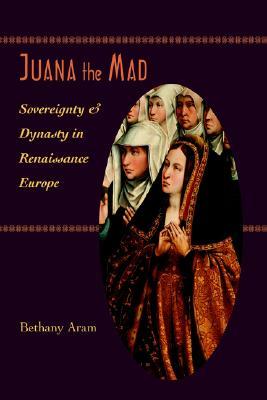
Book Review: “Juana the Mad: Sovereignty & Dynasty in Renaissance Europe” by Bethany Aram

Juana the mad book cover

Earlier this year I read two biographies of Isabella of Castile by Liss and Downey. Liss doesn’t tell us a whole lot about Isabella’s children but Downey has a great chapter on her progeny, especially Juana. So the debate about Juana is whether she was insane or not and Downey writes quite a bit about Juana’s abominable treatment by her father and husband, basically saying Juana was not mad. I was intrigued and looked at the notes and bibliography section and found Downey referenced this book. So I purchased a copy.

Bethany Aram is a professor of Spanish and European history at the Institute of International Studies, Seville, Spain. This book is one in a series of the Johns Hopkins University Studies in Historical and Political Science. Aram spent many years in archival research and draws upon recent scholarship. Aram gives us a biography of Juana’s life along with a study in royal authority in the Renaissance.

Aram puts Juana’s life entirely in perspective for the times. The first section of the book explains several aspects of royal authority in Renaissance Europe. The sovereigns’ household was a microcosm of the government of the country. In this respect, Juana never had control of her own household. It was first controlled by her mother, then her husband, followed by her father and finally her son. Secondly, the sovereign was viewed as having two bodies: their personal bodies and their monarchical body. Juana was held as a virtual captive which didn’t allow her to bodily rule. Thirdly, a sovereign ruled by alternating fear and love. Aram gives a complete explanation of these concepts and how they applied to Juana’s situation.

Aram quotes all primary sources. Throughout the rest of the book, she weaves conventional biographical information along with putting Juana’s life into the context of the times. Juana was third in line for the throne and was not prepared to take the reins of government. When the time came, she was either unwilling or unable to take control. The political situation in Spain was not stable and would have taken a strong monarch to rule.

Aram gives us a jaw-dropping picture of Juana’s treatment by those who wished to control her and rule in her place. The descriptions of her life in Burgundy, her treatment by her husband Philip, her captivity in Tordesillas, Spain by her father and later her son are amazing to read. She had no say in who worked in her household her entire life. Philip was the epitome of the abusive husband, not allowing her enough money to even eat sometimes, let alone run her household.

Under the domination of her father after Philip died, she was a prisoner with no outlet. Some officials tried to get her to sign away her rights as queen but she always found an excuse not to sign. She complained loudly about those who had control of her household and greatly mistreated her. Aram gives an impressive explanation of why Juana held on to the body of Philip. She wanted to bury him in the family mausoleum of Granada for dynastic reasons and for political motivations, her father didn’t agree. Aram says there is only one chronicler who describes Juana opening Philip’s coffin. She explains this might have been to confirm his body was still there, not some kind of macabre obsession.

After the death of Ferdinand, Juana’s son Charles maintained her position in captivity. When a group of rebels gained access to her and tried to persuade her to rule in her own right, she basically signed no documents to that effect and kept her son in power. While her behavior may not have been royal and considered eccentric for the times, it doesn’t appear she was mentally ill. She either didn’t want to rule or was unprepared and chose not to rule.

I found this book fascinating and a real eye-opener. It’s not entirely an easy read as the academic explanations of Renaissance sovereignty are complex and deep. But it sets the backdrop and once the reader gets to the descriptions of Juana’s life, it’s a real page turner. If you want to know the true story of Juana of Castile, I recommend this book.

Book Review: “Wicked Women of Tudor England: Queens, Aristocrats, Commoners” by Retha M Warnicke

Wicked Women book cover

Such an intriguing title for a book! This is one of a series of eighteen books under the heading “Queenship and Power” published by Palgrave Macmillan and edited by professionals from all over the world. Retha M. Warnicke is a professor of History in the School of Historical, Philosophical, and Religious Studies at Arizona State University. She has written numerous books on Tudor England.

I was looking for a biography of Anne Stanhope, the wife of Edward Seymour, Duke of Somerset and Lord Protector during the reign of King Edward VI and this book came up in a search. There is a chapter about her and she has a reputation for being somewhat of a shrew and for having some kind of feud with Queen Katherine Parr. She was accused of trying to take precedence over the Queen Dowager at social functions and of taking Parr’s jewelry. It was even rumored she had caused her husband to commit fratricide.

I’m not sure exactly what I was expecting from this book. It is actually an academic historical argument about how six women of the Tudor era gained wicked reputations. Warnicke takes each woman and reviews the historical records, literature and chronicles where they are described as “wicked”. She follows this with the known historical facts about their lives. In some cases she describes her own personal theories about the women.

Two of the chapters deal with Anne Boleyn and Katherine Howard, the two queens of King Henry VIII who were executed. I was a little frustrated with Warnicke’s arguments about them. In the case of Anne Boleyn, her theory is that she was considered wicked and executed because she miscarried a deformed fetus. Really? By the time Anne was arrested, there had been plenty of preparation and political machinations for charges against her. And Henry’s eye had already strayed to Jane Seymour.

For Katherine Howard, Warnicke argues she was the victim of sexual predators. I don’t think this is in dispute. She also argues that Katherine Howard denied she had sexual relations with Thomas Culpeper. Even if she didn’t, just the fact that she met with him surreptitiously was a mistake. I’m thinking if there was even the semblance of impropriety she was in trouble. If she became pregnant, there would be questions concerning the legitimacy of the child to inherit the throne. Maybe she wasn’t wicked but her behavior certainly didn’t help her own cause.

In the chapter on Anne Stanhope, Warnicke presents the evidence that yes, there may have been a personal controversy between her and Katherine Parr but this isn’t what resulted in Thomas Seymour’s execution. She argues that the Duchess’ inability to deliver favors for those who sought help from her husband caused anger and resentment against her, creating a wicked reputation. Certainly the historical facts about the rest of her life create the impression that she was in good standing with society and maintained a good reputation with her contemporaries.

The other chapters tell us about Lettice Knollys, the second wife of Queen Elizabeth I’s favorite Robert Dudley, Earl of Leicester and the two wives of Sir Thomas More. It is remarkable that Lettice’s wicked reputation is based on a letter confirming the marriage ceremony between her and Leicester that mentions she wore a loose fitting gown. This has been taken to mean she had premarital sex and was pregnant at the time of her marriage. Loose fitting gowns were commonplace at that time. The obstreperous reputation of the two wives of Sir Thomas is based on rather flimsy interpretations on the writings of More’s great friend the humanist Desiderius Erasmus and others. These two chapters were very interesting.

Some of the biographical information and her arguments are thought-provoking. But this is a work of academic argument, not a breezy read. The writing can be confusing so it requires patience and attention and some knowledge of the women and the era. I’m going to recommend this book with these caveats.

Book Review: “The Hundred Years War: A People’s History” by David Green

Green's hundred years war cover

As much as I love English and French medieval history, my knowledge of the Hundred Years War is minimal. I found this book in the bookstore and loved the concept of viewing the war from the people’s perspective. The book appears to be a selection of lectures Green has given regarding different aspects of the war and there is some repetition in some sections. But overall, I was pleasantly surprised.

The first chapter is an overview of the highlights of the war starting with the events leading up to King Edward III’s claim to the French throne. The war begins with raids and guerilla methods and then develops into battles (Poitiers, Crecy, and Agincourt), sieges and occupations. Other chapters address the mentality of the era such as chivalry and how it influenced the tactics of the conflict and the taking and ransoming of prisoners of war. There is some good information on how the introduction of artillery influenced military operations.

Green gives us great information on how the war affected different classes of people. Chapters are devoted to knights and nobles, the peasantry, the church and the clergy, soldiers and women. I especially enjoyed the section on women. One of the most interesting chapters is about the madness of kings. The proceedings of the war were influenced by the mental illness of two kings, Charles VI of France and Henry VI of England. There were also men who tried to broker peace which Green discusses.

In addition, Green tells us about the mechanics of occupation and how the war helped create national identities. I like how he explains what happened for both nations. The hardback edition of the book I have includes family trees for the Plantagenets, the Valois and the Lancastrians. There are maps of France denoting raids and occupied areas as well as a section of black and white photos depicting important people of the war. Green’s writing is a little academic but easy to read. I would highly recommend this book for those interested in medieval warfare and its history.

Book Review: “Queen’s Mate” by Pauline Matarasso

blue queens mate book cover

The full title of this book is “Queen’s Mate: Three women of power in France on the eve of the Renaissance”. I have to confess I almost didn’t buy this book. My research in to Anne of France, the unofficial regent of her brother King Charles VIII led me to this title. There is no full biography of her in English, however every source I did have for her mentioned this book. The other two women Matarasso writes about are Anne of Brittany and Louise of Savoy.

This work intrigued me but in looking for a copy of the book, it appeared it was out of print and the only copies available were used and very expensive. But I came into possession of some gift cards for Barnes and Noble and decided to use them to purchase the book. Boy am I glad I did! This is one of the best women’s biographies I’ve read in a long time. The book is so rich in detail on the lives of Anne of France and Anne of Brittany. Matarasso obviously did her research.

The first quarter of the book is dedicated to Anne of France. There is a lot of good detail about her reign as regent, especially about the “Mad War” and the War of the Breton Succession. Matarasso explains how Anne of France skillfully and diplomatically managed these conflicts which ended with the marriage of Anne of Brittany to King Charles VIII. Anne of France then retired from public life but still kept her hand in the government of the kingdom as well as her own duchy of Bourbon. I found a lot of good material here to write an article about her.

The majority of the book is about Anne of Brittany. I love all the details about Anne of Brittany’s chaotic childhood and her three marriages. Matarasso’s description of Anne’s two husband’s exploits in trying to conquer Italy are great. There is a great description of the scene of a visit to the French court by Juana of Castile and her husband Philip of Burgundy. Matarasso tells us about the castles Anne lived in, about her many pregnancies and all of her virtues as well as her faults.

There is really only a passing mention of Louise of Savoy here. Matarasso gives us some detail about her childhood. She was brought up under the guardianship of Anne of France and married a minor nobleman. The book ends with the accession of her son to the throne of France as King Francis I and Louise had a huge role in her son’s government so that piece is missing from this book. Matarasso explains there really is no complete biography of Louise. That may have changed since this book was written in 2001 but I know of no biography of her in English.  (I have since found a biography of her written by Dorothy Moulton Mayer.  See the review here.)

Since I received my copy of the book I found out it was published by Ashgate Publishing Company and the book is available from them on their website, although it is still expensive. But if you have an interest in these women and the period and you have the funds, I strongly recommend it. The writing is breezy, fun and keeps your interest. I couldn’t put it down.

Book Review: “The Warrior Queens: The Legends and the Lives of the Women Who Have Led Their Nations in War” by Antonia Fraser

The warrior Queens Fraser

Before there was Alison Weir, Philippa Gregory, and other contemporary women historians and writers, there was Antonia Fraser. Many years ago, in her heyday, I read everything she wrote that I could get my hands on. There was “Mary, Queen of Scots, “The Six Wives of Henry VIII”, “King Charles II” and a biography of Marie Antoinette, among others. Her non-fiction books were the gold standard of history. But somehow I missed “The Warrior Queens”.

I’ve always been fascinated by the story of Boudica, the Celtic queen of the Iceni tribe who rose up in rebellion against the occupying Romans in Britain in the mid-first century. I had heard she burned London to the ground! What an amazing story. I had to learn more. Apparently, Fraser felt the same way. The writing of this book was born out by her love of the story of Boudica. Most of the book is dedicated to Boudica’s story, relating it to the lives of other women who led their nations in war. Many of the women in this book I have heard of such as Matilda, Countess of Tuscany, the Empress Matilda of England and her cousin King Stephen’s wife Matilda of Boulogne, the twelfth century Georgian Queen Tamara, Isabella of Castile, and Queen Elizabeth I of England. These are some of my favorite women of history.

Fraser gives us the story of these women leading their troops into war in her inimitable intellectual manner which is very compelling. Her history is fair and balanced, engaging and fun. Her historical arguments make good sense. I especially found the story of the Rani of Jhansi to be captivating. She led her troops against the British during the Indian Rebellion of 1857. I knew nothing about her so it was refreshing to learn of her convictions and bravery.

Her final subjects are Golda Meir and Margaret Thatcher. It is interesting to see Fraser’s perspective on these modern women and their role in war. This book is women’s history at its finest. I can’t recommend it enough. I couldn’t put it down.

Book Review: “Boudicca’s Rebellion AD 60-61: The Britons rise up against Rome” by Nic Field

Boudicca's rebellion book cover

The story of Boudica, the Celtic Warrior Queen has always intrigued me. She rose in rebellion in the first century against the Roman Empire when they occupied Britain and had some success. I wanted to know more. In searching for sources, I found this book was available. The cover has an almost cartoonish drawing so I was a little dismayed. But I was wrong to be concerned. This is a very thorough account of Boudica’s rebellion with lots of valuable information.

Osprey Publishing specializes in military history books. They advertise that their books are “Accounts of history’s greatest conflicts, detailing the command strategies, tactics and battle experiences of the opposing forces throughout the crucial stages of each campaign.” This is certainly the case with this book. Author Nic Fields has an excellent grasp of the history of the Roman military. He details how the soldiers dressed, how the Roman army was organized, what weapons they used, etc. There are photographs of Roman military re-enactors, illustrating what they looked like. There are photos and explanations of archaeological evidence from the era along with maps and drawings.

Fields tells us about the primary sources: Tacitus and Cassius Dio. He gives thorough analysis of both authors, their accounts of the events and the differences and similarities. He explains how the Celts had no written records so we can only go by the Roman version of events. The sections of the book include opposing commanders, opposing armies, opposing plans, the campaign and the aftermath. I especially liked his detailing of the Celtic forces and the type of chariots they used to fight with and how they employed the chariots during battle.

My favorite section of the book talks about the location of the final battle between the Romans and Boudica’s forces. Tacitus and Dio do not give the actual location. The only thing we know is the battle occurred in the Midlands of Britain. Fields has identified a possible location and gives several photographs. This is really fascinating.

As mentioned, the book is filled with photographs. The illustrations of Peter Dennis are fantastic. He incorporates what we know about the Celts and Boudica herself. Certain items in the illustrations are numbered and there is a legend beneath the picture explaining the historical fact behind what you are seeing. I enjoyed the artist’s imagination very much.

So, I learned a lot about Boudica’s campaign against the Romans and this book made the time period come alive. I also learned about Osprey Publishing and will use them as a resource again for military history. I can highly recommend this book.

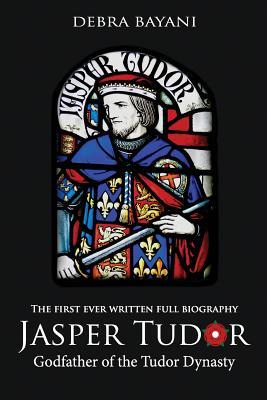
Book Review: “Jasper Tudor: Godfather of the Tudor Dynasty” by Debra Bayani

Jaspertudorbookcover

Jasper Tudor was the half-brother of King Henry VI of England and the uncle of King Henry VII. For his entire life, he was loyal to the Lancastrian cause during the Wars of the Roses. His support of his nephew was pivotal in the emergence of the Tudor dynasty. Before now there has not been a comprehensive biography of this enigmatic figure.

Debra Bayani had an incredible journey researching and writing this book. She says in the preface she learned about Jasper while reading an historical novel and was amazed to learn there had been no biography written about him. She immediately began doing research, traveling to Wales to find sources. She says it was not her intention to write his definitive biography but I think she has come pretty close.

It is clear in reading Bayani’s work she has gone to incredible lengths to get as much information as possible. There is great detail on the estates and incomes Jasper was rewarded for his loyalty to the Lancastrian kings as well as his whereabouts and travels. The wheel of fortune had wild turns for him as it did for many noblemen during the Wars of the Roses. For all intents and purposes, he acted as father to Henry Tudor who lost his biological father before he was born.

Of particular interest to me was the information on Jasper and Henry’s exile in Brittany and France and their efforts to raise troops and funds to invade England in an attempt to take the throne. Bayani gives us lots of particulars on this crucial mission. Jasper was amply rewarded for his support after the Battle of Bosworth. This book is filled with numerous pictures of places related to Jasper’s life. The author has also included an appendix section of many Welsh poems related to Jasper. In my opinion Bayani has done a terrific job writing this book and I highly recommend it for lovers of Tudor history.