Book Review: “Richard the Third” by Paul Murray Kendall

kendalls-richard-iii-book-cover

So it was with great trepidation that I started to read Paul Murray Kendall’s biography of Richard the Third. I absolutely loved his Louis XI, the Universal Spider book. But I had a sneaking suspicion Kendall was an apologist for old Richard III. Well, my suspicions were confirmed in the first chapter! About Richard III’s father, Richard Duke of York, Kendall says his “abilities were moderate” and “Excessive greed and ambition…seem to have been largely absent from his character”. Kendall goes on to say “It would require the unrelenting enmity of a queen (Margaret of Anjou) to remind him that he owned a better title to the throne than Henry the Sixth”. I thought, this is going to be good. But I decided to give Kendall a pass because the book was written in 1955 and a lot has changed since then.

Despite my reservations and all of its flaws, this is a fabulous book. Kendall resorts to purple prose but for the most part he relies on primary sources to tell Richard’s story. There are a few places where his bias is obvious. If the reader takes this in stride, Kendall reveals a lot of insight, not only into Richard himself but into life in fifteenth century England. He breaks down the intricate relationships between king and nobles during the conflict that came to be known as the Wars of the Roses.

He covers Richard’s life from birth until his death at the Battle of Bosworth in August 1485. He doesn’t mince any words about some of Richard’s actions as king. He says Richard did consider marrying his niece Elizabeth of York. He also asserts that the evidence supports the theory that the princes in The Tower died on his watch and that he was responsible even though it could not be proven in court. He devotes an entire appendix to examining the evidence about the princes. There is also another appendix where he gives his thoughts on Richard’s character. He feels Richard felt guilty about taking the throne and this colored his actions.

His comments on Richard’s condition of being a hunchback are way off base as we now know. He says the reason one shoulder was higher than the other was due his military training and using a heavy sword. He also states that Richard’s bones were thrown in a river as part of the Dissolution of the Monasteries during the reign of King Henry VIII. We now know this is not true. Kendall is particularly harsh in his comments about Henry VII.

Despite all this, this book is a real page turner. It was hard for me to put it down and I was disappointed when I was finished. The chapter describing the Battle of Bosworth is masterful. I would recommend the reader read all the notes to the text in the back of the book as they are packed full of historical information. This book definitely clarifies the life of Richard III.

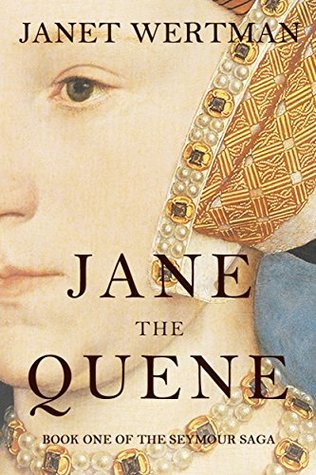
Book Review: “Jane the Quene” by Janet Wertman

Jane the Queen book cover

There are many readers who enjoy historical fiction from the Tudor era. I used to be one of them and have many fond memories of reading the delightful books of Jean Plaidy and Norah Lofts. Due to the constraints of historical research, I haven’t read any fiction for years. But I thought I would make an exception for my friend Janet Wertman and read the first book of her Seymour Saga.

What a delight this book is! Wertman’s premise is that Jane Seymour was the plain sister in the family and all she really wanted was to get married. The story opens with Jane working as a lady-in-waiting for Anne Boleyn and King Henry VIII and the Queen are about to go on summer progress. Jane is sent to the family home of Wulfhall to oversee the preparations for the King’s visit. While Henry VIII is there, he and Jane have a moment in the garden and that’s where Jane’s romance begins.

Jane’s prospects improve from that moment on. Wertman includes all the iconic moments in Jane’s life. There’s the day Anne Boleyn caught Henry with Jane in his lap and the famous scene where Henry tries to give Jane a bag of coins and a letter. Jane refuses the gifts with great aplomb. I love Wertman’s dialogue throughout the book. All the famous characters from the Tudor court are here: Jane’s brothers Edward and Tom, her sister-in-law Anne Seymour, her sister Elizabeth, Thomas Cromwell, Ralph Sadler, the notorious Anne Boleyn and of course, Henry VIII in all his royal splendor.

The scenes of the birth of Jane’s son Edward and her death as written are very vivid and moving. There’s a lot of insight into what Jane, Edward Seymour, King Henry and Thomas Cromwell are thinking, their behavior and their motivations. This book took me back to those Jean Plaidy days. I think any reader would enjoy the book and highly recommend it. I’ll be looking forward to the rest of the Seymour Saga from Janet.

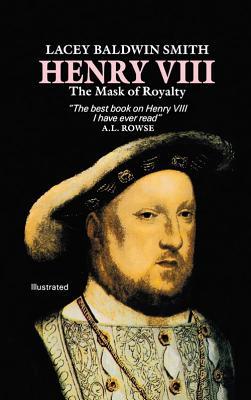
Book Review: “Henry VIII: The Mask of Royalty” by Lacey Baldwin Smith

Lacey Baldwin Smith's Mask of Royalty book cover

When I was a history major in college, probably in my senior year, I took my first psychology course. Psychology turned out to be a fascinating subject and made me think about how it could be applied to history. The thought of a course in psycho-history crossed my mind but unfortunately my school didn’t offer such a course! Little did I know at the time Lacey Baldwin Smith was writing his seminal work on King Henry VIII and that is was a masterful psycho-history biography.

Many people had recommended this book to me and it was gripping from the very first chapter. Smith begins with the dying king secluded in his chamber and describes the loyal servants around him and their behavior. As many Tudor history fans know, there may have been some shenanigans during the king’s fateful final illness, especially regarding his will. Smith explains that Henry had his full faculties up until the end, perhaps blissfully ignoring the fact he was dying. But we do know there were changes made to the will and it wasn’t signed by the king’s hand but with a dry stamp. All this is very intriguing.

The book then goes into flashback so to speak to around the time Henry married Catherine Howard and most of the book recounts the years from 1540 until his death in 1547. Smith explains how Henry was given an in-depth humanist education but he certainly wasn’t the most intelligent man at court. What he was good at was remembering many minute details of all the business of governing of the realm. There are many records with Henry’s own notes written by hand that still exist to this day.

There is a most interesting chapter regarding Henry and his thinking as Supreme Head of the Church in England. Henry’s conscience was responsible for the spiritual life of all his subjects. Smith gives us a most interesting insight into what a precarious position this was for Henry and how this affected his view of the church in his kingdom. Smith examines some of the foreign policy of Henry in the later years recounting the delicate dance of power between the Holy Roman Emperor Charles V and King François I of France.

Woven throughout Smith’s narration is how Henry’s psychological perspective and views of his place in the world influenced his reign. His insights go a long way in explaining why he did what he did in making decisions, marrying so many times and executing valuable servants. I found all of Smith’s arguments to be very absorbing and they gave me a deep understanding of not just Henry but the mindset of Tudor England overall. I couldn’t put this book down and was sad when I finished it. I can’t recommend it enough. Any reader will definitely have a better understanding of the standout king and his reign.

Book Review: “The Seymours of Wolf Hall: A Tudor Family Story” by David Loades

The Seymours of Wolf Hall book cover

It seems the Seymour family is more interesting than they appear on the surface. Most who know Tudor history are familiar with Jane Seymour, third wife of King Henry VIII and mother of King Edward VI. Others may have heard of Jane’s brothers, the dour Lord Protector Edward, Duke of Somerset and the swashbuckling Thomas, Baron Seymour of Sudeley and Lord Admiral. This book goes into even more depth about the family.

The introduction and initial chapter traces the Seymour ancestry back to France and how they migrated to England. I found the information on Jane’s father Sir John Seymour to be of great interest. He was a man of means and had ties to the court but didn’t spend much time there, choosing to live in Wiltshire and tend to business at home. Edward and Thomas were introduced to court and had valid careers in the navy, as gentlemen of the court and in Edward’s case as a successful soldier.

There are chapters in the book dedicated to Jane, Edward, Thomas and other siblings. Something I found most interesting was how Henry VIII really took a liking to Edward and rewarded him. He was very much part of the inner circle of the King. In addition to being the uncle of Edward VI, this is how he earned his important place on the council to rule England during Edward’s minority after Henry’s death. Loades also clarifies the reasons for Edward’s downfall. Thomas is by far the most attention-grabbing figure in the family. Mercurial and indiscreet, he seems to have set in motion all the mechanisms for his own downfall. The last part of the book traces the descendants of Edward Seymour and his wife Anne Stanhope down to the present day.

I’ve never read anything by Loades before and he certainly has the credentials of a competent historian. He puts his own spin on all aspects of this family which I found new and refreshing. Because of this, I recommend this book. My only quibble is the format of the book. It seems the author penned the book and sent the manuscript to the publisher and it was published straight from that. The paragraphs all run together and there are some grammatical and punctuation errors. Most egregiously, there is no index for the book. The publisher could have engaged the services of an editor to correct these errors but it doesn’t detract from the history as presented by the author.

Book Review: “The Sisters Who Would Be Queen: A Tudor Tragedy” by Leanda de Lisle

The Sisters Who Would Be Queen book cover

Several years ago I read a fascinating biography of Lady Jane Grey, known as the Nine Days Queen. It was written by Eric Ives and the subtitle of the book was “A Tudor Mystery”. So little is known about Jane who was a key personality in the Tudor era. I knew even less about Jane’s sisters Katherine and Mary. So when I found this book I was intrigued.

Since Ives has written a complete work on Jane, this book doesn’t really give much additional information about her. However, the information on Katherine and Mary here gives a complete picture of their lives. All these women were technically in line to inherit the throne of England based on the will of King Henry VIII and then the revisions made by King Edward VI. Edward really put these women in the spotlight, essentially putting their lives in danger, especially Jane.

Jane was used as pawn by John Dudley, Duke of Northumberland. Just before King Edward died, Northumberland married Jane to his own son Guildford. When Edward finally died, Northumberland had Jane and his son proclaimed Queen and King. This state of affairs only lasted about ten days, until Edward’s sister Princess Mary proclaimed herself Queen and forced Jane and Guildford to become prisoners in the Tower. Jane was beheaded a few months later.

Katherine’s story is for me the most fascinating. She managed to marry a Seymour in secret without the Queen’s permission. Even more interesting, she managed to have a son. After this, Queen Elizabeth I had Katherine held prisoner in the Tower along with her husband. They were allowed to see each other while incarcerated and Katherine managed to have another son! This led to the couple being separated and Katherine died an unfortunate death a few years later. De Lisle discloses in this book that there is a first-hand account of Katherine’s death and as it’s written here, it’s very emotional reading.

The last sister Mary managed to live the most conventional life of the three women but that’s putting it mildly. She was born deformed and was a very small person. But this probably saved her life because she wasn’t seen as a serious threat to the throne because of it. She married without the Queen’s permission like her sister and was also separated from her husband. He eventually died and Mary was able to carve out a living for herself as a comfortable widow.

All this makes for a fascinating story and de Lisle does a good job here recounting the lives of the three women. I have to admit her grammar and syntax drove me a little batty and sometimes she had me wondering if I was reading historical fiction or not. But it’s a pleasant book and I would recommend it if you are interested in the subject.

Book Review: “Sister Queens: Katherine of Aragon and Juana, Queen of Castile” by Julia Fox

Sister Queens book cover

In the never-ending quest to discover if Juana of Castile was really mad or not, I picked up a copy of this book to read. Having read plenty of biographies of Katherine of Aragon, I wasn’t as interested in this part of the story but Fox does present Katherine in a slightly different light which is always refreshing. But I have to confess, as I was reading the beginning of this book I became a little annoyed. It’s not really a serious biography of these two women at all.

My recent reading has been of more thoughtful biographies and analyses of history such as Bethany Aram’s “Juana the Mad” so Fox’s book seemed on the simplistic side. It reads more like historical fiction. However, that being said, the deeper I got into the book, the better I liked it. There are some great descriptions of certain events in Tudor history with some wonderful detail, essentially bringing the events to life. The recounting of the death of Katherine is really moving.

There could have been a lot more about Juana in this book but I understand why there isn’t. Juana’s time in public life was short having spent the majority of her later years in custody. And we don’t really know that much about how she actually felt or what is accurate according to the chroniclers who wrote according to their own personal agendas. I think Fox is more than fair to Juana in being somewhat neutral and not describing her as a raging lunatic.

After saying all this, I’m still going to recommend this book because Katherine and Juana are still captivating historical characters. Tudor history lovers will find it interesting and those who want to learn a little more about the sisters’ upbringing in Spain and basic facts about Juana will enjoy it.

Book Review: “Wicked Women of Tudor England: Queens, Aristocrats, Commoners” by Retha M Warnicke

Wicked Women book cover

Such an intriguing title for a book! This is one of a series of eighteen books under the heading “Queenship and Power” published by Palgrave Macmillan and edited by professionals from all over the world. Retha M. Warnicke is a professor of History in the School of Historical, Philosophical, and Religious Studies at Arizona State University. She has written numerous books on Tudor England.

I was looking for a biography of Anne Stanhope, the wife of Edward Seymour, Duke of Somerset and Lord Protector during the reign of King Edward VI and this book came up in a search. There is a chapter about her and she has a reputation for being somewhat of a shrew and for having some kind of feud with Queen Katherine Parr. She was accused of trying to take precedence over the Queen Dowager at social functions and of taking Parr’s jewelry. It was even rumored she had caused her husband to commit fratricide.

I’m not sure exactly what I was expecting from this book. It is actually an academic historical argument about how six women of the Tudor era gained wicked reputations. Warnicke takes each woman and reviews the historical records, literature and chronicles where they are described as “wicked”. She follows this with the known historical facts about their lives. In some cases she describes her own personal theories about the women.

Two of the chapters deal with Anne Boleyn and Katherine Howard, the two queens of King Henry VIII who were executed. I was a little frustrated with Warnicke’s arguments about them. In the case of Anne Boleyn, her theory is that she was considered wicked and executed because she miscarried a deformed fetus. Really? By the time Anne was arrested, there had been plenty of preparation and political machinations for charges against her. And Henry’s eye had already strayed to Jane Seymour.

For Katherine Howard, Warnicke argues she was the victim of sexual predators. I don’t think this is in dispute. She also argues that Katherine Howard denied she had sexual relations with Thomas Culpeper. Even if she didn’t, just the fact that she met with him surreptitiously was a mistake. I’m thinking if there was even the semblance of impropriety she was in trouble. If she became pregnant, there would be questions concerning the legitimacy of the child to inherit the throne. Maybe she wasn’t wicked but her behavior certainly didn’t help her own cause.

In the chapter on Anne Stanhope, Warnicke presents the evidence that yes, there may have been a personal controversy between her and Katherine Parr but this isn’t what resulted in Thomas Seymour’s execution. She argues that the Duchess’ inability to deliver favors for those who sought help from her husband caused anger and resentment against her, creating a wicked reputation. Certainly the historical facts about the rest of her life create the impression that she was in good standing with society and maintained a good reputation with her contemporaries.

The other chapters tell us about Lettice Knollys, the second wife of Queen Elizabeth I’s favorite Robert Dudley, Earl of Leicester and the two wives of Sir Thomas More. It is remarkable that Lettice’s wicked reputation is based on a letter confirming the marriage ceremony between her and Leicester that mentions she wore a loose fitting gown. This has been taken to mean she had premarital sex and was pregnant at the time of her marriage. Loose fitting gowns were commonplace at that time. The obstreperous reputation of the two wives of Sir Thomas is based on rather flimsy interpretations on the writings of More’s great friend the humanist Desiderius Erasmus and others. These two chapters were very interesting.

Some of the biographical information and her arguments are thought-provoking. But this is a work of academic argument, not a breezy read. The writing can be confusing so it requires patience and attention and some knowledge of the women and the era. I’m going to recommend this book with these caveats.

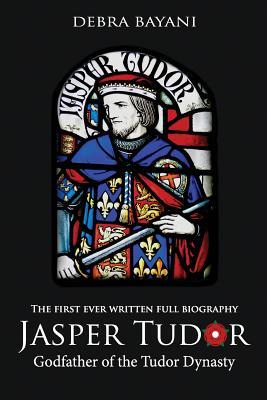
Book Review: “Jasper Tudor: Godfather of the Tudor Dynasty” by Debra Bayani

Jaspertudorbookcover

Jasper Tudor was the half-brother of King Henry VI of England and the uncle of King Henry VII. For his entire life, he was loyal to the Lancastrian cause during the Wars of the Roses. His support of his nephew was pivotal in the emergence of the Tudor dynasty. Before now there has not been a comprehensive biography of this enigmatic figure.

Debra Bayani had an incredible journey researching and writing this book. She says in the preface she learned about Jasper while reading an historical novel and was amazed to learn there had been no biography written about him. She immediately began doing research, traveling to Wales to find sources. She says it was not her intention to write his definitive biography but I think she has come pretty close.

It is clear in reading Bayani’s work she has gone to incredible lengths to get as much information as possible. There is great detail on the estates and incomes Jasper was rewarded for his loyalty to the Lancastrian kings as well as his whereabouts and travels. The wheel of fortune had wild turns for him as it did for many noblemen during the Wars of the Roses. For all intents and purposes, he acted as father to Henry Tudor who lost his biological father before he was born.

Of particular interest to me was the information on Jasper and Henry’s exile in Brittany and France and their efforts to raise troops and funds to invade England in an attempt to take the throne. Bayani gives us lots of particulars on this crucial mission. Jasper was amply rewarded for his support after the Battle of Bosworth. This book is filled with numerous pictures of places related to Jasper’s life. The author has also included an appendix section of many Welsh poems related to Jasper. In my opinion Bayani has done a terrific job writing this book and I highly recommend it for lovers of Tudor history.

Book Review: “Winter King: Henry VII and the Dawn of Tudor England” by Thomas Penn

Winter King book cover

I have to start off by saying Thomas Penn has written a rip roaring biography here. It is certainly easy to see how this book won the 2012 H.W. Fisher Best First Biography prize. If you are looking for an in depth survey of the reign of Henry VII, this is your answer.

Penn begins by reminding us how Henry’s reign is overlooked by many historians because of the notoriety of his son Henry VIII and grand-daughter Elizabeth I. He likens the beginning of Henry VIII’s reign to a metaphorical spring, a second coming of sorts because Henry VIII seemed to be the opposite of his father. This is why he named the book the “Winter King”.

Henry VII had a dubious claim to the throne of England based on ancestry alone. He had spent most of his early years in exile on the continent and essentially had no thought or chance of becoming King of England. But when dissent in England reared its head during the reign of Richard III, Henry’s horizon opened up to possibilities. Disenchanted nobles gathered by his side and an invasion was planned, executed and carried forth with worthy results for Henry. This part of the story is genuinely exceptional. After his victory at Bosworth Field, Henry married Edward IV’s daughter Elizabeth of York. Almost immediately she gave birth to a son, Arthur, and the Tudor dynasty was on its way to establishing its splendid reputation in history.

After Henry quelled a few rebellions and crushed the hopes of a few imposters to the throne, the reign became relatively quiet. But in 1501-2, Henry’s heir Prince Arthur and then his wife died. It was a time of crisis for Henry. All his hopes were placed in his second son, Prince Henry. This was when Henry became physically ill with the tuberculosis which would eventually be fatal. His paranoia became even more evident. He was cautious and secretive and began resorting to extra-judicial measures. He found men to carry out his rare and extraordinary methods for collecting money and keeping people under control.

Penn is masterful in setting the scene here. He tells us about the men Henry relied on. He talks about secret plots and behind the scenes diplomatic maneuvers. He gives us great insight into the personality of Henry and what his motives were. There are delicious descriptions of visits of ambassadors, Elizabeth of York’s funeral, the entry of Catherine of Aragon into London and her wedding to Arthur Tudor. Really the entire panoply of Henry’s reign is described in great detail.

For me, the best chapters are in the last third of the book. After the death of Arthur and Elizabeth, King Henry brings Prince Henry to court to give him every advantage and to make clear the hopes of the dynasty rested on his shoulders. The education of Prince Henry as well as a great awareness of how he spent his leisure time is recounted. Prince Henry was closely guarded by his father and not allowed much leeway in his behavior. But the descriptions of him and his pals and their military training and jousting antics are really fun to read about.

I found that reading S.B. Chrimes biography of Henry first laid the foundation for a better understanding of Penn’s book so I would recommend that course of action. But it’s not totally necessary. For me the book seemed to start off a little slow, however it certainly picks up after a few chapters and begins to read more like an enjoyable historical fiction book. Only it’s not fiction! Really I can’t recommend this book enough if you are interested in the Tudor era and this overlooked king.

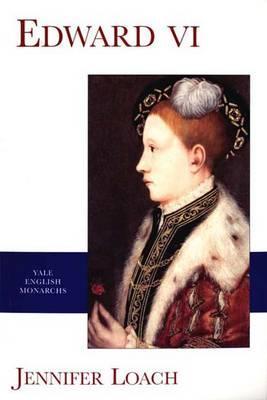
Book Review: “Edward VI” by Jennifer Loach

Edward VI book cover

This biography is another volume in the Yale English Monarch series. Author Jennifer Loach, before her untimely death at forty-nine in 1995, was a Fellow and Tutor in Modern History at Somerville College, Oxford. Ms. Loach started out as an historian of parliament with a specialty in the Marian parliaments but she soon widened her field of study to cover European history in general and the reigns of Mary I and Edward VI in particular, bridging the gap between Henry VIII and Queen Elizabeth I. Most of the work on the reign of King Edward VI had been published in the early to mid-twentieth century. In 1988, Loach was commissioned to write this book for Yale University Press and spent the last years of her life solely concentrating on its writing and publication.

It is unfortunate Ms. Loach died before the completion of the book. Her husband brought her notes and computer disks to Penry Williams and George Bernard, a student of Loach’s. The Preface of the book describes how these two editors managed to complete the project, a process in and of itself that is very interesting. Ms. Loach had discussed with them how she would construct the narrative of the book so they had a clear idea of her methods. For the reader, it is apparent the book was unfinished in some places although this doesn’t detract from the basic historical information provided.

Because Edward’s reign was short, he was young and had little say in the running of day-to-day government, it is necessary to concentrate on the regencies of his regime. This encompasses the retelling of the leadership of Edward’s maternal uncle, Edward Seymour, Duke of Somerset and John Dudley, Earl of Warwick, later Duke of Northumberland. In this volume, there is not a lot of detail about these men’s command but it is enough to give the reader an idea of the overall impact on the reign. Dr. Loach also gives a general overview of the social and economic difficulties of the reign as well as the religious policy.

The most interesting part of this biography is about the king himself. She tells us how Edward received one of the most complete humanist educations of his era. There is some fascinating information on Edward’s court and how he enjoyed magnificence, panoply and intricate ceremony and ritual, very much following in the footsteps of his father. Edward loved to dress in sumptuous clothes and personally participate in court entertainments as a performer and in inventing them. In many ways he was a typical sixteenth century teenager albeit fortunate enough to have a superb education and access to the royal treasury.

Loach includes an entire chapter on Edward’s last illness, containing her personal thoughts on a possible medical diagnosis for what ultimately proved to be fatal. The information on Edward’s “device” for changing the succession to Lady Jane Grey is most interesting. There is a brief description of Edward’s funeral and a chapter for what followed his death with the proclamation of Lady Jane Grey as Queen and how Mary fought to claim her throne and who fought with her. There are some wonderful illustrations in the book and an appendix describing a selected list of portraits of King Edward. This is a wonderful, no-nonsense history of the life and reign of the young King Edward.