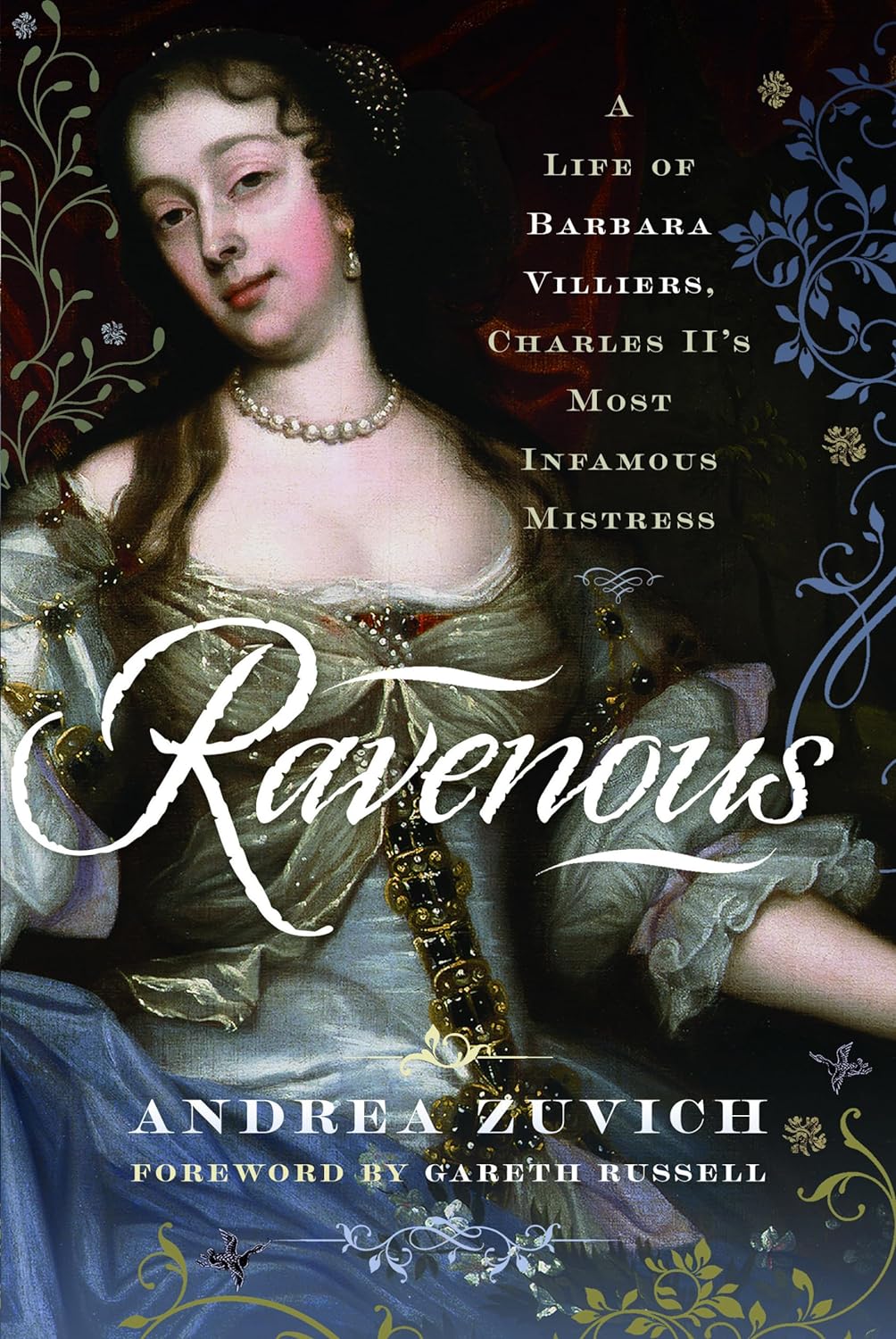
Book Review: “Ravenous: A Life of Barbara Villiers, Charles II’s Most Infamous Mistress” by Andrea Zuvich

My good friend and historian Andrea Zuvich kindly provided me with a copy of her latest book “Ravenous” which I was happy to read and review. As the title infers, Villers is not a very sympathetic or even likable character. Zuvich’s treatment of Barbara is very even handed, neither extolling her character nor denigrating her in the process. By providing the complex details of Barbara’s life, we get a complete view of her.

Barbara’s family, the Villiers, were integral operators in the Stuart monarchy beginning with the reign of James I. Zuvich gives us some background into the family, and Barbara was related to one of the more minor family members. From the time she was a teenager, she engaged in carnal relations with an aristocratic member of the court. Although this relationship did not result in a marriage, Barbara had a connection with the man throughout her whole life. Early on, Barbara managed to gain access to King Charles II, even while he was in exile and before his restoration to the English throne. By the time this happened, she was Charles’ maîtresse en titre, in the tradition of his grandfather, King Henri IV of France.

This would be Charles II’s longest lasting relationship, especially due to the birth of several children with Barbara, in effect creating a family unit which he supported until his death. Initially, Barbara engaged in political and diplomatic matters at court and as Zuvich explains, played a role in the disgrace of Henry Hyde, Charles’ chancellor, among others. Charles endowed Barbara with various sizable sources of income, something people grumbled about. He also elevated her, first to the title of Countess of Castlemaine and later to the title of Duchess of Cleveland. All of their male children together were given aristocratic titles and the female children made good marriages.

Later in her life, Barbara engaged in behavior, such as taking lovers and gambling large amounts of money which caused embarrassment for Charles, and she slowly disappeared from any meaningful influence and authority at court. Zuvich has found numerous references to debts and lawsuits for collection in Barbara’s name that make for interesting reading. I especially liked Andrea’s take on the relationship between King Charles and his wife, Queen Catherine of Braganza. She is very fair in her treatment of the queen.

Andrea’s research is meticulous, and she obviously went to great lengths to explore the archives to find intriguing nuggets about Barbara’s life. She also investigates and reports on all the many interrelationships between Barbara Villiers and numerous members of the Restoration Court. There is an extensive collection of illustrations in the book, documenting Barbara’s beauty throughout her life. The book is well written and well-researched. For anyone interested in the Barbara and various intrigues and dealings and interactions between courtiers of the Stuart Restoration court, I can highly recommend “Ravenous”.

For US buyers: Ravenous: A Life of Barbara Villers, Charles II’s Most Infamous Mistress

For UK buyers: Ravenous: A Life of Barbara Villiers, Charles II’s Most Infamous Mistress

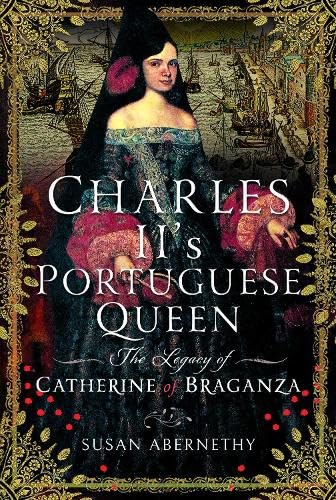
Book Deal: 25% off Charles II’s Portuguese Queen: The Legacy of Catherine of Braganza

Barnes and Noble US is offering members 25% of pre-orders until April 25, 2025. Order your copy of Charles II’s Portuguese Queen: The Legacy of Catherine of Braganza today for delivery on June 30th.

https://www.barnesandnoble.com/w/charles-iis-portuguese-queen-susan-abernethy/1147058576?ean=9781036121648

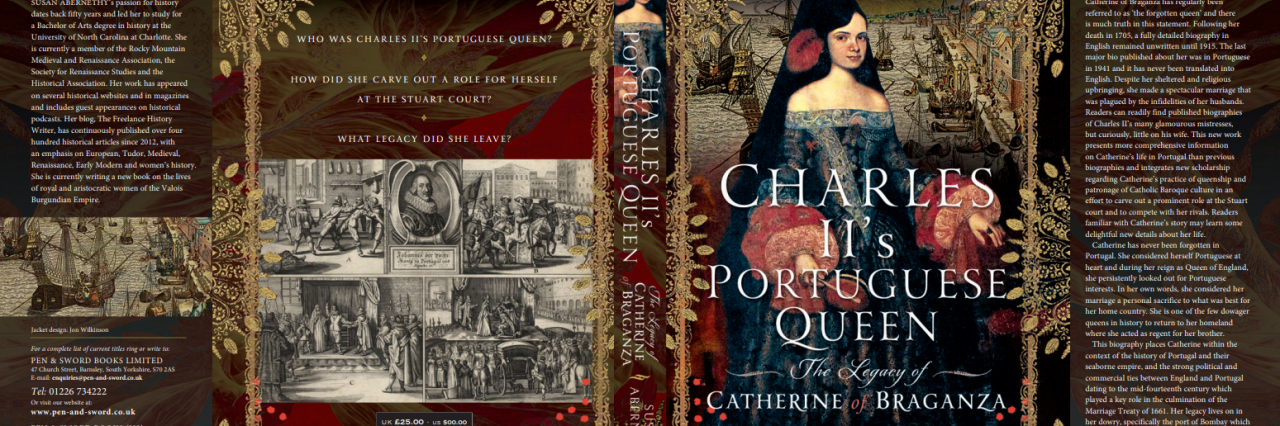
Charles II’s Portuguese Queen: The Legacy of Catherine of Braganza is now available for pre-order

Exciting News! The Freelance History Writer’s debut book Charles II’s Portuguese Queen: The Legacy of Catherine of Braganza is now available for pre-order. Click on the links below and order your copy today.

To order for shipping to the United States:

From Blackwell’s Booksellers

To order for shipping to the UK and elsewhere in the world:

From Amazon.co.uk

From Pen and Sword publishers

Book Review: “Burghley: William Cecil at the Court of Elizabeth I” by Stephen Alford

This book has been on my shelf for some time and I’ve finally had a chance to read it. My knowledge of William Cecil and his role in Queen Elizabeth I’s reign was moderate but I wanted to know more. He certainly loomed large as private secretary and as Lord Treasurer and it is clear his influence was paramount.

Alford had access to all of Burghley’s papers and this book is not really a standard biography. He concentrates on Cecil as a man with glimpses into Burghley’s personal life. There’s a good deal of information on Burghley’s homes of Cecil House on the Strand, Theobalds and Burghley house. Alford stresses how Burghley was a dynast and had a keen interest in genealogy and family trees. He kept meticulous records on every aspect of his life, personal and work related, leaving a large archive for his son Robert to utilize as a minister in Elizabeth’s government, as well as James I’s.

Alford gives lots of interesting details about what Cecil and his family ate, how he entertained the Queen when she visited, his interest in gardening, his illnesses and the hiring of doctors to treat him and the taking of the waters as a cure. The section of Cecil’s early life and his career in university is fascinating. Cecil’s family worked for the earlier Tudor monarchs and introduced William to his career in the government. Cecil worked for Henry VIII, Edward VI, Mary I as well as Elizabeth. Contacts made when Cecil was in school served him throughout his life.

Perhaps the most compelling thing about this book is the intricate particulars of how Cecil strove to bring down Mary Queen of Scots. Alford tells us Cecil operated mostly with words and printed material. He had his own propaganda machine and intelligence network. Using these, collaborating with his protégé, Sir Francis Walsingham, they concocted a plot to implicate Mary Queen of Scots to kill Elizabeth and place herself on the English throne. This is really great stuff and worth the price of the book. For anyone with an interest in the life of William Cecil and intrigue at the Tudor court, I can highly recommend this book. A very enjoyable read.

Book Review: “Catherine of Braganza” by Janet MacKay

Mackay Braganza book cover


I’ve been doing some research on the seventeenth century and found a used copy of this book, originally published in 1937.  MacKay wrote this twenty-nine years after Lillias Campbell Davidson wrote her definitive biography.  I have been unable to find any biographical information on MacKay, who authored one other book.

There are many primary sources documenting Catherine’s life.  MacKay’s writing is flavored with description and fantasy but overall she adheres to the historical truth.  I found Mackay has a considerable amount of insight into the personalities of Catherine of Braganza and King Charles II and it makes for interesting reading.

The first chapter on Catherine’s life is short, about twenty pages but this is the only part of Catherine’s life that is not well-documented.  The narrative then picks up momentum and describes the various negotiations regarding her marriage to Charles II, the newly restored Stuart King of England.  There’s a great description of Catherine’s leave-taking of her mother, her brothers and her beloved Portugal.  Once she is in England, her troubles begin with the difficult Lady Castlemaine and Charles’ insistence that she relent in allowing Castlemaine to become a Lady of the Bedchamber.

MacKay gives a succinct and compelling retelling of the Popish Plot which threatened Catherine’s life.  Although her time in England had its ups and downs, Charles stood by her the entire time.  She was devastated by his death in 1685.  Catherine remained in England another seven years and worked tirelessly to return to Portugal.  Her marriage contract allowed this but she had a difficult time getting a ship to take her home and some illness which delayed her.  Astonishingly, there are eighty letters written by Catherine in the British Library, many of them written to her brother regarding arrangements for her return to Portugal.  MacKay quotes these letters extensively to tell the story.

The last few years spent by Catherine in Portugal are well covered here.  The book has several portraits.  There is an adequate bibliography but it is poorly footnoted as many books were from this era.  Nonetheless, MacKay has written an insightful biography which I enjoyed very much.

Book Review: “John Dudley: The Life of Lady Jane Grey’s Father-in-Law” by Christine Hartweg

John Dudley, Duke of Northumberland is an enigmatic character in Tudor history. He makes his appearance during the last days of King Henry VIII and came to great prominence during the reign of King Edward VI. He was largely responsible for the execution of Protector Edward Seymour, Duke of Somerset and for the short reign of Lady Jane Grey.

Christine Hartweg has a fascination for Robert Dudley, Earl of Leicester, the great favorite of Queen Elizabeth I. By extension, she has done meticulous research into Leicester’s father resulting in this biography. There is great detail here on the personal life of John Dudley including his early life and the execution of his father after the death of King Henry VII. It is interesting to note he had a devoted relationship with his wife, Jane Guildford. Her father had been Northumberland’s mentor and the couple had a large and loving family.

Hartweg recounts Northumberland’s rise to power including his clashes with the Duke of Somerset and his close mentoring of King Edward VI. Northumberland was a great proponent of the Protestant religion. This led him to influence King Edward to modify his will and name his cousin Lady Jane Grey as his successor. Northumberland arranged a marriage between Jane Grey and his son Guildford. It is uncertain if he forged this match specifically so his son could be king and he could retain some of his power. This is an intriguing question.

Another intriguing question is whether Northumberland genuinely repudiated his Protestant faith and became a true Catholic. Or was he just trying to save his own skin? The truth is we will never really know. It is clear that Queen Mary I didn’t believe him and Northumberland was unable to avoid execution. There are no definitive answers to these questions but Hartweg does a great job with the historical evidence and gives us all the possibilities. This book is highly recommended for those interested in the career of John Dudley.

Book Review: “The Myth of Bloody Mary” by Linda Porter

This is the third biography I’ve read on my list in doing research. While they have all been good so far, this is the best for several reasons. It is clear that Mary has been much maligned by the vicissitudes of history. She is hated and misunderstood and is best remembered for the burning of heretics during her reign, mostly due to the work of John Foxe and his “Book of Martyrs”. Porter does a masterful job of cutting through all the myths and gives us incredible insight into the personality of Mary and the circumstances of her time as Queen of England.

Ms. Porter gives us a vision of what Mary was thinking from an early age and how she was treated by her parents. In the beginning, Mary was considered a sparkling princess, given a household of her own, the best classical education and music instruction, beautiful clothes and jewels. Even though she was not in the presence of her parents for any extended period of time, she adored them. This made it all that much harder for her to accept the high intensity treatment by her father when Henry VIII repudiated her mother and demoted Mary’s status. For a long time, Henry didn’t acknowledge Mary as his heir. He finally did and then withdrew the endorsement.

Mary never recovered from the stress of her complete and utter submission to her father. She then spent several years in relative peace, keeping her thoughts to herself and out of trouble. When her brother Edward VI reigned, Mary was under pressure again. When he died, Mary faced her greatest challenge. There were those who put forth Jane Grey as Edward’s successor and Mary risked all to take the throne from Jane. It was a great triumph and showed Mary’s courage and tenacity.

Once Queen, Mary had many issues to contend with. Her council was always at odds. Her choice of husband didn’t go down well and her phantom pregnancies were highly unusual. Philip did treat her appropriately and with complete respect but left England as soon as he could. There were several rebellions against her but she rose to the challenge and deflected the danger. Her efforts to return England to the Catholic Church didn’t make much headway. The kingdom suffered from famine and pestilence in the last year making things that much more difficult for Mary. In the end, Mary herself succumbed to the rampant influenza.

I loved this book for the insight into Mary’s personality and Mary’s vision for England. Of the three books so far, Porter gives the best explanation of Mary’s persecution and execution of the Protestant martyrs, putting it into the context of what was happening in Europe at the time. She also explains how Mary paved the way for her sister Elizabeth, giving her a template and good foundation for her long reign. Porter goes a long way toward restoring Mary’s reputation as the first English Queen Regnant. This is a really balanced reflection on her accomplishments.

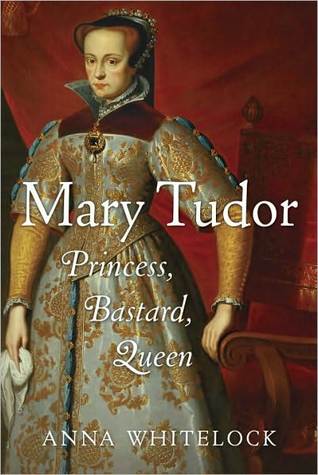
Book Review: “Mary Tudor: Princess, Bastard, Queen” by Anna Whitelock

I’m in the midst of reading several biographies of Mary Tudor which I’ve had on my bookshelves for a long time. It is an interesting exercise to see how each writer views the subject and writes about her differently. I know I shouldn’t compare but it’s hard not to.

The first book I read was John Edward’s biography which is a more academic and scholarly book. While it gives good insight into Mary’s personality, Edward’s expertise in Spanish history gives the book more of an emphasis on her marriage to Philip II as well as her mission to return the English church to Catholicism. This book is much different.

Whitelock’s writing is fast, breezy and easy to read. It seems more like novel than an academic work. There’s nothing wrong with this, it’s just different. There is a great deal of documentation on Mary’s life. One advantage to this volume is the author uses the subject’s real words from the archives and manuscripts of the time. This gives the book a real immediacy and increases the intrigue. I like how she quotes letters and ambassador’s documents.

The book is divided into sections just as Mary’s life was delineated. John White, Bishop of Winchester gave the sermon at Mary’s funeral. He says of Mary: She was a King’s Daughter, She was a King’s Sister, She was a King’s Wife, She Was a Queen, and by the same title a king also. So Whitelock divides the book into sections based on these parts of Mary’s life. There is a family tree, a beautiful selection of color photos and an extensive bibliography in this book. I highly recommend it. Now on to Linda Porter’s biography of Mary.

Book Review: “Crown of Blood” by Nicola Tallis

The subtitle of this book is “The Deadly Inheritance of Lady Jane Grey”. There are several biographies available on the life of Lady Jane Grey. This is a new one by historian Nicola Tallis published in December 2016.

I have to give Ms. Tallis a lot of credit. This is a well-written, well-footnoted and obviously well researched look at the life of Lady Jane Grey. Tallis gives us a great deal of detailed background on Jane’s family. I especially liked the description of Jane’s father, Henry Grey, Duke of Suffolk. He has a well-deserved, disreputable reputation and Tallis explains why.

Tallis also has examined the reputation of Jane’s mother Frances Brandon. She believes the status of Frances’ character has suffered because of one comment by Jane in an interview. I believe Nicola is right. It is easy to lay 21st century values on the past which is what has happened here with Frances. If we examine Frances’ manner in dealing with the ever-changing politics of the Tudor era, she appears to have survived where the rest of her family didn’t. This is greatly to her credit.

As for Jane, Tallis describes her family life, her education and her correspondence with learned Protestants on the continent, her marriage and her elevation to the throne of England and her downfall in spectacular detail. It is almost as if you are there with Jane. Tallis uses direct quotations from primary sources to tell Jane’s sad story.

There is a section of wonderful color illustrations in the book with portraits of the main players. There are genealogical tables for the house of Tudor, Grey and Suffolk and a timeline of Jane’s life. The appendixes cover the lack of portraits of Jane, a transcript of her debate with Dr. John Feckenham shortly before her death and a list of places to visit to follow in Jane’s footsteps. Tallis has written a very comprehensive bibliography which is a valuable resource for Tudor historians. I cannot recommend this book enough. It was hard to put it down.

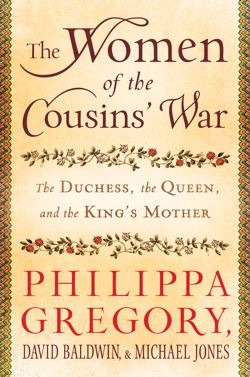
Book Review: “The Women of the Cousins’ War” by Philippa Gregory et al

Apparently Philippa Gregory, a prolific writer of historical fiction, came up with the idea of collaborating with historians David Baldwin and Michael Jones to produce a book with the biographies of three women who played a significant role in the Wars of the Roses. I haven’t been able to find any primary references that state categorically that this conflict was called the “Cousin’s War” contemporaneously. If anyone can direct me to proof of this, please comment below. The women covered are Jacquetta of Luxembourg, mother of Queen Elizabeth Woodville, Queen Elizabeth Woodville herself and Margaret Beaufort, mother of King Henry VII, the first king of the Tudor dynasty.

The introduction of the book is written by Gregory. It seems to be a kind of essay where she discusses the process of writing historical fiction and non-fiction. This section of the essay doesn’t make a whole lot of sense and I’m still not sure what her point is. She then goes on to discuss the history of the study of women’s history. This section is certainly more interesting. Women’s history has made great strides in recent years. But she discusses how women have been and are discriminated against in history and historical studies. She then proceeds to disparage the historical record of Margaret Beaufort, saying none of it is believable and calls her a virtuous and pious stereotype. I’m really puzzled by this. She appears she to have a bias against Beaufort and the Lancastrians.

Gregory wrote the essay on Jacquetta of Luxembourg. This chapter of the book has what little factual information there is on this intriguing woman. But it is basically a short history of the Wars of the Roses and is filled in with lots of “Jacquetta probably attended…” or “Jacquetta was possibly there…”. This basically confirms the fact there is precious information about her in the historical record which is really a shame.

The late David Baldwin, whom I had the pleasure of meeting in 2014, wrote the essay on Elizabeth Woodville. This chapter is an abridged version of his book, “Elizabeth Woodville: Mother of the Princes in the Tower” which was first published in 2002. Of course the essay is excellent but if a reader is looking for more in depth information, I would recommend the book itself.

The essay on Margaret Beaufort was written by the expert, Michael Jones. Again, this is an abridged version of the author’s own book “The King’s Mother: Lady Margaret Beaufort, Countess of Richmond and Derby” by Jones and Malcolm Underwood. The essay is very good but I would also recommend Jones and Underwood’s biography or that of Elizabeth Norton if you want a complete picture of her life.

I have to say this is a strange book. I’m sure it was published with good intentions. The authors opted not to footnote their work and instead have given notes and bibliographies at the end of each chapter. There are also several black and white and color photographs, family trees, a list of battles of the Wars of the Roses and a map showing the location of the battles. If the reader is seeking quick and brief knowledge on these women and a short run down on the Wars of the Roses, this is your book. But I strongly suggest reading the full biographies for better and fuller historical material.