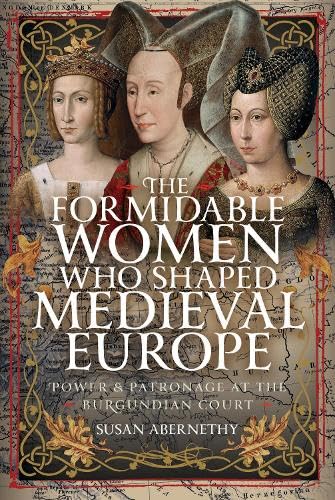
The Formidable Women Who Shaped Medieval Europe: Power and Patronage at the Burgundian Court is now available in the US and Canada.
Purchase the book here: Amazon Canada
Also available around the world at Bookfinder.com
The Formidable Women Who Shaped Medieval Europe: Power and Patronage at the Burgundian Court is now available in the US and Canada.
Purchase the book here: Amazon Canada
Also available around the world at Bookfinder.com

Heidi over at Adventures of a Tudor Nerd: Exploring the 16th Century and Beyond has read and reviewed The Formidable Women Who Shaped Medieval Europe: Power and Patronage at the Burgundian Court. Have a look at her review and order your copy here for delivery by Christmas: The Formidable Women Who Shaped Medieval Europe at Blackwell’s booksellers
Throughout European history, we tend to think about the countries as a whole when it comes to the political sphere of influence. We think of the big countries like France, Spain, Italy, Germany, Austria, and England as having the most impact, but we have to consider that during the Middle Ages, duchies held immense power. Take, for example, the Duchy of Burgundy, also known as the Burgundian Empire. It was a part of France, but that does not mean that the dukes stayed on the side of the French. The Burgundians used their influence to expand and marry into the medieval European families, affecting European history as a whole. While we tend to focus on the Dukes of Burgundy, we should be paying attention to the women of this duchy. That is why Susan Abernethy chose to focus on these women in her latest book, “The Formidable Women Who Shaped Medieval Europe: Power and Patronage at the Burgundian Court.”
I would like to thank Pen and Sword Books and NetGalley for sending me a copy of this book. I enjoyed Susan Abernethy’s first book about Catherine of Braganza. When I heard that she was writing a book about medieval Burgundian women, I was intrigued. I know a little bit about historical figures connected to Burgundy, but I didn’t know much about the history of the duchy itself, so I was excited to learn more.
Abernethy begins by giving her readers a brief history of how Burgundy became a kingdom and a duchy of France. While the history of Burgundy is extensive, we are mainly focusing on the Valois Dukes of Burgundy and the women in their lives. The Valois Dukes of Burgundy were Philip the Bold, John the Fearless, Philip the Good, and Charles the Bold. While this is primarily about the women of Burgundy, it is important to understand the political and military landscape that these women had to deal with in Burgundy and other countries during this time.
The bulk of this book focuses on the women of the Burgundian empire, starting with Margaret of England, Duchess of Brabant, in the 13th century, and ending with Queen Juana of Castile, in the 16th century. We get to hear stories about duchesses and queens, countesses and diplomats, and even a saint. They had to deal with wars, international diplomacy, family drama, and husbands who were not faithful. There were some familiar figures like Mary of Guelders, Queen of Scots, Jacquetta of Luxembourg, Margaret of York, Duchess of Burgundy, and Margaret of Austria, but the majority of these women were new to me, which was very exciting.
It’s a lot of ground to cover, but Abernethy has a way of telling the stories of women comprehensively. I thoroughly enjoyed learning about Burgundy and these extraordinary women who made the duchy an empire. If you are someone who wants to learn about the Duchy of Burgundy, I would recommend you read “The Formidable Women Who Shaped Medieval Europe: Power and Patronage at the Burgundian Court” by Susan Abernethy.

Pen & Sword is having an autumn sale! You can pre-order my upcoming book, The Formidable Women Who Shaped Medieval Europe: Power and Patronage at the Burgundian Court for 30% off. Pre-order your copy today! (UK residents from the Pen & Sword website only until October 31. Book will be released on October 30)
The Formidable Women Who Shaped Medieval Europe: Power and Patronage at the Burgundian Court
You can also purchase Charles II’s Portuguese Queen: The Legacy of Catherine of Braganza for 30% off

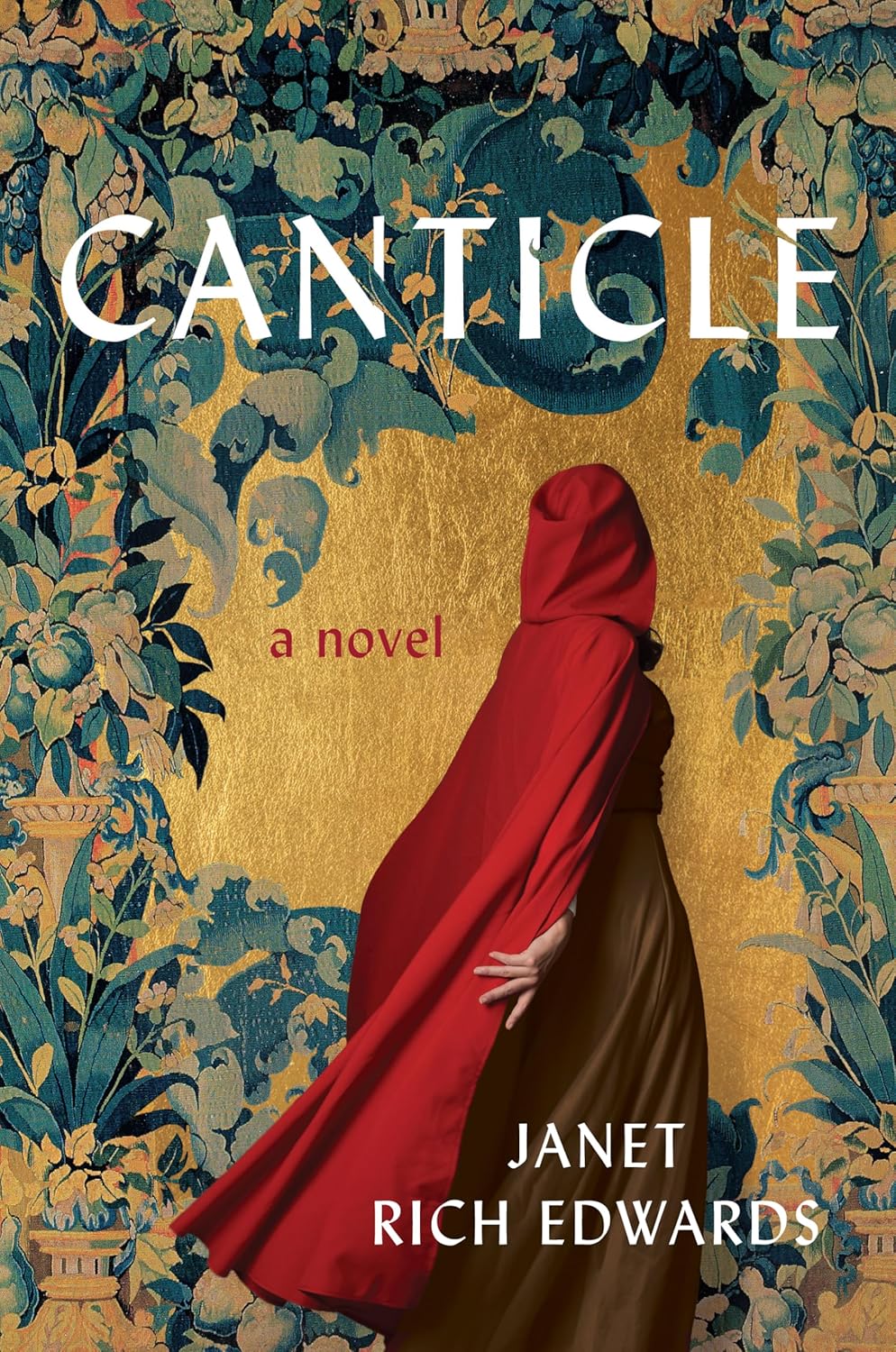
Set in the 13th century and in the city of Brugge (Bruges) this complex novel of faith, fairness, hypocrisy and the plight of women in a world of men fills in many voids in the contemporary understanding of the role of female mystics and the place of women in the church. Although much is known about the beguines, a sect of female monks prevalent in Europe during the years before Protestantism took hold, the intimate personal view revealed here touches close to the emotional life of these remarkable people.
Aleys is a young girl born to a family of wool merchants who is visited by visions of a divine source urging her to find her way to God. The images she sees are bright, compelling, frightening and profound. When she voices a wish to become part of the Franciscan order her family is taken aback, since she has agreed to marry into a house of wealth that will assure her father a place in the guild he desperately seeks. Lukas, a Franciscan friar becomes her mentor although he is perplexed that she, a mere girl, should be privy to such holy calling when his own dedication and fervor have left him without such divine inspiration. Through a series of miracles Aleys performs and the devious machinations of the local bishop, a jealous and avaricious man who is more concerned with his own promotion within the church than real religious matters she is made an anchorite, sequestered from life in a cell attached to the local church.
How Aleys deals with not only the passionate response of the people of Brugge but the plots devised by the bishop is the meat of the story. It is an intimate look at the joy and sorrow of the true prophet, blessed and cursed with vivid images and an emotional bonding with Jesus, Mary and God. A thread dealing with the clandestine translation of the gospel into Dutch for the benefit of common folk who have only had access to the words of the Bible through priests who often did not understand the Latin or the meaning of the verses complicates the lives of Aleys, the beguines, and Lukas, her tortured mentor.
An understanding of the genesis of saints and martyrs who dominated much of the religious thought of the time is available to the reader who wishes to understand more about Christianity, women and the Church. A potent narrative illuminating the rapture and the pain of the zealots who often found themselves at odds with the established keepers of the faith is limned with skill and clear evidence of extensive research and soul-searching on the part of this author who is an academic as well as a novelist.
Shelf Talker: An intimate look into the lives of religious visionaries who became martyrs and saints as well as the intriguing sect of the beguines, a female sect of monks could easily be the basis of a course on women’s issues and/or comparative religion. Well written, compelling narrative and a gripping personal story of a young girl’s transformation from common to divine.

My initial reaction of disbelief to the new ‘revelations’ regarding the Princes in the Tower has not changed, even after viewing the Channel 4 program on US Public TV. In fact, that program was just embarrassing. There is no doubt the documents discovered and viewed are authentic and from the time period in question. Of course, Maximilian provided troops and supplies. Yes, Perkin Warbeck promised the ruler of Saxony he would repay his loan of three hundred thousand florins (worth about $3.4 million dollars in today’s money). Yes, Warbeck signed documents “Richard of England”. These are indisputable facts.
However, these documents are not proof the princes lived. Can anyone explain to me how the actual Richard, Duke of York, assuming he escaped from the Tower of London, was in possession of a royal seal at the age of nine years old? And, after traveling all over Europe as a young child, how did he still have that seal to sign and authenticate a document in his later years? They never raised this question in the program. And Margaret of York, Duchess of Burgundy naming a room in her palace ‘Richard’s room’ is not proof the actual prince lived.
The dialogue in the scene at the site of the Battle of Stoke Field was a bewildering muddle. Was it a ten-year-old boy at the battle? Or was it the sixteen-year-old King Edward V? The chronicles are also confused as Lambert Simnel claimed at first to be the second son of King Edward IV, Richard, Duke of York. When there were rumors that Edward, Earl of Warwick, (someone who actually did have a claim to the throne), had died, Simnel (or those who promoted him) proclaimed him to be Warwick. At no time did the boy profess to be King Edward V. This is really an unbelievable stretch by the presenters.
The scene with the biographer of Perkin Warbeck was particularly surreal. Reciting a story straight out of historical fiction, she made the events seem totally unbelievable. The look on the lawyer’s face was priceless. What I found most egregious is how the entire program was presented without any historical context whatsoever.
The life and times of these pretenders and the noblemen and rulers who promoted him must be taken in context. In order to spook King Henry VII, the ruler of a new dynasty, they all had their own personal agendas. If Perkin Warbeck really was the true king, why did nobody rise up in support of him in his three attempts to invade England? The story of Warbeck in particular had an element of implausibility. But it really did happen and it’s one of the reasons history is so intriguing and fun.
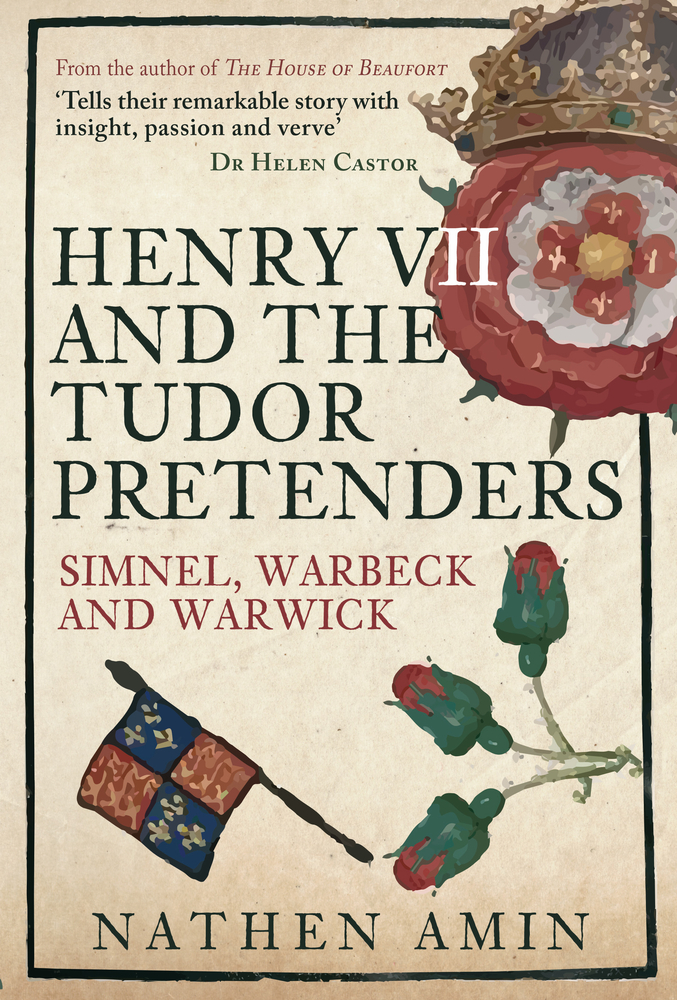
I would urge everyone to read Nathen Amin’s latest book, “Henry VII and the Tudor Pretenders: Simnel, Warbeck and Warwick”. This is a measured, even handed account of what really happened regarding the men who feigned being the missing Princes in the Tower, putting them in their proper context in history.


If you are a lover of medieval history, you will really enjoy this book. This is storytelling at it’s best. Based on real events and the last medieval judicial duel to the death in France, the author gives deeply detailed insight into the personalities involved as well as information on the clothing, the armor, the horses, the castles and the lifestyle of ordinary medieval nobility and on the administration of law in medieval France. And if you have seen the movie, this will fill in some of the blanks from the screenplay. I can recommend both the book and the movie.


Personal note: This book was on my shelf of my father’s extensive book collection and I remember being intrigued by it as a young child. Perhaps it was just the cover which probably had some Flemish piece of art on it. Or maybe my interest in the Middle Ages began at an early age. Whatever the case, I purchased a copy of it a while ago and recently read it.
In doing research in the reigns of the Valois Dukes of Burgundy, this book always pops up as a reference. I had the impression the subject of the book was the Middle Ages in general but upon learning Huizinga wrote about Burgundy and France, it seemed like it was time to dive in. Huizinga states he set out to write about medieval art as the Middle Ages were transitioning into the Renaissance. But he discovered, in order to explain the art, he had to delve into the medieval mindset.
To my surprise, Huizinga gives a complete description of how medieval people viewed the world. The first chapter alone, titled “The Violent Tenor of Life” is full of erudite gems, acknowledging the contrasts between suffering and joy, adversity and happiness, in which every event and action is embodied in expressive and solemn forms to the dignity of ritual. Calamities and indigence were difficult to guard against. All things in life were proud and cruel at the same time and presented themselves to the mind in violent contrasts and impressive forms.
Huizinga talks of the uninterrupted spectacles of executions, the luxurious entries of princes, the jousting tournaments, the religious and spiritual processions, sermons of itinerant preachers, religious reverence and pomp and grandeur and the emotions and tears of public mourning. He discusses chivalry and courtly love, the poetry of the troubadours and writers, as well as the prose and the lives of the religious in monasteries and convents. The lords of the era lived a life of honor, revenge, pride and asceticism. The fashion of the times mirrored these values, with the long-pointed toes of shoes, sumptuous fabrics and furs and the high hennins and the shaved foreheads and temples of the women.
Religious thought is crystalized into images. The art of the era followed fixed principles, mostly religious and classical themes with a strict hierarchy. The only way an artist could put his personal touch to a painting was by adding specific and minute details in the background. The sculptors followed these same principles although they had less leeway in expressing themselves than the painters.

One chapter in particular I found fascinating: “The Vision of Death”. The words and sermons of preachers morphed into expressing themselves into the popular woodcut. An excellent of example would be Hans Holbein the Younger’s “Dance of Death” series of woodcuts from the early 1520’s. There were poems and treatises on expressing the violence of death, the putrefying corpse and details of decomposition. These were turned into paintings and sculptures, immortalized in memento mori and seen in cadaver monuments and images of the macabre dance.

Huizinga’s language and expression are exquisite. He distills the writings and art of the age into portraying the medieval mindset as the Middle Ages came to a close. Admittedly, if I had read this book ten years ago, it might not have made sense. But after studying medieval times for many years now, it all comes together in describing what I have learned. His words explain the hysterics of Margery Kempe in her autobiography. It clarifies why the people of England during the reign of King Henry VIII didn’t conceive of him as a monster. This book is a classic and should be read by anyone who aspires to learn about the Middle Ages.

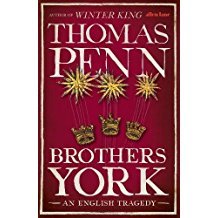
Thomas Penn’s “The Brothers York: An English Tragedy” is chock full of revelations. His book on King Henry VII “The Winter King”details Henry’s creative accounting and this book does the same with King Edward IV. Penn breaks down the inventive financing Edward IV engaged in to raise funds for the government and for himself. Much of the money garnered by these methods went straight to the king’s chamber rather than the Exchequer. The raising of bonds from nobles in exchange for good behavior was started during Edward’s reign and Henry VII just continued the practice.
Penn explains over and over again how Edward IV manipulated the inheritance laws to confiscate property from the nobility and in turn, give it to his brothers and most loyal followers. This practice obviously did not endear Edward IV to the nobility. These transactions caused resentment and anger toward the king, perhaps more so than his favoritism of the Woodville family. And Penn, rightfully so, emphasizes that any gains made by the Woodville family only occurred at Edward’s pleasure.
The manipulation of the inheritance laws greatly concerned King Edward’s brother George, Duke of Clarence. Before Edward married Elizabeth Woodville and had children, George was the king’s heir. This went to his head, giving him a sense of entitlement. George was aggrieved and angry with Edward for giving and taking away property and for the loss of his position as heir to the throne. Foolishly, George rebelled against Edward, and we all know how this ended.
But to me, there is one startling revelation. Penn really only hints at this and never comes right out and says it point blank. Richard III was an alcoholic. He mentions Richard was seriously drinking large quantities of wine after he became king. This was so intriguing to me. In his footnotes, he cites an article in an academic journal titled: “Multi-isotope analysis demonstrates significant lifestyle changes in King Richard III” written by four researchers from the British Geological Survey and from the University of Leicester.
They examined the bones of Richard III and concluded he was eating a diet of rich food and significantly increased his wine consumption during his years as king. The scientific evidence suggests Richard was under great stress and drinking heavily. In his case, it was easy to become king but not so easy to execute royal duties and remain king. This goes a long way in explaining some of Richard’s behavior and decisions.
All the little intricacies and relationships between the three brothers and the courtiers and nobles of the court are examined intensely by Penn with extraordinary perception and discernment. To me, studying the Wars of the Roses always made me uncomfortable because none of it made complete sense. Penn’s insight into the character and machinations of Edward IV, George, Duke of Clarence and Richard III has really gone a long way toward explaining this decades long conflict. It all becomes crystal clear and is pretty fascinating. This is one of the best books I’ve read in the last ten years. I highly recommend it.

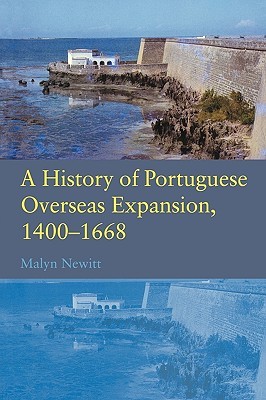
I’ve been doing some research in Portuguese history and their seaborne empire and found this volume. Having just finished Charles R. Boxer’s book on the Portuguese Seaborne Empire, I was a little concerned this book might just be a rehash of Boxer’s. But I discovered there was no need to worry because this one is completely different. While Newitt covers the same topic, this is a more in-depth survey of the era.
Malyn Newitt is Charles Boxer Professor of History at King’s College, London, the same university where Boxer taught. In this book, he examines how the ideas and institutions of late medieval society, as well as Portugal’s rivalry with Castile, were utilized to expand into Africa, Asia, Southeast Asia and the Atlantic islands allowing the country to become a global commercial powerhouse. He scrutinizes the origins of Portuguese expansion up until 1469, Portuguese expansion from 1469-1500, expansion in the East and the Atlantic from 1500-1515, the Portuguese diaspora and the empire at its height in 1580.
At that point in time, the Portuguese empire faced a huge challenge to its dominance from the heavily armed and better resourced English and Dutch which lead to a steep decline. The empire was resilient and survived in a reduced capacity from 1620 until the end of this survey in 1668. Newitt’s last chapter is an overview of the entire era.
Newitt gives a chronological survey of each of the exploratory voyages made by the Portuguese pioneers. At first these journeys were sponsored by the Portuguese monarchy with any new lands discovered coming under the aegis of the king. Motives for this exploration were trade, scientific discovery and a great desire to spread Christianity through missionaries. In the beginning, the king managed to keep some control over the trade and profits but as the empire grew, an “unofficial” empire came into being.
Reading about this era gives some perspective to our current global economic situation. I enjoyed this account of Portuguese expansion. All areas are covered such as Africa, Brazil, India, Southeast Asia, Japan, China and Sri Lanka. The book includes a glossary, maps and a complete bibliography.

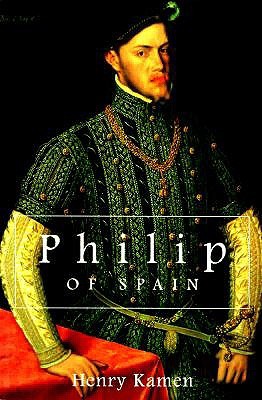
Kamen’s seminal biography of King Philip II of Spain was published in 1997 and I remember when I read it then I enjoyed it very much. Since reading Geoffrey Parker’s new biography of Philip, I decided to read this book again. I’m glad I did as it gave me a new perspective.
Kamen’s book is not as detailed as Parker’s. Parker has a lot more information on Philip’s early life and the writing is based more on Philip’s actual words from existing and newly discovered documentation. However, Kamen’s book has a great overview of Philip’s reign. He breaks down Philip’s time in power into several sections by years with chapter titles such as The Formative Years, The Renaissance Prince, Soldier and King, Towards Total War and The Time of Thunder to name a few. For information on the man himself, the two chapters with the most interesting material are titled The World of Philip II and The Statesman. These cover the man himself, his wives and children, his foreign policy and other noteworthy tidbits of information about Philip as a person.
Because I had just read Parker’s biography, it was thought-provoking to note the differences in opinion between the two authors. Kamen mentions throughout this book how he disagrees with Parker on several points, some minor but with several major differences. For example, Kamen does not believe Philip II had anything to do with the murder of Juan Escobedo while Parker goes into great detail in an effort to prove Philip did. It is intriguing to consider the two points of view.
This book is enhanced with maps, a family tree and photo section. It appears in some ways that Kamen is an apologist for Philip but this does not detract from his perspective on the life and reign of this significant and in some ways remarkable king. I highly recommend this book and would suggest if the reader has the time and opportunity to read both this biography and Parker’s. Kamen’s book has definitely withstood the test of time since its publication 21 years ago.

 The Freelance History Writer Notes and Reviews
You must be logged in to post a comment.