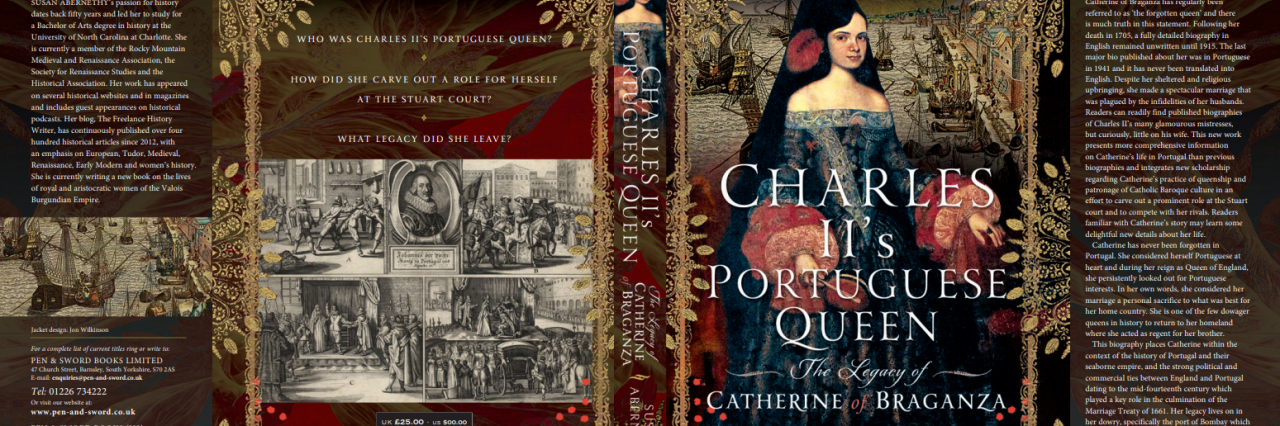
Book Review: “The Medieval and Post-Medieval Image of Eleanor of Aquitaine” by Michael R. Evans

inventing-eleanor-book-cover

Everybody loves Eleanor of Aquitaine. But did you know there are a lot of myths and legends that surround her story? Michael Evans has studied all the evidence from primary sources forward in an effort to find the real story of this popular Queen.

Evans begins by saying the actual evidence of Eleanor’s life is scarce and a lot of it is written by chroniclers hostile to her politically. He also argues that she is not any more extraordinary than any other medieval woman of her time based on the historical evidence. He then recounts the two categories of stories about her: the Black Legend and the Golden Myth.

The Black Legend myths include how she killed the fair Rosamund Clifford, mistress of King Henry II and the stories of her alleged incest with her uncle Raymond of Toulouse. He tells how the legend of the murder of Rosamund first appeared and then grew hugely out of proportion. The evidence of the incest is negligible but it was common practice to blacken a powerful woman’s name with tales of sexual misconduct.

The Golden Myth includes the stories of Eleanor dressing as an Amazon to go on Crusade and how she and her daughter Marie presided over scenes of courtly love in Poitou. Both of these myths were debunked a long time ago but he shows how they got started and continued to have life in books and literature. (For more on the legends surrounding Eleanor’s life, click here.)

There is quite a bit in the book about how Eleanor has appeared in literature, fiction and non-fiction, on stage, in the movies and on television. Katherine Hepburn in “The Lion in Winter” is especially commended in her portrayal of Eleanor. Anyone who is interested in Eleanor will not be disappointed in this book. It sheds an eye-opening light on her story. It is my opinion that Eleanor’s life was remarkable even without the legends.

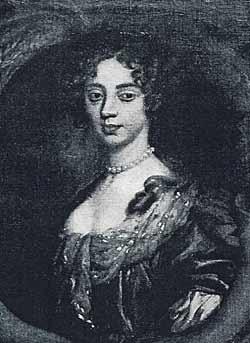
Book Review: “Lucy Walter: Wife or Mistress” by Lord George Scott

lucy_walter

I was looking into the life of the woman who was the mistress of King Charles II before he became king with the Restoration of the Monarchy in England in 1660. Her name was Lucy Walter and in the Oxford Dictionary of National Biography entry on her written by Robin Clifton, this book is listed as one of the sources for the article. I knew there was no contemporary biography of her so I thought I would check it out. I happened to find a cheap used copy of the book on the internet.

It turns out that Lord George Scott is a descendant of Lucy Walter’s family and this book was published in 1947. Scott passed way in February of that year, before the proofs of the book came back from the printer. The task of reading the proofs and readying the book for publishing was taken up by Scott’s son and an assistant. The author’s intention in writing this book is to prove that Lucy Walter was in fact married to Charles.

Lucy became Charles’ mistress early on during his exile after the execution of his father King Charles I. She gave birth to a son, James Crofts, later called James Scott in April of 1649. Charles at all times acknowledged James was his natural, illegitimate son. Charles also insisted he never married Lucy Walter. He never faltered in this assertion and swore to it in front of his councilors twice. There is no existing written evidence that he married Lucy.

Scott uses this book to present many arguments that Lucy was married. He insists she came from a good family and would not have turned into a fallen woman. He cites many sources. He especially mentions the letters from Charles’ sister the Princess of Orange who refers to Lucy as Charles’ wife. He talks about witnesses to the marriage itself. He says Lucy had paperwork showing her marriage was legal and she turned this over to John Cosin, later bishop of Durham when she was on her deathbed. The papers were supposedly kept in a black box which later disappeared.

The book has some wonderful illustrations and a family tree for Lucy. It also gives some good biographical information on her life. But Scott’s convoluted arguments are presented in a jumbled order. Characters come and go in the story and it’s all very confusing. In the end, I’m afraid he is not very convincing. All of his contentions just don’t add up. In looking at other evidence, there is no doubt Lucy was a woman of loose morals and caused a lot of trouble for Charles. He son James also didn’t come to a good end during the reign of his uncle King James II. While the basic premise of the story is of interest, Scott does not succeed in his mission of clearing Lucy’s name.

Book Review: “France in the Sixteenth Century” by Frederic J. Baumgartner

france in the sixteenth century book cover

I’ve been reading a lot of French history since the first of the year. The selections included a general survey, a secret history of Paris, medieval Paris and the Norman Conquest among others. But I have to say, sixteenth century France really intrigues me the most for several reasons. The characters of this period are really compelling and they are contemporaries of Tudor England, another of my favorite eras.

The author made a concerted choice to cover the era from the calling of the Estates General in 1484 after the death of King Louis XI up until the meeting of the Estates General in 1614, the era of the Renaissance and Reformation. Themes for the chapters of the book include the fundamental components of the Estates General: the monarch, the clergy, the nobles and the commoners. The chapters on the monarch cover the personalities of the kings, the organization of the court, the collection and spending of revenues and a summary of political events during the monarch’s reign.

The chapters on the clergy cover the challenges created by the spread of Calvinism in France and the Catholic response. For the nobility, he examines the developments in the military and under the commoner chapters, he discusses economics in the cities and the countryside. There is extensive information about the judicial system in France. He also gives an overview of cultural and intellectual changes during the century. This book really covers a great deal of social history.

Baumgartner is a professor of history at Virginia Polytechnic Institute and State University. He states in the introduction that this book is intended for upper level undergraduate and graduate students and advanced scholars looking for detailed information about the era. While the book is intended for academics, I really found it to be a fun read. There were a few sections that were dry and uninteresting but for the most part it was completely absorbing. Information I enjoyed included how revenues were collected, how food was distributed, how the judicial system worked, the lives of the nobles and the clergy and the monarchs, and the rise of Calvinism in France. Perhaps the best section for me was a succinct description of the Wars of Religion. I always wondered why there were so many petty nobles in France. I learned from this book that people could buy their way into the nobility!

The sections on intellectual and cultural pursuits were fascinating too. Baumgartner convincingly includes a lot of information on women during this era which I find refreshing. There are photos, maps and genealogical tables in the book as well as a glossary of terms which I will definitely refer to again. This book really delivers on its topic and I highly recommend it.

Book Review: “Paris: The Secret History” by Andrew Hussey

Paris the Secret History book cover

This title really intrigued me. Paris is a magnetic city just in its own right. To imagine there was a secret history was too tempting to pass up. In my ongoing effort to refresh my French history knowledge before my trip to France, I began reading.

Hussey mentions in the introduction his intention in writing this book is to emulate the work of Peter Ackroyd’s “London: A Biography”. Ackroyd’s book is splendid so this was a good sign. The first chapter covers Prehistory to the year 987 AD. I found this section most interesting. Paris was started basically on the small, swampy islands in the Seine. He talks about how the city, then known as Lutetia, was inhabited by the Franks and the Romans. The Romans built a wall around the city and it became a trading center. Next, in this chapter and in every one after, Hussey gives small tidbits of history that might not be as well known by the average reader, the so-called secrets of the city. One of the highlights in this first chapter is the death by beheading of St. Denis on Montmartre, making the name of the hill self-explanatory.

In the medieval section, Hussey give us a colorful array of characters, talking about the ordinary people. Sections include, lovers and scholars, students and streetfighters, poets, saints and thieves. In fact, the entire book is filled with details about average everyday people down to the present day. The history of Paris is filled with robbers, gypsies, drunkards, beggars as well as the nobility, merchants and the bourgeoisie. There’s a lot of information on artists, writers, poets and students and how they shaped the politics of the city over the millennia. If social history is your cup of tea, you will enjoy this aspect of the book.

Hussey obviously knows and loves the city well. He gives us details about many of the neighborhoods, even down to who and what kind of people lived on certain streets. The book has many drawings, maps and photos showing us the boundaries of the city over the years. One of the first things that struck me as I began reading this book is that it is really well written. Everything he writes is very clear with no grammatical or typographical errors. It was just a joy to read. If you are interested in French history and Paris in particular, I can heartily recommend this book.