Book Review: “The Life and Afterlife of Isabeau of Bavaria” by Tracy Adams

Adams Isabeau cover

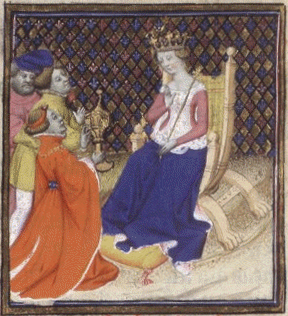
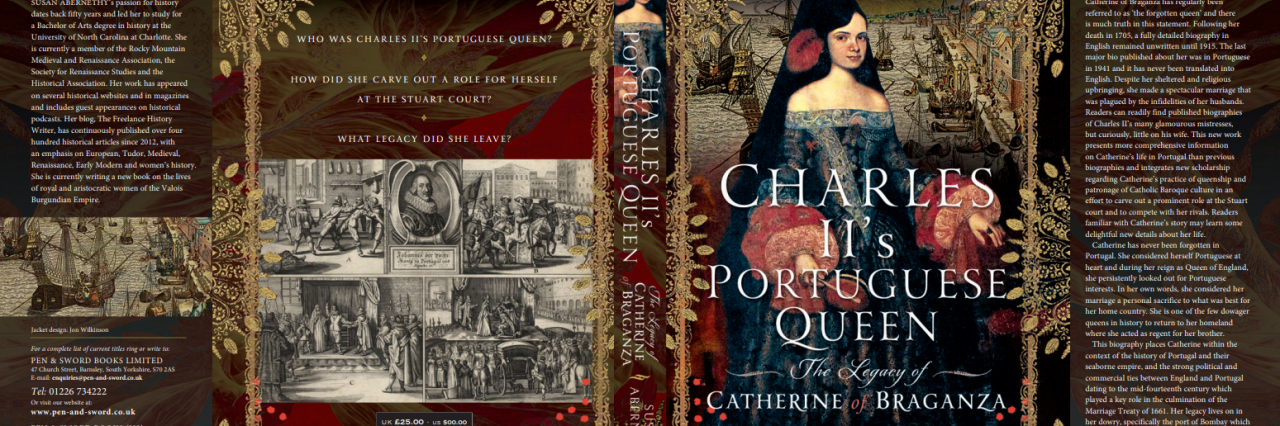
This is in no way a conventional biography of this German princess who was the wife of the mentally unstable King Charles VI of France and mother of King Charles VII in the early fifteenth century. This book is part of a series called “Rethinking Theory”. The author’s mission is to examine how Isabeau’s reputation as a reasonably competent regent and mediator came cascading down through the centuries until it was believed she was wallowing in debauchery.

Isabeau’s husband began suffering from periods of insanity and while he was ill, she would take on the role of regent for her husband and promoter and protector of her son the dauphin with the explicit trust and authorization of Charles by official ordinance. Her husband’s illness put Isabeau in unique and tenuous position. This period of French history was filled with strife as Armagnacs and Burgundians looked to take over control of the government from the ailing king while the English waged war and encroached on French territory. Adams explains medieval queens were allowed to perform the role of intercessor and mediator in various conflicts and Isabeau served as a mediator during these dark days of war and feuding among the nobility.

Adams gives us a chronology of the Queen’s life and roles throughout the book and examines all the chronicles and sources from the contemporary to the present day. She explains the various slanderous aspects of Isabeau’s reputation that appear in the sources. Then she dissects the origins of these slanders and gives plausible explanations for why they are inaccurate. There are no contemporary records of the Queen engaging in debauchery, having affairs or being obese. Also there is no evidence her household servants engaged in scandalous behavior. Adams says what biased passages in the chronicles that do exist had their source in the Queen’s enemies, namely the Burgundians. These slanders have been repeated over and over by historians for hundreds of years without footnotes and references.

The author is very clear in explaining the position of the feuding nobles and giving highlights of the history and Isabeau’s position during the troubles. She gives good arguments for her points and quotes the relevant passages from the chronicles in French as well as English. The book is full of exceedingly thought-provoking information and as a reference book on the roles of medieval queens it’s a tremendous resource. I learned a lot about this complicated and intriguing era of French history and Adams is good at defending her arguments. I highly recommend this book. It’s a terrific read.

Book Review: “Eleanor of Castile” by Jean Powrie

Powrie Eleanor of Castile

What a delightful and fun book this is. I’ve been doing quite a bit of research on Eleanor of Castile and had this book on my shelf. The back cover of the book states this is not a conventional biography of Eleanor but deals more with her death, the burial of her remains and the journey of her cortege from the north of England to Westminster along with information on the Eleanor Crosses.

The book was published in 1990 and the first chapter is an overview of the life of Eleanor, giving what sparse facts we know of her. The chapter ends with her death in Harby. The next section of the book has chapters describing the cities where Eleanor’s body rested giving many details of the locations as they existed in the thirteenth century. Oftentimes there are maps. The author gives the route Eleanor’s corpse took from Harby to London recounting the possible roads chosen and how the cortege entered each locale. For every city there is a description of what gates, churches, cathedrals, friaries and abbeys existed at the time as well as any castles or other likely housing locations. Powrie tells us which church the body may have lain in and where the entourage probably lodged overnight. In most cases this was in a royal castle or a friary.

The most interesting aspect of this book is the narrative explaining all the features and qualities of the Eleanor Crosses, the monuments King Edward I built for his beloved wife at every location where her body rested on this long journey. These Crosses are not just a memorial to the Queen’s life and King Edward’s regard for Eleanor but a symbol of royal power. Powrie tells us of the Crosses that still exist and gives drawings or photos of their appearance and how they have been restored. There are many of the Crosses that no longer exist and there are explanations for what most likely happened to them. If there are any depictions from history or possible remnants of the Crosses there are illustrations. Any records of payments made to artisans for the creation of the Crosses are given in detail.

The book ends with information on Westminster Abbey and Eleanor and Edward’s tomb there across from Edward’s father King Henry III’s burial place, next to the shrine of King Edward the Confessor. This book is a pleasant surprise and filled with pertinent information on cities and buildings in medieval England. If you are interested in the subject, I would recommend it.

Book Review: “Eleanor of Castile: The Shadow Queen” by Sara Cockerill

Eleanor Cockerill book cover

The title of this book is really fitting because there isn’t much in the way of historical records about this medieval English queen. Eleanor of Castile’s life was due for a new look as previous biographies were written years ago. Sarah Cockerill, an English lawyer, spent the last ten years doing in depth research on Eleanor and it really shows. She should be given much credit for this as she gives us all the facts known about Eleanor along with some fascinating insight into her personality. Eleanor’s marriage to King Edward I was obviously a love match, a real anomaly in English royal history. Cockerill gives us many tidbits on their relationship which is fascinating stuff.

That being said, this book is not an easy read. It’s badly in need of an editor. There are errors and omissions, as well as spelling and grammatical errors which are annoying. The narrative is not in chronological or any other sensible order. Due to the lack of sources on Eleanor, a large portion of the book deals with the history of the men surrounding her and the reader can easily get bogged down. For me, it wasn’t until about two hundred pages in that it got more focused on Eleanor and Cockerill’s insight began to become apparent. This isn’t a curl up with the cat and a cup of tea book but if you are looking for a good reference on Eleanor of Castile and thirteenth century English history, this book will fit the bill.

Book Review: “Eleanor of Castile: Queen and Society in Thirteenth-Century England” by John Carmi Parsons

eleanor of castile parsons book cover

Eleanor of Castile is one of the few medieval queens I know very little about. Apparently there is a reason for this. Very little of historical record exists about this lady. What we do know of her is she was the wife of King Edward I of England, she went with him on Crusade, she had many children, she was a prolific collector of properties and Edward built crosses in her memory. Interestingly, there are a few books about her and John Carmi Parsons wrote one of them.

This work can be considered a quasi-scholarly effort. That being said I enjoyed this book. Parsons has separate sections. The first is a section on theme and context. Specifically he tells us how little in the way of historical records there are and gives us a biographical sketch of what we know about her. He talks a little about Eleanor’s reputation through the ages: how she is considered a grasping queen at one point and a gentle and benign queen at other times in history. He talks about her many pregnancies and births and her unexpected death at the age of forty-nine. This gives us a fairly complete biographical history of her.

The next section is about Eleanor’s prerogatives, resources and administration. Parsons goes into detail about Eleanor’s sources of revenue, her household and staff, wardrobe, exchequer and treasury, and local administration. All of this is pretty fascinating stuff because it doesn’t just relate to Eleanor alone but also other thirteenth century queens. It gives us an idea of how these women lived. Chapter three is an interesting glimpse into Eleanor’s reputation as a queen. The name of this section is “Outcry and Gossip, Rumor and Scandal”. Apparently Eleanor was well known for her acquisition of properties, most likely with Edward’s overt encouragement and her methods could sometimes be dubious judging from the evidence. Eleanor’s income apparently was inadequate and she used any means necessary to increase it.

Parson’s includes a long appendix which chronicles all of Eleanor’s procurement of property where records exist. This section is forty pages long! Even if you don’t read the whole chapter, it gives you an idea of how Eleanor spent her time and increased her income. The last chapter gives an explanation of the legend and the reality of Eleanor’s reputation. Evidently, Eleanor was concerned about her reputation and how she was perceived. On her death bed, she directed an audit of her proceedings in her property acquisitions and ordered any irregularities be made whole. This book is enlightening and I would highly recommend it. If you are unfamiliar with medieval terms such as “advowson” and “corrodies” I would suggest you keep a dictionary close by. It’s a great introduction to this elusive queen and tells us quite a bit about how medieval queens operated.

Book Review: “Arbella: England’s Lost Queen” by Sarah Gristwood

gristwoods arbella

In reading about Bess of Hardwick, Bess’ granddaughter Arbella Stuart is mentioned. Arbella was the daughter of Bess’s daughter Elizabeth and Charles Stuart, 1st Earl of Lennox. Charles was the son of Margaret Douglas, daughter of Margaret Tudor, sister of King Henry VIII and dowager Queen of Scots as the wife of King James IV. The key point of Arbella’s ancestry is that she was a royal princess of the blood which had a huge impact on her life.

Arbella was the focal point of kidnapping plots as well as the subject of many marriage rumors. Because of this she led a very secluded life. Both her parent died when she was very young and she ended up in the care of her grandmother Bess. She essentially spent her days as a prisoner up until Queen Elizabeth I died in 1603. She was then allowed to go to the Stuart court of King James I and VI. After she obtained her freedom, she plotted her own marriage and ended up alienating herself from the King and court. I don’t want to tell more about her life at this time as she will be the subject of an article on the main blog.

I read an older biography of Arbella by Blanche Hardy and Mary S. Lovell covers her story in detail in her biography of Bess of Hardwick. Gristwood’s book is not a biography in the conventional sense. She does give us a chronological view of Arbella’s life but mostly writes about Arbella in the context of her times and gives us her analysis of some key points in Arbella’s life. This is definitely a more in-depth view of this eccentric and complex woman. Gristwood has read all the extant letters written by Arbella and sifts through the odd syntax to give us the meat of what she writes. She tries to give us an inkling of what Arbella was thinking when she wrote the letters.

Perhaps the most interesting aspect of this book is Gristwood’s theory that Arbella Stuart suffered from the scourge of royalty, the genetic disorder called porphyria. King George III is most well known as being a sufferer and it has been suggested Mary Queen of Scots had this complex disease. Gristwood has an appendix in the book explaining the different studies done on the disease in the royal family, comparing the symptoms of the disease to Arbella’s known symptoms. She also explains that while porphyria is the most convincing diagnosis for Arbella, there may have been other diseases or mental illnesses that explain her behavior. I think Gristwood makes a pretty good argument while saying we will never know for sure. If only we could send a doctor back in time to do some tests on Arbella and confirm her condition. I would definitely recommend this book, especially if you have read a conventional biography of Arbella. It helps to fill in the gaps.

Book Review: “Arbella Stuart: A Biography” by Blanche C. Hardy

arbella hardy book cover

I’m just going to admit it up front. I really enjoy reading history written by historians of another era. This biography of Arbella Stuart, a grand-daughter of Margaret Tudor, was written in 1913! As the author duly notes in her “Biographical Note”, the story of Arbella has been told many times beginning from right after her death in ballads and poems to biographical notes, novels and memoirs in the eighteenth and nineteenth centuries. Arbella is mentioned by Agnes Strickland in “Lives of the Tudor and Stuart Princesses” and some of Arbella’s letters were published in 1866.

That being said, I believe Blanche C. Hardy gives us the whole story of Arbella’s life in riveting detail and in her own words by quoting her letters, many of which still exist in various archives. She begins with the illicit conspiracy between two mothers, Bess of Hardwick and Margaret Douglas, Countess of Lennox who plotted to marry their children, Elizabeth Cavendish and Charles Stuart, 1st Earl of Lennox. Bess of Hardwick was a formidable noblewoman during most of the monarchies of the Tudor era. Margaret was the daughter of Margaret Tudor by her second husband Archibald Douglas, 6th Earl of Angus. Margaret and her sons Henry and Charles could rightly claim the throne of England. So the conspiracy to marry her son Charles without telling Queen Elizabeth I could have dire consequences. Bess and Margaret secretly plotted the marriage and managed to carry it off.

Elizabeth Cavendish gave birth to Arbella in 1575. Both of Arbella’s parents died while she was an infant and she was brought up in close confinement by her grandmother Bess of Hardwick. Bess, at the very least, wanted to restore Arbella’s interest in the Lennox estates which were taken away when her parents died. At the most, she harbored an interest in putting her grand-daughter on the throne of England. Arbella was given a first class education and there were many who were interested in marrying her to men in the aristocracy of England and Europe. She was therefore kept under strict guard most of her life. There is no evidence Arbella was ever deeply involved in any of these plots which to some extent was extraordinary.

However, Arbella did conspire to make a marriage to the nobleman William Seymour, a descendant of Mary Tudor, sister of King Henry VIII through her grand-daughter Katherine Grey, sister of Lady Jane Grey, the Nine Days Queen. Any alliance and heir born of this combination would have a considerable claim to the throne of England. Needless to say, this proposed alliance created a huge controversy. Queen Elizabeth was furious at the prospect and Bess of Hardwick broke off her relationship with Arbella for the rest of her life. This incident was the first indication that Arbella did not really have a stable mind. Letters written during this time strongly indicate this.

Once Queen Elizabeth died, Arbella was in high favor with Elizabeth’s successor, King James I. She had a high position at court and was well liked by James and his Queen and their children. But she managed to throw this all away by marrying Seymour in a secret ceremony and against the wishes of the King. She never regained her position at court and in fact, made a daring attempt to flee from England with Seymour. Hardy’s description of Arbella’s escape and Seymour’s breakout from the Tower of London makes for some exciting reading. Arbella’s only flaw was that she was too close to the throne of England. This made for an unfortunate and miserable life for her and her story doesn’t have a happy ending. Hardy does a great job of recounting all the foibles and adventures of this eccentric woman. We are lucky that Nabu Press has reprinted this one hundred year old volume so we can enjoy it. I highly recommend this book.

Book Review: “Bess of Hardwick ~Empire Builder” by Mary S. Lovell

Bess of Hardwick cover

The Freelance History Writer is scheduled to go to the United Kingdom later this year on a tour following in the footsteps of Mary Queen of Scots. Needless to say, I am thrilled! So, in preparation, I’m trying to do some reading by some of the authors who will lecture on the tour and about some of the personalities related to Mary Queen of Scots. Mary was held captive by Queen Elizabeth I in England for nearly twenty years. For the first fifteen years, her jailer was George Talbot, 6th Earl of Shrewsbury and his formidable wife, Elizabeth Shrewsbury, otherwise known as Bess of Hardwick. One of our lecturers on the tour will be Mary S. Lovell who has written this biography of Bess.

This volume has been on my to-read shelf for quite some time so I was happy to give it a look. What a huge and very pleasant surprise. As Lovell tells us in the introduction, Bess is best known as the builder of some great houses in England such as Hardwick Hall and Chatsworth which we will visit. Bess and her children are the founders of the Dukedoms of Devonshire, Portland and Newcastle as well as the barony of Waterpark. Lovell is not the first biographer of Bess but she feels Bess hasn’t been presented properly by these prior authors. Previously she has been interpreted as being a shrew and as having a stormy relationship with Queen Elizabeth. Lovell spent many years pouring over volumes of letters, financial accounts and manuscripts by and about Bess and found no evidence for these portrayals. What she found was a strong, intelligent and entrepreneurial woman who got along well with Queen Elizabeth. In fact, she was a valued friend of the Queen.

Bess was married four times and had numerous children and step-children. Lovell gives us not just the details of Bess’ life but a full accounting of the lives, marriages and careers of her four husbands. This really enhances the biography as all the men are quite interesting. There are many twists and turns to this story, especially within all the family dynamics and dysfunctions. One of Bess’ husbands may have even been killed with poison by one of his brothers. Lovell tells us about Bess’ adroitness at handling her housekeeping duties, how she fed her family and servants, how much money she spent, how she entertained noble guests, her building projects and how she furnished her homes.

The years of the captivity of Mary Queen of Scots in the Shrewsbury household really bring to light the personality of Mary. I love the descriptions of how Bess and Mary sat together and labored at their embroidery. There are tapestries in Bess’ great homes still in existence that were worked on by Mary herself which I hope to see on the tour. Mary comes across as a conspirator who used her infamous charms and various methods to try to escape her jailer, even working to split up the marriage of Bess and her husband George. While this isn’t the only reason for their break up, Mary’s connivance certainly didn’t help the marriage.

This book isn’t just a biography of Bess and her husbands and family. It’s full of great details on the social history of the Tudor era. Born during the reign of King Henry VIII, the many changes in the monarchy during her eighty-one years affected her and her family in so many different ways. I especially enjoyed the insights into the operations of the reign of Queen Elizabeth I and her ministers. Lovell explains how Bess and her husbands negotiated their service at court with the management of their estates. Bess, through marriage and adept handling of her finances became a wealthy woman in her own right. This book is an easy and intriguing read and I highly recommend it.

Book Review: “The Lady Queen: the Notorious Reign of Joanna I, Queen of Naples, Jerusalem, and Sicily” by Nancy Goldstone

Joanna of Naples book cover

I don’t know for certain if George RR Martin found inspiration for his “Game of Thrones” books from this era in history or not but it certainly appears that he did. There are many elements in this story that mimic what I’ve watched in the TV show. Needless to say, this history in this book is more than mesmerizing.

The story of the reign of Joanna is complicated and has its roots going back to Charles of Anjou, the brother of the saintly King Louis IX of France. He was not satisfied with being the brother of a King and sought a kingdom for himself. He managed to get a papal grant to the Kingdom of Sicily in 1262 and then earned it by conquest in 1266. He was later expelled but still claimed power over the peninsular possessions of the kingdom and made his capital at Naples. Because of this he is usually styled as the King of Naples after 1282 and so are his successors. His grandson, Robert the Wise ruled the kingdom from 1309 to 1343 and due to various reasons, some maybe not so legitimate, his granddaughter Joanna succeeded him.

Joanna I, Queen of Naples, Jerusalem and Sicily

Joanna I, Queen of Naples, Jerusalem and Sicily

Joanna spent her early years in the care of her grandfather and grandmother at the Neapolitan court, learning from these masters. Goldstone goes into the early history of Joanna’s family leading up to her birth and years at court as a child. I find the history of Italy and all its various kingdoms and alliances a little confusing due to not being familiar with this era. But Goldstone is really masterful in explaining the history making this a really enjoyable read. While I had heard the terms Guelph and Ghibelline, they were unclear to me. But Gold stone straightens this out by giving definitions and clarifying how they were parties who were loyal to the Pope and the Holy Roman Emperor.

Joanna marries four times, each husband being more dreadful than the last until the final one, Otto of Brunswick who supported her. It’s a pity she didn’t marry him first. She had children but none of them survived past childhood. The lack of an heir and her sex make her reign perilous and open to conquest. She was a supporter of the Pope in Avignon but he was constantly threatening interdict or excommunication and to take away her powers as Queen and give them to one of his legates. Her relatives were the bane of her existence. Her first husband was murdered by the feuding factions of her court and she basically never lived this down for the rest of her life, even though she was found completely innocent of the crime. Her husband’s relatives, the royal Hungarians, used the murder as an excuse for many years to try to take Joanna’s throne from her.

I can’t recommend this book enough. It reads like a novel and Goldstone’s writing is clear and laced with humor. This is history at its best and most notorious, horrifying and fun at the same time.

Book Review: “Edward the Elder 899-924” edited by N.J. Higham and D.H. Hill

Edward the Elder cover

There is a real dearth of primary sources for historians to work with regarding the reign of the Anglo-Saxon King Edward the Elder, first son of King Alfred the Great. This is a real shame because Edward did much to build the English state during his twenty-four year reign. He led many successful campaigns against the Vikings and had control over much of southern and middle of England. His influence also touched Wales and the north. He had three wives, a large family and prickly relations with the church. This book is an attempt to shed some light on the reign of this important and critical ruler.

This volume was published in 2001 and is a compendium of papers which were presented at a conference at the University of Manchester, organized by the Manchester Center for Anglo-Saxon Studies in 1999 in recognition of the eleventh centenary of Edward the Elders accession to the throne of Wessex upon his father’s death. A variety of scholars have written individual chapters using such diverse sources as coins and textiles, literature and archaeology. If the reader is familiar with Anglo-Saxon studies, some of these names will be very recognizable.

While some of the papers contained in this volume are well written and readable, some of them are not. A number of the subjects are interesting and some are esoteric and pedantic. It would depend on the reader’s preference and purpose in reading the book as to whether the chapters are useful or not. Regardless, the book brings awareness to many aspects of Edward’s reign. Personally, I enjoyed the introduction by Nick Higham on Edward’s reputation and the papers on Edward’s relationship with the church. Barbara Yorke’s chapter on Edward as Atheling was most interesting. She went into how his father worked to make him the candidate to succeed him and to protect Edward’s position. Simon Keynes has a great chapter which serves as a survey of Edward’s reign. There are specialty chapters on the coinage of Edward, how the Irish viewed West Saxon dynastic practices, the Danelaw, the shiring of Mercia, York, and an interesting chapter on the embroideries from the tomb of St. Cuthbert in Durham Cathedral. It is believed that Edward’s second wife Aelflaed commissioned these embroideries.

There are other interesting chapters here on Edward’s large family, his own marriages and how he married his daughters to men on the continent and a whole chapter on his niece Aelfwynn. Aelfwynn was the daughter of Edward’s elder sister Aethelflaed, the Lady of Mercia. When Aethelflaed died, Edward exiled Aelfwynn and basically took over the kingdom of Mercia. I found these chapters on the family relations the most interesting and in sync with my own personal research. Whether the reader of this volume is an advanced historian, undergraduate or a general reader, there is something of interest for everyone. This book will serve as the closest to a biography as we can expect until someone writes a definitive work on Edward.

Book Review: “The Perkin Warbeck Conspiracy 1491-1499” by Ian Arthurson

perkin warbeck book cover

In the course of doing some research on Lady Katherine Gordon, the Scottish noblewoman who married Perkin Warbeck, the pretender to the English throne, I came across a reference to “The Perkin Warbeck Conspiracy 1491-1499” by Ian Arthurson. I was very lucky a book seller in close-by Colorado Springs had a used copy of the book and received it quickly in the mail. While I knew the basic story of Warbeck, I certainly wasn’t versed in all the details.

Arthurson has done considerable and impeccable research on this subject and written books and articles about it. The book begins with Warbeck’s confession which is certainly unsatisfactory but Arthurson says it appears to be sincere and shouldn’t be doubted. While it is far from the complete story of what occurred, it is very telling. Arthurson continues by filling in the gaps of the confession, beginning with Warbeck’s origins in the city of Tournai in what is now Belgium.

In the nineteenth century, James Gairdner found information in the Tournai archives about Warbeck, his parentage and his family. Warbeck clearly was not a Plantagenet. Arthurson includes the family tree of the Werbecques of Tournai. Perkin’s grandfather Diercq was a boat builder and Perkin’s father Jehan was a pilot. The family was entrepreneurs who held town offices and even higher posts; they associated with princely courts and were well educated. Perkin was not the son of a lowly boatman but from the governing classes of Tournai (guilds).

Warbeck left home when he was relatively young, becoming a merchants assistant. This allowed him to travel very far, associating with many people and princes. He spent a considerable amount of time at the court of the Portuguese king. Later, he was taken to Ireland by his Breton master Pregent Meno. This is where the origins of the pretender conspiracy begin.

The Irish has accepted an earlier pretender named Lambert Simnel in an attempt to dethrone the new Tudor (Lancaster) king of England, Henry VII. In 1487, Simnel had actually been crowned at Christ Church Cathedral in Dublin as King Edward VI. So Ireland was ripe with conspiracies. While Warbeck was in Ireland, he was mistaken for the young Edward, Earl of Warwick, son of George Plantagenet, Duke of Clarence and brother of King Edward IV. Warbeck denied he was Warwick. Some people said Warbeck was an illegitimate son of King Richard III. Again Warbeck denied this. Eventually, it was decided Warbeck was Richard, Duke of York, second son of King Edward IV, who supposedly was murdered in the Tower of London. Warbeck denied this too but eventually was persuaded to go along. There was rebellion in Ireland in York’s name with Warbeck as the focus. Due to ineptitude and a lack of funds, it took some time to quell this rebellion but eventually it died down.

Warbeck made his way to France where he was in March 1492 when King Henry VII attacked France. Warbeck was forced to flee, going to the court of Margaret, Dowager Duchess of Burgundy. Margaret would have been Richard, Duke of York’s aunt. Margaret took up Warbeck’s cause and he was even accepted as the real Duke of York by Maximillian I, Holy Roman Emperor. All of this plays into the politics and diplomacy of the time. Arthurson goes on to explain the players in the Warbeck conspiracy, the battles, who funded him, who supported him, who raised troops and supplied ships, who was executed because of the rebellions and who was pardoned. Arthurson is fair and honest in his assessment of all the players from the kings and emperors all the way down to the lowliest conspirator.

Arthurson cites all the sources from the era, fiction and non-fiction. He is very convincing in his assessment of Perkin Warbeck as a supreme actor. He must have been to carry out this persona for eight years. Whether those who supported him believed him to be Richard, Duke of York is immaterial as the rebellions and conspiracies happened anyway. Warbeck was able to carry off his role of pretender with incomparable ability and ease. This book reads like a detective story and I enjoyed it very much. If you want to know the truth about Perkin Warbeck, this is the book.