Book Review: “Paris, 1200” by John W. Baldwin

Paris 1200 book cover

I love French medieval history so this book looked like it was right up my alley. John W. Baldwin is Charles Homer Haskins Professor Emeritus of History at Johns Hopkins University and has written many books on French history. This particular book was originally published in French in 2006. It was so popular, Stanford University Press decided to publish it in English in 2010.

Using sources only for the years 1190 to 1210 gives Baldwin a laser like focus on this seminal year. Construction of Notre Dame and the great wall of King Philip Augustus was underway. Pope Innocent III put the royal domains under interdict in January because the king had tried to put aside his lawful wife, Ingeborg of Denmark. This uncomfortable state of affairs for the ordinary people lasted for nine months. The churches were closed, no weddings or burials were performed, no mass was celebrated and no confession was allowed. King Philip made an important treaty with King John of England and the students of Paris threatened to go on general strike to protest infringements of their rights.

Baldwin gives us an interesting perspective on certain personalities of this time period such as the bourgeoisie who played a role in the king’s government, the working poor, the prostitutes, the king, Pierre the Chanter who directed the choir of Notre Dame and other women of the city. He tells us how the city was provisioned, who the merchants were, the use of currency and credit, and how trade was imperative to the economy of the city and France. There is an important chapter on the government of Philip Augustus. Before he went on Crusade, he set up a bureaucracy to rule in his absence and to collect taxes which was very successful.

Other sections of the book deal with the church, clergy and religious life and on the operation of the schools in the city. The details Baldwin gives on the schools is fascinating. He has gleaned from the documents who the teachers were, the subject matter they taught and what books they used. He even tells us who the students were, how they lived and especially how they got into a lot of trouble.

A final chapter deals with everyday life of the people of Paris. Baldwin gives details about the festivals people celebrated, how they worshiped at Christmas, the tournaments of the aristocracy, the joys of marriage, entertainment such as jongleurs and music, how the people spoke and swore and the art of love. All of this is very intriguing and really gives a feel for how people lived in the era.

There are some great photos in the book. Included are miniatures from illuminated manuscripts depicting everyday life and how the clergy lived and worshiped. There are photos of Notre Dame and a diagram of its choir. There is a map of Paris from 1200 and other maps and tables. I really enjoyed this book and learned a lot. I highly recommend it.


Book Review: “La Belle France: A Short History” by Alistair Horne

La Belle France book cover

In my quest to read as much French history as possible before my trip later this summer, I picked up this book with the express purpose of having an overview. I wasn’t disappointed. The book starts with the invasion and conquest of Julius Caesar and ends with the presidency of Francois Mitterrand.

The book was published in 2004 and written by a British historian who specializes in early modern French history. He has written books on topics ranging from the age of Napoleon to the war in Algeria in the 1960’s. “La Belle France” is a sweeping narrative where Horne gives an overall view of the history along with a special look at particular details which I assume he finds to be of noteworthy interest. The early chapters are a little dismissive. He doesn’t tell us a lot about the Franks and the chapters on medieval history are sparse on detail. By the time of the Renaissance he gets into full swing.

I was a little disappointed in Horne’s attitude toward women in this book. He calls Eleanor of Aquitaine “oversexed” and refers to Marie de ’Medici as fat, blond and stupid. However, a little later he does give some examples of important women in French history so I’m not really sure where he is coming from in regards to this topic.

I really enjoyed the sections on King Henri IV and his extended siege of Paris, Cardinal Richelieu and King Louis XIII, the age of Napoleon, the reign of Napoleon III and the First World War. Horne’s writing really shines here. He also has insightful comments in the section on WWII with the occupation of France by the Nazis and Vichy France, the collaborators and the Resistance and also on the modern era under the presidents Pompidou and Mitterrand.

Nothing really is black and white about French history and this book illustrates that very well. Other than the comments on women, Horne is really balanced in his approach to the subject and well versed on the sections where he has expertise. I sought a review of two thousand years of French history and this book delivered. I recommend it.

Book Review: “Before France and Germany: The Creation & Transformation of the Merovingian World” by Patrick J. Geary

before france and germany book cover

In anticipation of a trip to France, I’ve been on a mission to read as many of the books in my library as I can related to French history. Starting with the earliest in the timeline is this book on the Merovingian era of France. My personal knowledge of this time period is spotty so I was very interested in what this book had to say.

I was not disappointed. Geary starts by outlining some basic information on the Roman Empire and how it affected France and western Germany. He talks about the many “barbarian tribes” and their movements within the empire and just outside it. Caesar conquers Gaul and begins to incorporate the Roman style of government. Then various tribes settle in the same area. Geary explains how some tribes maintained the Roman way of governing and some didn’t.

Eventually a confederation of tribes commingled and become the Franks. The Franks have their own style of governing along with adopting some elements of Roman government. This is the birth of Merovingian Empire. He then recounts the reigns of some of the Merovingian kings such as Clovis, Chlothar II and Dagobert I. In addition to the kings and their government, Geary relates the history of the church in France which is most fascinating. The beginnings of Christianity started with the missions of Irish and Anglo-Saxon monks. The Merovingian kings and other nobles started the building of monasteries in France, the most recognizable being Saint-Denis where the French kings are buried.

This book details the fifth to the eighth centuries and recounts the start of the Merovingian government down through its demise, giving the reasons for its fall and the final chapter summarizes the legacy of Merovingian Europe. I found this book to be very revealing about this era and enjoyed it very much. I recommend it.

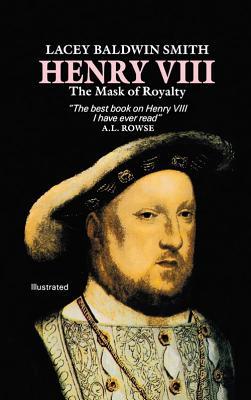
Book Review: “Henry VIII: The Mask of Royalty” by Lacey Baldwin Smith

Lacey Baldwin Smith's Mask of Royalty book cover

When I was a history major in college, probably in my senior year, I took my first psychology course. Psychology turned out to be a fascinating subject and made me think about how it could be applied to history. The thought of a course in psycho-history crossed my mind but unfortunately my school didn’t offer such a course! Little did I know at the time Lacey Baldwin Smith was writing his seminal work on King Henry VIII and that is was a masterful psycho-history biography.

Many people had recommended this book to me and it was gripping from the very first chapter. Smith begins with the dying king secluded in his chamber and describes the loyal servants around him and their behavior. As many Tudor history fans know, there may have been some shenanigans during the king’s fateful final illness, especially regarding his will. Smith explains that Henry had his full faculties up until the end, perhaps blissfully ignoring the fact he was dying. But we do know there were changes made to the will and it wasn’t signed by the king’s hand but with a dry stamp. All this is very intriguing.

The book then goes into flashback so to speak to around the time Henry married Catherine Howard and most of the book recounts the years from 1540 until his death in 1547. Smith explains how Henry was given an in-depth humanist education but he certainly wasn’t the most intelligent man at court. What he was good at was remembering many minute details of all the business of governing of the realm. There are many records with Henry’s own notes written by hand that still exist to this day.

There is a most interesting chapter regarding Henry and his thinking as Supreme Head of the Church in England. Henry’s conscience was responsible for the spiritual life of all his subjects. Smith gives us a most interesting insight into what a precarious position this was for Henry and how this affected his view of the church in his kingdom. Smith examines some of the foreign policy of Henry in the later years recounting the delicate dance of power between the Holy Roman Emperor Charles V and King François I of France.

Woven throughout Smith’s narration is how Henry’s psychological perspective and views of his place in the world influenced his reign. His insights go a long way in explaining why he did what he did in making decisions, marrying so many times and executing valuable servants. I found all of Smith’s arguments to be very absorbing and they gave me a deep understanding of not just Henry but the mindset of Tudor England overall. I couldn’t put this book down and was sad when I finished it. I can’t recommend it enough. Any reader will definitely have a better understanding of the standout king and his reign.

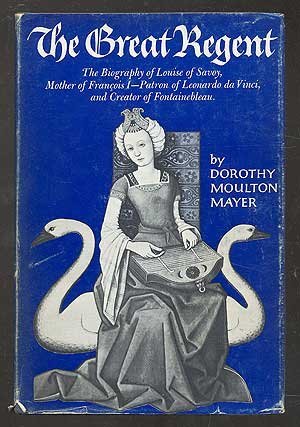
Book Review: “The Great Regent: Louise of Savoy, 1476-1531” by Dorothy Moulton Mayer

The Great Regent book cover

The difficult thing about researching and writing about French history can sometimes be finding sources when you don’t read the language. Completely by chance, I found this biography of Louise of Savoy in English and was thrilled. This book was written in 1966 and published by Funk and Wagnalls. The author herself has an interesting story.

Dorothy Moulton Mayer was an accomplished English singer. She married a German born philanthropist, Robert Mayer who was one of the founders of the London Philharmonic Orchestra. From the 1950’s on, Dorothy wrote several biographies including on Queen Marie Antoinette, painter Angelica Kaufman, violinist and composer Louis Spohr and this one on Louise of Savoy. I really have to admire her determination in writing these biographies.

Louise of Savoy was the mother of King François I of France. This in and of itself is not remarkable. What is significant is the fact that François trusted and relied on his mother so much that she basically ruled France from the time he took the throne in 1515 until her death in 1531. This served two purposes. François could continue to pursue his passions and pleasures such as hunting, conquering Italy and women. And secondly, Louise did an outstanding job when she was in charge of the government.

This can particularly be seen when François and his troops lost the Battle of Pavia in 1525 to the Holy Roman Emperor Charles V during the Italian Wars. François was taken prisoner and kept incarcerated in Spain until March of 1526. Louise was completely in charge in France and worked diligently to release the King. The Treaty of Madrid was brokered and François was released. However, in return he had to give up his two sons as hostages to Charles. Thereafter, Louise had to work even harder to get her grandsons released. She brokered the Treaty of Cambrai in 1529 along with her sister-in-law, Margaret of Austria who was acting on behalf of her nephew Charles V. This was called the Ladies Peace and Mayer gives a detailed description of the proceedings which is fascinating.

I really loved this book. Mayer’s writing is fluid and comprehensive. She gives lots of detail about the life of this remarkable lady including her upbringing under Anne de Beaujeu where she learned her craft and tidbits about her health. Her descriptions of her accomplishments are fair and balanced. Mayer talks about how historians have denigrated Louise’s actions and reputation. Mayer gives her own interpretations.

The book has a comprehensive bibliography of primary sources and there are some outstanding photos of contemporary art depicting Louise. And in the end there is a fascinating appendix. Mayer sent Louise’s handwritten letter to the Emperor Charles V after her beloved son King François was taken prisoner to a handwriting expert. She includes the expert’s interpretation of the writer’s personality. I think you will find the essence of Louise’s character it what he has written. Louise is a lady to admire and I highly recommend this book.

Book Review: “The Seymours of Wolf Hall: A Tudor Family Story” by David Loades

The Seymours of Wolf Hall book cover

It seems the Seymour family is more interesting than they appear on the surface. Most who know Tudor history are familiar with Jane Seymour, third wife of King Henry VIII and mother of King Edward VI. Others may have heard of Jane’s brothers, the dour Lord Protector Edward, Duke of Somerset and the swashbuckling Thomas, Baron Seymour of Sudeley and Lord Admiral. This book goes into even more depth about the family.

The introduction and initial chapter traces the Seymour ancestry back to France and how they migrated to England. I found the information on Jane’s father Sir John Seymour to be of great interest. He was a man of means and had ties to the court but didn’t spend much time there, choosing to live in Wiltshire and tend to business at home. Edward and Thomas were introduced to court and had valid careers in the navy, as gentlemen of the court and in Edward’s case as a successful soldier.

There are chapters in the book dedicated to Jane, Edward, Thomas and other siblings. Something I found most interesting was how Henry VIII really took a liking to Edward and rewarded him. He was very much part of the inner circle of the King. In addition to being the uncle of Edward VI, this is how he earned his important place on the council to rule England during Edward’s minority after Henry’s death. Loades also clarifies the reasons for Edward’s downfall. Thomas is by far the most attention-grabbing figure in the family. Mercurial and indiscreet, he seems to have set in motion all the mechanisms for his own downfall. The last part of the book traces the descendants of Edward Seymour and his wife Anne Stanhope down to the present day.

I’ve never read anything by Loades before and he certainly has the credentials of a competent historian. He puts his own spin on all aspects of this family which I found new and refreshing. Because of this, I recommend this book. My only quibble is the format of the book. It seems the author penned the book and sent the manuscript to the publisher and it was published straight from that. The paragraphs all run together and there are some grammatical and punctuation errors. Most egregiously, there is no index for the book. The publisher could have engaged the services of an editor to correct these errors but it doesn’t detract from the history as presented by the author.

Book Review: “The Sisters Who Would Be Queen: A Tudor Tragedy” by Leanda de Lisle

The Sisters Who Would Be Queen book cover

Several years ago I read a fascinating biography of Lady Jane Grey, known as the Nine Days Queen. It was written by Eric Ives and the subtitle of the book was “A Tudor Mystery”. So little is known about Jane who was a key personality in the Tudor era. I knew even less about Jane’s sisters Katherine and Mary. So when I found this book I was intrigued.

Since Ives has written a complete work on Jane, this book doesn’t really give much additional information about her. However, the information on Katherine and Mary here gives a complete picture of their lives. All these women were technically in line to inherit the throne of England based on the will of King Henry VIII and then the revisions made by King Edward VI. Edward really put these women in the spotlight, essentially putting their lives in danger, especially Jane.

Jane was used as pawn by John Dudley, Duke of Northumberland. Just before King Edward died, Northumberland married Jane to his own son Guildford. When Edward finally died, Northumberland had Jane and his son proclaimed Queen and King. This state of affairs only lasted about ten days, until Edward’s sister Princess Mary proclaimed herself Queen and forced Jane and Guildford to become prisoners in the Tower. Jane was beheaded a few months later.

Katherine’s story is for me the most fascinating. She managed to marry a Seymour in secret without the Queen’s permission. Even more interesting, she managed to have a son. After this, Queen Elizabeth I had Katherine held prisoner in the Tower along with her husband. They were allowed to see each other while incarcerated and Katherine managed to have another son! This led to the couple being separated and Katherine died an unfortunate death a few years later. De Lisle discloses in this book that there is a first-hand account of Katherine’s death and as it’s written here, it’s very emotional reading.

The last sister Mary managed to live the most conventional life of the three women but that’s putting it mildly. She was born deformed and was a very small person. But this probably saved her life because she wasn’t seen as a serious threat to the throne because of it. She married without the Queen’s permission like her sister and was also separated from her husband. He eventually died and Mary was able to carve out a living for herself as a comfortable widow.

All this makes for a fascinating story and de Lisle does a good job here recounting the lives of the three women. I have to admit her grammar and syntax drove me a little batty and sometimes she had me wondering if I was reading historical fiction or not. But it’s a pleasant book and I would recommend it if you are interested in the subject.

Book Review: “A Queen of Unrest” by Harry Tighe

A Queen of Unrest book cover

This book is subtitled: “The story of Juana of Castile, mother of Charles V., born 1479, died 1555” and is a reprint of a 1905 edition that was in the library of the University of Michigan. I’ve mentioned before I enjoy reading older history books and we are lucky some publishers are reprinting some of them or publishing them digitally so we can read them. In doing research on Juana, I found this book completely by accident as it came up as a recommendation on Barnes and Noble.

I’m just going to disclose up front I found this book to be a very weird. I can’t seem to find much information about the author but from what I did find, he was a playwright and a novelist. He may have written other historical books but it’s hard to determine the subjects of some of his titles as there is no information listed about them. This volume is a curious mixture of historical biography and descriptions of historical events mixed with elements of fiction. His list of sources is not very detailed and includes the “Encyclopedia Britannica” and ‘A Spanish book entitled “Juana of Castile”’ with no author given. This is not very promising.

From the early chapters, he says Juana was sickly, unattractive and not very bright. And he fervently insists that she was insane! From what I’ve read so far, Juana was at the very least attractive if not beautiful. I can’t see Philip the Handsome being instantly sexually drawn to a woman who was considered ugly. I also find it hard to believe a sickly woman gave birth to five healthy children. She was highly educated and spoke and read Latin so she must have had at the very least a modest intellect. As for her being insane, the jury is still out on that one.

Tighe gives a nice description of Juana’s childhood in Castile. He doesn’t waste much time on her life in Burgundy. There is some good information on her tours of Spain to be recognized by the Cortes as her mother and father’s successor. He spends a lot of time on Philip. There is a large chapter with a complete description of Philip’s visit with King Henry VII at Windsor which is a reprint of a chronicler’s record of the event. While this is of great interest, it doesn’t really have much to do with Juana. He only gives a passing reference to the fact that Juana was imprisoned for most of her life.

There is no explanation for the origin of the title of the book. It is unclear if he means that Juana was full of unrest or her kingdom was in disarray or a combination of both. The book is very short at 228 pages so I’m afraid there is not a lot of detailed and useful information on Juana. She is a woman about whom volumes could be written. That being said, I did get one huge insight from reading this book. Some of the descriptions of Juana’s behavior reminded me of a family member who suffered from depression. This has given me a great deal of food for thought and I’m going to do some further research on this illness.

Book Review: “French Musketeer 1622-1775” by René Chartrand

French Musketeers book cover

Who doesn’t love the Musketeers? Ever since the French writer Alexandre Dumas, père wrote his series of historical novels in the 19th Century, people have followed the adventures of D’Artagnan, Athos, Porthos and Aramis and their intrepid valets in books and movies. But were these men just characters in a book or did they really exist? Did the Musketeers really duel and fight amongst themselves? Did they actually fight in wars? And what were their uniforms really like? What sort of equipment was issued to them?

This book from Osprey Publishing answers this and many more questions. Chartrand gives an overall history of the various units of the Musketeers. They fought on horseback and on foot in numerous wars as well as fulfilling their duty as bodyguards for the King. The chief ministers of Louis XIII and Louis XIV, Cardinal Richelieu and Cardinal Mazarin had their own companies of Musketeers. Chartrand says there were many instances of duels being fought between the Kings’ and the Cardinals’ Musketeers. So the duel scenes in the stories have a basis in fact.

There is a chapter in the book regarding the fighting of the Musketeers in sieges, battles and wars. They also performed secret missions for the king. The book is filled with colorful illustrations by Graham Turner as well as copies of various prints and paintings depicting Musketeers from the different eras of their existence. A great deal of the book explains the costume and the equipment of the soldiers and how it changed over time. Also included are a chronology, a list of ranks, a glossary of terms and a bibliography.

The information I found most interesting is the historical basis for the characters in Dumas’ novels. Dumas found a copy of a book which was the basis for all of his stories. It was published in 1700 and called “Memoirs of Mr. D’Artagnan, Captain-Lieutenant of the First Company of the King’s Musketeers, concerning a quantity of private and secret events that occurred during the reign of Louis the Great”, written by Gatien de Courtiz de Sandras. Sandras had been a King’s Musketeer for eighteen years. Chartrand explains that Dumas’ characters of D’Artagnan, Athos, Porthos and Aramis are actually based on real men who served in some form or another as Musketeers or soldiers in other units. Sandras may have met the “real” D’Artagnan at some point so his memoirs possibly contain some actual facts of his life. Of course Dumas used artistic license and fictionalized many aspects of their lives.

I distinctly remember seeing the movie version of “The Three Musketeers” from 1973. My college library had a fabulous collection of most of Dumas’ work in old volumes that had been bound in new covers. I read every book I could get my hands on, devouring them. Not only are they entertaining reading but they give the basic outline of French history during the Renaissance and early modern period. So reading this book was a lot of fun and brought back good memories and I enjoyed the illustrations.

Book Review: “Sister Queens: Katherine of Aragon and Juana, Queen of Castile” by Julia Fox

Sister Queens book cover

In the never-ending quest to discover if Juana of Castile was really mad or not, I picked up a copy of this book to read. Having read plenty of biographies of Katherine of Aragon, I wasn’t as interested in this part of the story but Fox does present Katherine in a slightly different light which is always refreshing. But I have to confess, as I was reading the beginning of this book I became a little annoyed. It’s not really a serious biography of these two women at all.

My recent reading has been of more thoughtful biographies and analyses of history such as Bethany Aram’s “Juana the Mad” so Fox’s book seemed on the simplistic side. It reads more like historical fiction. However, that being said, the deeper I got into the book, the better I liked it. There are some great descriptions of certain events in Tudor history with some wonderful detail, essentially bringing the events to life. The recounting of the death of Katherine is really moving.

There could have been a lot more about Juana in this book but I understand why there isn’t. Juana’s time in public life was short having spent the majority of her later years in custody. And we don’t really know that much about how she actually felt or what is accurate according to the chroniclers who wrote according to their own personal agendas. I think Fox is more than fair to Juana in being somewhat neutral and not describing her as a raging lunatic.

After saying all this, I’m still going to recommend this book because Katherine and Juana are still captivating historical characters. Tudor history lovers will find it interesting and those who want to learn a little more about the sisters’ upbringing in Spain and basic facts about Juana will enjoy it.