Book Review: “Sister Queens: Katherine of Aragon and Juana, Queen of Castile” by Julia Fox

Sister Queens book cover

In the never-ending quest to discover if Juana of Castile was really mad or not, I picked up a copy of this book to read. Having read plenty of biographies of Katherine of Aragon, I wasn’t as interested in this part of the story but Fox does present Katherine in a slightly different light which is always refreshing. But I have to confess, as I was reading the beginning of this book I became a little annoyed. It’s not really a serious biography of these two women at all.

My recent reading has been of more thoughtful biographies and analyses of history such as Bethany Aram’s “Juana the Mad” so Fox’s book seemed on the simplistic side. It reads more like historical fiction. However, that being said, the deeper I got into the book, the better I liked it. There are some great descriptions of certain events in Tudor history with some wonderful detail, essentially bringing the events to life. The recounting of the death of Katherine is really moving.

There could have been a lot more about Juana in this book but I understand why there isn’t. Juana’s time in public life was short having spent the majority of her later years in custody. And we don’t really know that much about how she actually felt or what is accurate according to the chroniclers who wrote according to their own personal agendas. I think Fox is more than fair to Juana in being somewhat neutral and not describing her as a raging lunatic.

After saying all this, I’m still going to recommend this book because Katherine and Juana are still captivating historical characters. Tudor history lovers will find it interesting and those who want to learn a little more about the sisters’ upbringing in Spain and basic facts about Juana will enjoy it.

Book Review: “Wicked Women of Tudor England: Queens, Aristocrats, Commoners” by Retha M Warnicke

Wicked Women book cover

Such an intriguing title for a book! This is one of a series of eighteen books under the heading “Queenship and Power” published by Palgrave Macmillan and edited by professionals from all over the world. Retha M. Warnicke is a professor of History in the School of Historical, Philosophical, and Religious Studies at Arizona State University. She has written numerous books on Tudor England.

I was looking for a biography of Anne Stanhope, the wife of Edward Seymour, Duke of Somerset and Lord Protector during the reign of King Edward VI and this book came up in a search. There is a chapter about her and she has a reputation for being somewhat of a shrew and for having some kind of feud with Queen Katherine Parr. She was accused of trying to take precedence over the Queen Dowager at social functions and of taking Parr’s jewelry. It was even rumored she had caused her husband to commit fratricide.

I’m not sure exactly what I was expecting from this book. It is actually an academic historical argument about how six women of the Tudor era gained wicked reputations. Warnicke takes each woman and reviews the historical records, literature and chronicles where they are described as “wicked”. She follows this with the known historical facts about their lives. In some cases she describes her own personal theories about the women.

Two of the chapters deal with Anne Boleyn and Katherine Howard, the two queens of King Henry VIII who were executed. I was a little frustrated with Warnicke’s arguments about them. In the case of Anne Boleyn, her theory is that she was considered wicked and executed because she miscarried a deformed fetus. Really? By the time Anne was arrested, there had been plenty of preparation and political machinations for charges against her. And Henry’s eye had already strayed to Jane Seymour.

For Katherine Howard, Warnicke argues she was the victim of sexual predators. I don’t think this is in dispute. She also argues that Katherine Howard denied she had sexual relations with Thomas Culpeper. Even if she didn’t, just the fact that she met with him surreptitiously was a mistake. I’m thinking if there was even the semblance of impropriety she was in trouble. If she became pregnant, there would be questions concerning the legitimacy of the child to inherit the throne. Maybe she wasn’t wicked but her behavior certainly didn’t help her own cause.

In the chapter on Anne Stanhope, Warnicke presents the evidence that yes, there may have been a personal controversy between her and Katherine Parr but this isn’t what resulted in Thomas Seymour’s execution. She argues that the Duchess’ inability to deliver favors for those who sought help from her husband caused anger and resentment against her, creating a wicked reputation. Certainly the historical facts about the rest of her life create the impression that she was in good standing with society and maintained a good reputation with her contemporaries.

The other chapters tell us about Lettice Knollys, the second wife of Queen Elizabeth I’s favorite Robert Dudley, Earl of Leicester and the two wives of Sir Thomas More. It is remarkable that Lettice’s wicked reputation is based on a letter confirming the marriage ceremony between her and Leicester that mentions she wore a loose fitting gown. This has been taken to mean she had premarital sex and was pregnant at the time of her marriage. Loose fitting gowns were commonplace at that time. The obstreperous reputation of the two wives of Sir Thomas is based on rather flimsy interpretations on the writings of More’s great friend the humanist Desiderius Erasmus and others. These two chapters were very interesting.

Some of the biographical information and her arguments are thought-provoking. But this is a work of academic argument, not a breezy read. The writing can be confusing so it requires patience and attention and some knowledge of the women and the era. I’m going to recommend this book with these caveats.
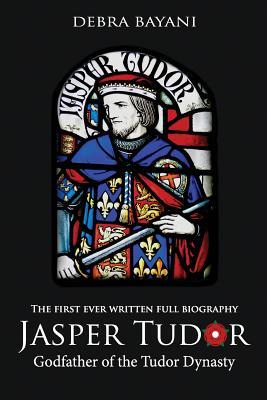
Book Review: “Jasper Tudor: Godfather of the Tudor Dynasty” by Debra Bayani

Jaspertudorbookcover

Jasper Tudor was the half-brother of King Henry VI of England and the uncle of King Henry VII. For his entire life, he was loyal to the Lancastrian cause during the Wars of the Roses. His support of his nephew was pivotal in the emergence of the Tudor dynasty. Before now there has not been a comprehensive biography of this enigmatic figure.

Debra Bayani had an incredible journey researching and writing this book. She says in the preface she learned about Jasper while reading an historical novel and was amazed to learn there had been no biography written about him. She immediately began doing research, traveling to Wales to find sources. She says it was not her intention to write his definitive biography but I think she has come pretty close.

It is clear in reading Bayani’s work she has gone to incredible lengths to get as much information as possible. There is great detail on the estates and incomes Jasper was rewarded for his loyalty to the Lancastrian kings as well as his whereabouts and travels. The wheel of fortune had wild turns for him as it did for many noblemen during the Wars of the Roses. For all intents and purposes, he acted as father to Henry Tudor who lost his biological father before he was born.

Of particular interest to me was the information on Jasper and Henry’s exile in Brittany and France and their efforts to raise troops and funds to invade England in an attempt to take the throne. Bayani gives us lots of particulars on this crucial mission. Jasper was amply rewarded for his support after the Battle of Bosworth. This book is filled with numerous pictures of places related to Jasper’s life. The author has also included an appendix section of many Welsh poems related to Jasper. In my opinion Bayani has done a terrific job writing this book and I highly recommend it for lovers of Tudor history.

Book Review: “Winter King: Henry VII and the Dawn of Tudor England” by Thomas Penn

Winter King book cover

I have to start off by saying Thomas Penn has written a rip roaring biography here. It is certainly easy to see how this book won the 2012 H.W. Fisher Best First Biography prize. If you are looking for an in depth survey of the reign of Henry VII, this is your answer.

Penn begins by reminding us how Henry’s reign is overlooked by many historians because of the notoriety of his son Henry VIII and grand-daughter Elizabeth I. He likens the beginning of Henry VIII’s reign to a metaphorical spring, a second coming of sorts because Henry VIII seemed to be the opposite of his father. This is why he named the book the “Winter King”.

Henry VII had a dubious claim to the throne of England based on ancestry alone. He had spent most of his early years in exile on the continent and essentially had no thought or chance of becoming King of England. But when dissent in England reared its head during the reign of Richard III, Henry’s horizon opened up to possibilities. Disenchanted nobles gathered by his side and an invasion was planned, executed and carried forth with worthy results for Henry. This part of the story is genuinely exceptional. After his victory at Bosworth Field, Henry married Edward IV’s daughter Elizabeth of York. Almost immediately she gave birth to a son, Arthur, and the Tudor dynasty was on its way to establishing its splendid reputation in history.

After Henry quelled a few rebellions and crushed the hopes of a few imposters to the throne, the reign became relatively quiet. But in 1501-2, Henry’s heir Prince Arthur and then his wife died. It was a time of crisis for Henry. All his hopes were placed in his second son, Prince Henry. This was when Henry became physically ill with the tuberculosis which would eventually be fatal. His paranoia became even more evident. He was cautious and secretive and began resorting to extra-judicial measures. He found men to carry out his rare and extraordinary methods for collecting money and keeping people under control.

Penn is masterful in setting the scene here. He tells us about the men Henry relied on. He talks about secret plots and behind the scenes diplomatic maneuvers. He gives us great insight into the personality of Henry and what his motives were. There are delicious descriptions of visits of ambassadors, Elizabeth of York’s funeral, the entry of Catherine of Aragon into London and her wedding to Arthur Tudor. Really the entire panoply of Henry’s reign is described in great detail.

For me, the best chapters are in the last third of the book. After the death of Arthur and Elizabeth, King Henry brings Prince Henry to court to give him every advantage and to make clear the hopes of the dynasty rested on his shoulders. The education of Prince Henry as well as a great awareness of how he spent his leisure time is recounted. Prince Henry was closely guarded by his father and not allowed much leeway in his behavior. But the descriptions of him and his pals and their military training and jousting antics are really fun to read about.

I found that reading S.B. Chrimes biography of Henry first laid the foundation for a better understanding of Penn’s book so I would recommend that course of action. But it’s not totally necessary. For me the book seemed to start off a little slow, however it certainly picks up after a few chapters and begins to read more like an enjoyable historical fiction book. Only it’s not fiction! Really I can’t recommend this book enough if you are interested in the Tudor era and this overlooked king.

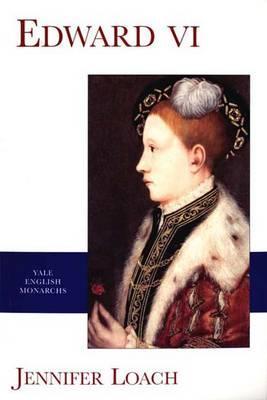
Book Review: “Edward VI” by Jennifer Loach

Edward VI book cover

This biography is another volume in the Yale English Monarch series. Author Jennifer Loach, before her untimely death at forty-nine in 1995, was a Fellow and Tutor in Modern History at Somerville College, Oxford. Ms. Loach started out as an historian of parliament with a specialty in the Marian parliaments but she soon widened her field of study to cover European history in general and the reigns of Mary I and Edward VI in particular, bridging the gap between Henry VIII and Queen Elizabeth I. Most of the work on the reign of King Edward VI had been published in the early to mid-twentieth century. In 1988, Loach was commissioned to write this book for Yale University Press and spent the last years of her life solely concentrating on its writing and publication.

It is unfortunate Ms. Loach died before the completion of the book. Her husband brought her notes and computer disks to Penry Williams and George Bernard, a student of Loach’s. The Preface of the book describes how these two editors managed to complete the project, a process in and of itself that is very interesting. Ms. Loach had discussed with them how she would construct the narrative of the book so they had a clear idea of her methods. For the reader, it is apparent the book was unfinished in some places although this doesn’t detract from the basic historical information provided.

Because Edward’s reign was short, he was young and had little say in the running of day-to-day government, it is necessary to concentrate on the regencies of his regime. This encompasses the retelling of the leadership of Edward’s maternal uncle, Edward Seymour, Duke of Somerset and John Dudley, Earl of Warwick, later Duke of Northumberland. In this volume, there is not a lot of detail about these men’s command but it is enough to give the reader an idea of the overall impact on the reign. Dr. Loach also gives a general overview of the social and economic difficulties of the reign as well as the religious policy.

The most interesting part of this biography is about the king himself. She tells us how Edward received one of the most complete humanist educations of his era. There is some fascinating information on Edward’s court and how he enjoyed magnificence, panoply and intricate ceremony and ritual, very much following in the footsteps of his father. Edward loved to dress in sumptuous clothes and personally participate in court entertainments as a performer and in inventing them. In many ways he was a typical sixteenth century teenager albeit fortunate enough to have a superb education and access to the royal treasury.

Loach includes an entire chapter on Edward’s last illness, containing her personal thoughts on a possible medical diagnosis for what ultimately proved to be fatal. The information on Edward’s “device” for changing the succession to Lady Jane Grey is most interesting. There is a brief description of Edward’s funeral and a chapter for what followed his death with the proclamation of Lady Jane Grey as Queen and how Mary fought to claim her throne and who fought with her. There are some wonderful illustrations in the book and an appendix describing a selected list of portraits of King Edward. This is a wonderful, no-nonsense history of the life and reign of the young King Edward.

Book Review: “Lancastrians, Yorkists and Henry VII” by S.B. Chrimes

Chrimes Lancastrian book cover

Upon the recommendation of a respected history friend, I purchased a used copy of this book. In my pursuit to learn more and understand the Wars of the Roses, it appeared this would be a valuable read. It is easy to get confused among all the descendants of King Edward III and the possible contenders for the English throne in the fifteenth century. I also had enjoyed Chrimes biography of King Henry VII.

My friend was right, this is an excellent book. In the forward, Chrimes tells us the origins of the term “Wars of the Roses” and how it didn’t come into being until the eighteenth century. He swears he will not use the term in the course of the book and he keeps his promise. The only thing I’m wondering is what, if anything, the people of the time period called the conflict. This question is not answered.

Chrimes begins with the children of King Edward III and traces the roots of the family feud to John of Gaunt’s son Henry of Bolingbroke’s usurpation of the throne from his cousin King Richard II. This was the beginning of the Lancastrian dynasty which lasted until the deposition and eventually the death of King Henry VI in 1471. The first section of the book describes the Lancastrian dynasty, how it came into being and how it ends. The second section of the book tells us about the rise of the Yorkists. He goes into great detail about the reign of King Edward IV and how he reestablished a strong working government after the lapses of the Lancastrian kings.

After the sudden death of King Edward, the House of York divided itself with Richard III usurping the throne from his nephew. Chrimes’ point of view is that Richard started out strongly but after the death of his heir, Prince Edward, followed by the death of his wife, Anne Neville, things began to unravel. It was too soon after Richard took over and some Yorkists defected to Henry Tudor. Henry was an unlikely heir assumptive to the throne, having only a weak at best claim and no experience in government or military matters. Richard should have won the Battle of Bosworth but there was no controlling the behavior of the Stanley’s or Henry Percy, Earl of Northumberland.

It was clear the powers that be were tired of the civil strife. Henry Tudor’s oath to marry Elizabeth of York promised peace. Chrimes is very complimentary of Henry Tudor’s grasp of governing and stresses how he kept in place the Yorkist administration, exploiting and expanding on it. The book includes many pictures from illuminated manuscripts of the central characters and my copy has a family tree of Edward III and a map of England with areas marked for Lancastrians and Yorkists. The entire panoply of characters are presented here in a concise retelling of the history. Chrimes is fair-minded and even-handed, not taking sides or judging and all of this is done with an amiable and kindly sense of humor. I was sorry the book ended and will likely use it for reference in the future.

Book Review: “Henry VII” by S.B. Chrimes

Henry VII Chrimes book cover

As historians, we are lucky to have a selection of biographies on English kings published by the Yale University Press called “The English Monarchs Series”. For over thirty years, the biographies, written by eminently qualified historians, have given us the latest research on these important figures in history. S.B. Chrimes, born in 1907, was head of the department of history at University College, Cardiff, the University of Wales, from 1953 to 1974. This biography of Henry Tudor was first published in Britain in 1972 by a British publisher. A paperback edition was issued in 1977 and Yale University Press published their edition in 1999 with a new forward by George Bernard, reader in Tudor history at the University of Southampton.

Bernard’s forward essentially updates the research done by Chrimes since the original publishing of the work in 1972. For the most part he states the work is still valid with a few revisions based on new research. The earliest works on Henry were from James Gairdner and Wilhelm Busch from the 1890’s so Henry was definitely due for a fresher look. Chrimes is quick to point out the biography of Henry VII’s life from Sir Francis Bacon (1561-1626) should be taken with a grain of salt and refutes several of Bacon’s arguments.

Part one of this book gives us an overview of Henry’s life up to the Battle of Bosworth in August of 1485. This is followed by a chapter on his accession, coronation, marriage and family. Next he covers the issue of security which Henry dealt with for the rest of his reign. Chrimes recounts the uprisings and pretenders who haunted Henry for many years. This section of the book is very interesting.

The rest of the book gives us many details on Henry’s reign based on meticulous research by Chrimes and others. Part two of the book is entitled “The Personnel and Machinery of Government” with sections on the King Council, Seals and Secretariats, Financial Administration, Parliaments and Great Councils and Judicature. While this section is very informative, some may find the material dry and uninteresting. If you are a Tudor historian, you will learn a lot about the workings of early Tudor government.

Part three is entitled “Statecraft”. This section deals with law-making, law enforcement, fiscal and financial policy, economic and social policy, relations with the church, Henry’s policies toward Wales and Ireland and his handling of foreign policies. Again, some of this information may appear dry but I found the chapters on Wales and Ireland and Henry’s foreign policy to be very appealing. It was especially interesting to read about how Henry made overtures to find a wife after his queen, Elizabeth of York died in 1503 and how this impacted his foreign policy. For most of his reign he lobbied for a diplomatic and trade alliance with the Holy Roman Emperor and sought to marry Margaret of Austria, Duchess of Savoy and Regent of the Netherlands. Ultimately, Margaret refused to marry him.

Chrimes addresses the viewpoints that Henry was rapacious and miserly. He basically argues yes and no to both. One item of interest is he refutes Francis Bacon’s statement that when Henry died he left a fortune of two million pounds. He says this isn’t true and that most of what remained in the treasury was precious items and jewels, Henry’s favorite investments. There is a diverse selection of appendixes in the book and a myriad of great photos. There is a valuable bibliography and a nice selection of family trees as well. This book is an excellent and reliable overview of King Henry VII’s life and reign and I highly recommend it to lovers of Tudor history.

Book Review: “Isabel the Queen: Life and Times” by Peggy K. Liss

Liss Isabel the Queen cover

My knowledge of Queen Isabel of Castile is very limited. She is remembered for the Reconquista, the Spanish Inquisition and of course for sponsoring the voyages of Christopher Columbus. And being a fan of Tudor history, I knew of her as the mother of Catherine of Aragon, the first wife of King Henry VIII. But I’m interested in knowing more so I’m reading a couple of biographies about her, including this one.

Ms. Liss wrote this book in honor of the 500th anniversary of the landing of Christopher Columbus in North America and a revised edition was released in 2004 for the 500th anniversary of Isabel’s death. It is an academic work, printed by the University of Pennsylvania Press and has been on my shelf for some time. Liss is an expert on Isabel and the book is filled with many great details about the era and Isabel’s reign and personal life.

This is a comprehensive work. As I don’t know much about Spanish history, the short timeline Liss gives is most appreciated. Liss writes a great deal about Isabel’s motivations for her actions as monarch in the context of the history of Spain and she is possibly a bit of an apologist for Isabel. I realize we shouldn’t put our 21st century sensibilities onto an older era. But much of what Isabel did was repugnant as many of the aspects of this book describe.

There is also much to admire about Isabel. She and Ferdinand had something very rare; a loving marriage. She was adamant that her children be educated too, especially her daughters, giving them something she lacked as a child. Isabel worked very hard at consolidating government on the Iberian Peninsula and administering justice. While executing war on various surrounding kingdoms, Isabel acted as quartermaster, raising funds and supplies and getting them to the theater of operations. Basically, whatever Fernando needed, she delivered. When asked by her husband, she would appear before the troops to lift their spirits.

I loved the description of Isabel’s first meeting with her future husband Fernando of Aragon. It was quite romantic. There is an honest assessment of her relationship with her daughter Juana, also known as Juana la Loca. While Isabel knew Juana had mental difficulties, she followed tradition and wrote in her will that she was to succeed her as Queen of Castile. The epilogue of the book describes how a lot of Isabel’s lifetime work for Spain was undone by Juana.

To be honest, Liss’ grammar and syntax are dense and a little hard to read. This is not a curl up with the cat and cuppa tea read and is more suited for historical research. But I still recommend it if you want to learn more about this complex and admirable queen as the details of her reign are extraordinary. On to the next biography.

Book Review: “Arbella: England’s Lost Queen” by Sarah Gristwood

gristwoods arbella

In reading about Bess of Hardwick, Bess’ granddaughter Arbella Stuart is mentioned. Arbella was the daughter of Bess’s daughter Elizabeth and Charles Stuart, 1st Earl of Lennox. Charles was the son of Margaret Douglas, daughter of Margaret Tudor, sister of King Henry VIII and dowager Queen of Scots as the wife of King James IV. The key point of Arbella’s ancestry is that she was a royal princess of the blood which had a huge impact on her life.

Arbella was the focal point of kidnapping plots as well as the subject of many marriage rumors. Because of this she led a very secluded life. Both her parent died when she was very young and she ended up in the care of her grandmother Bess. She essentially spent her days as a prisoner up until Queen Elizabeth I died in 1603. She was then allowed to go to the Stuart court of King James I and VI. After she obtained her freedom, she plotted her own marriage and ended up alienating herself from the King and court. I don’t want to tell more about her life at this time as she will be the subject of an article on the main blog.

I read an older biography of Arbella by Blanche Hardy and Mary S. Lovell covers her story in detail in her biography of Bess of Hardwick. Gristwood’s book is not a biography in the conventional sense. She does give us a chronological view of Arbella’s life but mostly writes about Arbella in the context of her times and gives us her analysis of some key points in Arbella’s life. This is definitely a more in-depth view of this eccentric and complex woman. Gristwood has read all the extant letters written by Arbella and sifts through the odd syntax to give us the meat of what she writes. She tries to give us an inkling of what Arbella was thinking when she wrote the letters.

Perhaps the most interesting aspect of this book is Gristwood’s theory that Arbella Stuart suffered from the scourge of royalty, the genetic disorder called porphyria. King George III is most well known as being a sufferer and it has been suggested Mary Queen of Scots had this complex disease. Gristwood has an appendix in the book explaining the different studies done on the disease in the royal family, comparing the symptoms of the disease to Arbella’s known symptoms. She also explains that while porphyria is the most convincing diagnosis for Arbella, there may have been other diseases or mental illnesses that explain her behavior. I think Gristwood makes a pretty good argument while saying we will never know for sure. If only we could send a doctor back in time to do some tests on Arbella and confirm her condition. I would definitely recommend this book, especially if you have read a conventional biography of Arbella. It helps to fill in the gaps.

Book Review: “Arbella Stuart: A Biography” by Blanche C. Hardy

arbella hardy book cover

I’m just going to admit it up front. I really enjoy reading history written by historians of another era. This biography of Arbella Stuart, a grand-daughter of Margaret Tudor, was written in 1913! As the author duly notes in her “Biographical Note”, the story of Arbella has been told many times beginning from right after her death in ballads and poems to biographical notes, novels and memoirs in the eighteenth and nineteenth centuries. Arbella is mentioned by Agnes Strickland in “Lives of the Tudor and Stuart Princesses” and some of Arbella’s letters were published in 1866.

That being said, I believe Blanche C. Hardy gives us the whole story of Arbella’s life in riveting detail and in her own words by quoting her letters, many of which still exist in various archives. She begins with the illicit conspiracy between two mothers, Bess of Hardwick and Margaret Douglas, Countess of Lennox who plotted to marry their children, Elizabeth Cavendish and Charles Stuart, 1st Earl of Lennox. Bess of Hardwick was a formidable noblewoman during most of the monarchies of the Tudor era. Margaret was the daughter of Margaret Tudor by her second husband Archibald Douglas, 6th Earl of Angus. Margaret and her sons Henry and Charles could rightly claim the throne of England. So the conspiracy to marry her son Charles without telling Queen Elizabeth I could have dire consequences. Bess and Margaret secretly plotted the marriage and managed to carry it off.

Elizabeth Cavendish gave birth to Arbella in 1575. Both of Arbella’s parents died while she was an infant and she was brought up in close confinement by her grandmother Bess of Hardwick. Bess, at the very least, wanted to restore Arbella’s interest in the Lennox estates which were taken away when her parents died. At the most, she harbored an interest in putting her grand-daughter on the throne of England. Arbella was given a first class education and there were many who were interested in marrying her to men in the aristocracy of England and Europe. She was therefore kept under strict guard most of her life. There is no evidence Arbella was ever deeply involved in any of these plots which to some extent was extraordinary.

However, Arbella did conspire to make a marriage to the nobleman William Seymour, a descendant of Mary Tudor, sister of King Henry VIII through her grand-daughter Katherine Grey, sister of Lady Jane Grey, the Nine Days Queen. Any alliance and heir born of this combination would have a considerable claim to the throne of England. Needless to say, this proposed alliance created a huge controversy. Queen Elizabeth was furious at the prospect and Bess of Hardwick broke off her relationship with Arbella for the rest of her life. This incident was the first indication that Arbella did not really have a stable mind. Letters written during this time strongly indicate this.

Once Queen Elizabeth died, Arbella was in high favor with Elizabeth’s successor, King James I. She had a high position at court and was well liked by James and his Queen and their children. But she managed to throw this all away by marrying Seymour in a secret ceremony and against the wishes of the King. She never regained her position at court and in fact, made a daring attempt to flee from England with Seymour. Hardy’s description of Arbella’s escape and Seymour’s breakout from the Tower of London makes for some exciting reading. Arbella’s only flaw was that she was too close to the throne of England. This made for an unfortunate and miserable life for her and her story doesn’t have a happy ending. Hardy does a great job of recounting all the foibles and adventures of this eccentric woman. We are lucky that Nabu Press has reprinted this one hundred year old volume so we can enjoy it. I highly recommend this book.