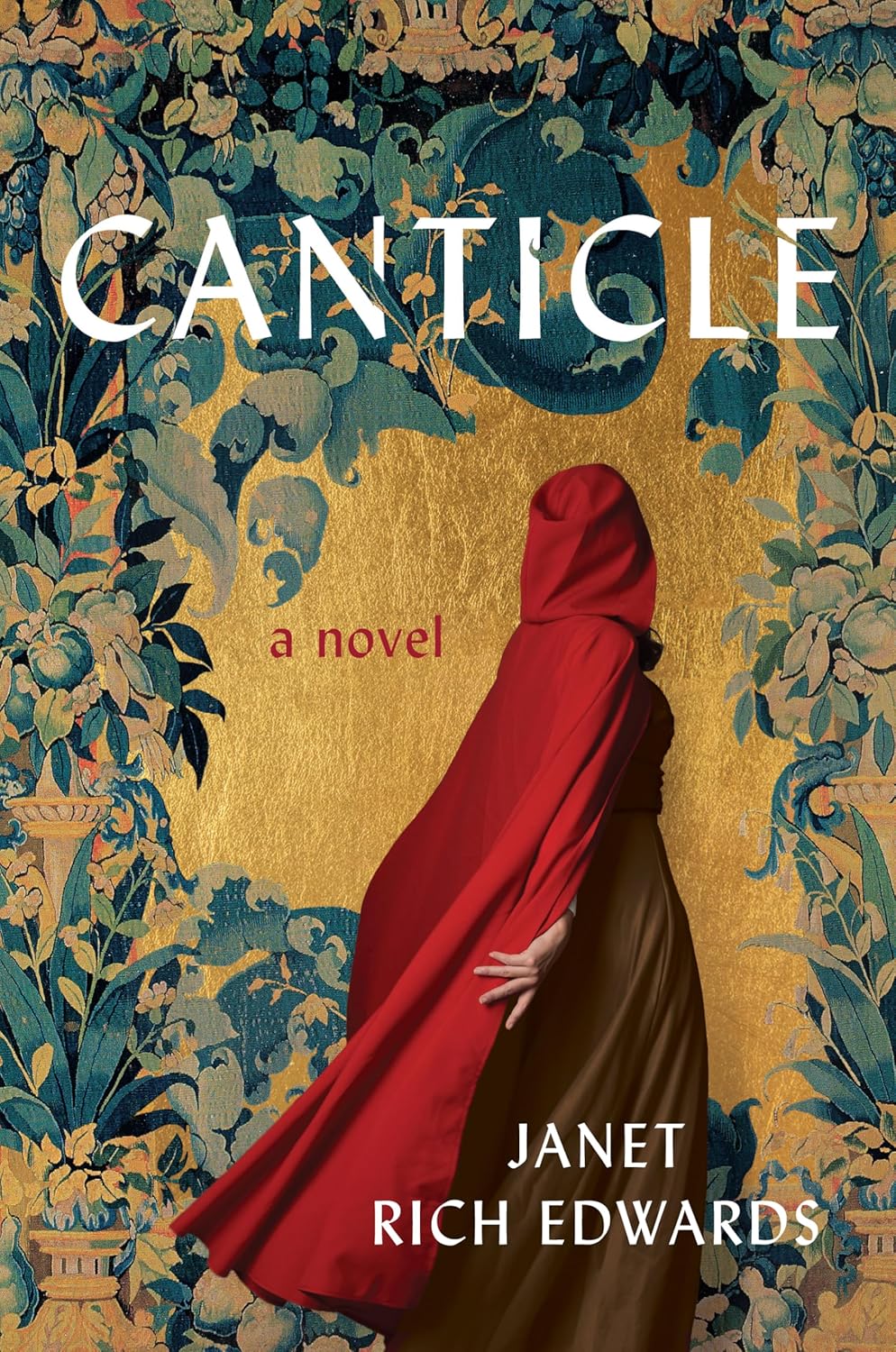
Set in the 13th century and in the city of Brugge (Bruges) this complex novel of faith, fairness, hypocrisy and the plight of women in a world of men fills in many voids in the contemporary understanding of the role of female mystics and the place of women in the church. Although much is known about the beguines, a sect of female monks prevalent in Europe during the years before Protestantism took hold, the intimate personal view revealed here touches close to the emotional life of these remarkable people.
Aleys is a young girl born to a family of wool merchants who is visited by visions of a divine source urging her to find her way to God. The images she sees are bright, compelling, frightening and profound. When she voices a wish to become part of the Franciscan order her family is taken aback, since she has agreed to marry into a house of wealth that will assure her father a place in the guild he desperately seeks. Lukas, a Franciscan friar becomes her mentor although he is perplexed that she, a mere girl, should be privy to such holy calling when his own dedication and fervor have left him without such divine inspiration. Through a series of miracles Aleys performs and the devious machinations of the local bishop, a jealous and avaricious man who is more concerned with his own promotion within the church than real religious matters she is made an anchorite, sequestered from life in a cell attached to the local church.
How Aleys deals with not only the passionate response of the people of Brugge but the plots devised by the bishop is the meat of the story. It is an intimate look at the joy and sorrow of the true prophet, blessed and cursed with vivid images and an emotional bonding with Jesus, Mary and God. A thread dealing with the clandestine translation of the gospel into Dutch for the benefit of common folk who have only had access to the words of the Bible through priests who often did not understand the Latin or the meaning of the verses complicates the lives of Aleys, the beguines, and Lukas, her tortured mentor.
An understanding of the genesis of saints and martyrs who dominated much of the religious thought of the time is available to the reader who wishes to understand more about Christianity, women and the Church. A potent narrative illuminating the rapture and the pain of the zealots who often found themselves at odds with the established keepers of the faith is limned with skill and clear evidence of extensive research and soul-searching on the part of this author who is an academic as well as a novelist.
Shelf Talker: An intimate look into the lives of religious visionaries who became martyrs and saints as well as the intriguing sect of the beguines, a female sect of monks could easily be the basis of a course on women’s issues and/or comparative religion. Well written, compelling narrative and a gripping personal story of a young girl’s transformation from common to divine.


 The Freelance History Writer Notes and Reviews
You must be logged in to post a comment.