Book Review: “Bess of Hardwick ~Empire Builder” by Mary S. Lovell

Bess of Hardwick cover

The Freelance History Writer is scheduled to go to the United Kingdom later this year on a tour following in the footsteps of Mary Queen of Scots. Needless to say, I am thrilled! So, in preparation, I’m trying to do some reading by some of the authors who will lecture on the tour and about some of the personalities related to Mary Queen of Scots. Mary was held captive by Queen Elizabeth I in England for nearly twenty years. For the first fifteen years, her jailer was George Talbot, 6th Earl of Shrewsbury and his formidable wife, Elizabeth Shrewsbury, otherwise known as Bess of Hardwick. One of our lecturers on the tour will be Mary S. Lovell who has written this biography of Bess.

This volume has been on my to-read shelf for quite some time so I was happy to give it a look. What a huge and very pleasant surprise. As Lovell tells us in the introduction, Bess is best known as the builder of some great houses in England such as Hardwick Hall and Chatsworth which we will visit. Bess and her children are the founders of the Dukedoms of Devonshire, Portland and Newcastle as well as the barony of Waterpark. Lovell is not the first biographer of Bess but she feels Bess hasn’t been presented properly by these prior authors. Previously she has been interpreted as being a shrew and as having a stormy relationship with Queen Elizabeth. Lovell spent many years pouring over volumes of letters, financial accounts and manuscripts by and about Bess and found no evidence for these portrayals. What she found was a strong, intelligent and entrepreneurial woman who got along well with Queen Elizabeth. In fact, she was a valued friend of the Queen.

Bess was married four times and had numerous children and step-children. Lovell gives us not just the details of Bess’ life but a full accounting of the lives, marriages and careers of her four husbands. This really enhances the biography as all the men are quite interesting. There are many twists and turns to this story, especially within all the family dynamics and dysfunctions. One of Bess’ husbands may have even been killed with poison by one of his brothers. Lovell tells us about Bess’ adroitness at handling her housekeeping duties, how she fed her family and servants, how much money she spent, how she entertained noble guests, her building projects and how she furnished her homes.

The years of the captivity of Mary Queen of Scots in the Shrewsbury household really bring to light the personality of Mary. I love the descriptions of how Bess and Mary sat together and labored at their embroidery. There are tapestries in Bess’ great homes still in existence that were worked on by Mary herself which I hope to see on the tour. Mary comes across as a conspirator who used her infamous charms and various methods to try to escape her jailer, even working to split up the marriage of Bess and her husband George. While this isn’t the only reason for their break up, Mary’s connivance certainly didn’t help the marriage.

This book isn’t just a biography of Bess and her husbands and family. It’s full of great details on the social history of the Tudor era. Born during the reign of King Henry VIII, the many changes in the monarchy during her eighty-one years affected her and her family in so many different ways. I especially enjoyed the insights into the operations of the reign of Queen Elizabeth I and her ministers. Lovell explains how Bess and her husbands negotiated their service at court with the management of their estates. Bess, through marriage and adept handling of her finances became a wealthy woman in her own right. This book is an easy and intriguing read and I highly recommend it.

Book Review: “The Perkin Warbeck Conspiracy 1491-1499” by Ian Arthurson

perkin warbeck book cover

In the course of doing some research on Lady Katherine Gordon, the Scottish noblewoman who married Perkin Warbeck, the pretender to the English throne, I came across a reference to “The Perkin Warbeck Conspiracy 1491-1499” by Ian Arthurson. I was very lucky a book seller in close-by Colorado Springs had a used copy of the book and received it quickly in the mail. While I knew the basic story of Warbeck, I certainly wasn’t versed in all the details.

Arthurson has done considerable and impeccable research on this subject and written books and articles about it. The book begins with Warbeck’s confession which is certainly unsatisfactory but Arthurson says it appears to be sincere and shouldn’t be doubted. While it is far from the complete story of what occurred, it is very telling. Arthurson continues by filling in the gaps of the confession, beginning with Warbeck’s origins in the city of Tournai in what is now Belgium.

In the nineteenth century, James Gairdner found information in the Tournai archives about Warbeck, his parentage and his family. Warbeck clearly was not a Plantagenet. Arthurson includes the family tree of the Werbecques of Tournai. Perkin’s grandfather Diercq was a boat builder and Perkin’s father Jehan was a pilot. The family was entrepreneurs who held town offices and even higher posts; they associated with princely courts and were well educated. Perkin was not the son of a lowly boatman but from the governing classes of Tournai (guilds).

Warbeck left home when he was relatively young, becoming a merchants assistant. This allowed him to travel very far, associating with many people and princes. He spent a considerable amount of time at the court of the Portuguese king. Later, he was taken to Ireland by his Breton master Pregent Meno. This is where the origins of the pretender conspiracy begin.

The Irish has accepted an earlier pretender named Lambert Simnel in an attempt to dethrone the new Tudor (Lancaster) king of England, Henry VII. In 1487, Simnel had actually been crowned at Christ Church Cathedral in Dublin as King Edward VI. So Ireland was ripe with conspiracies. While Warbeck was in Ireland, he was mistaken for the young Edward, Earl of Warwick, son of George Plantagenet, Duke of Clarence and brother of King Edward IV. Warbeck denied he was Warwick. Some people said Warbeck was an illegitimate son of King Richard III. Again Warbeck denied this. Eventually, it was decided Warbeck was Richard, Duke of York, second son of King Edward IV, who supposedly was murdered in the Tower of London. Warbeck denied this too but eventually was persuaded to go along. There was rebellion in Ireland in York’s name with Warbeck as the focus. Due to ineptitude and a lack of funds, it took some time to quell this rebellion but eventually it died down.

Warbeck made his way to France where he was in March 1492 when King Henry VII attacked France. Warbeck was forced to flee, going to the court of Margaret, Dowager Duchess of Burgundy. Margaret would have been Richard, Duke of York’s aunt. Margaret took up Warbeck’s cause and he was even accepted as the real Duke of York by Maximillian I, Holy Roman Emperor. All of this plays into the politics and diplomacy of the time. Arthurson goes on to explain the players in the Warbeck conspiracy, the battles, who funded him, who supported him, who raised troops and supplied ships, who was executed because of the rebellions and who was pardoned. Arthurson is fair and honest in his assessment of all the players from the kings and emperors all the way down to the lowliest conspirator.

Arthurson cites all the sources from the era, fiction and non-fiction. He is very convincing in his assessment of Perkin Warbeck as a supreme actor. He must have been to carry out this persona for eight years. Whether those who supported him believed him to be Richard, Duke of York is immaterial as the rebellions and conspiracies happened anyway. Warbeck was able to carry off his role of pretender with incomparable ability and ease. This book reads like a detective story and I enjoyed it very much. If you want to know the truth about Perkin Warbeck, this is the book.

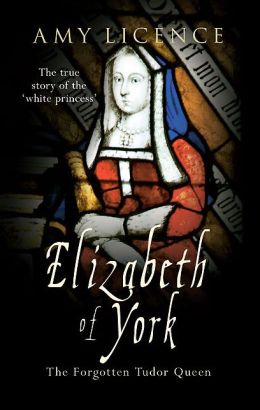
Book Review: Elizabeth of York: The Forgotten Tudor Queen by Amy License

Elizabeth of York book cover

Because of the TV show “The Tudors” which aired recently, there had been an increased interest in this fascinating dynasty of English kings. Consequently, there has been an upsurge in the number of books written on the dynasty itself, as well as the many historical figures from the era. While it has been common knowledge among historians that there is very little detailed information on the life of Elizabeth of York, mother of King Henry VIII, this hasn’t stopped a couple of authors from writing biographies of her.

Alison Weir recently released her biography “Elizabeth of York: A Tudor Queen and Her World” and Amy License also penned a work on her life. License is prolific and popular writer of books, articles and blog posts about women’s and children’s issues in Tudor and medieval England. She also has appeared on television and radio in England talking about these topics.

Elizabeth of York: The Forgotten Tudor Queen unfortunately has very little information about Elizabeth herself. However, License’s style is unique in that she views her subjects from a family and feminist perspective. There is a lot of information and detail about how women lived during this era. There is some good information on Elizabeth’s mother Elizabeth Wydeville. I learned Elizabeth of York enjoyed a very close knit family, seeing her parents often and having very loving relationships with her siblings. License also has good explanations for the politics of the War of the Roses and how Elizabeth’s husband Henry Tudor dealt with the myriad of pretenders to his throne.

So while there is not as much detailed information about Elizabeth in License’s book as there is in Weir’s, it is still a worthwhile read because of License’s distinctive feminist point of view and there are also some great pictures in the book. I would recommend this book to anyone interested in Tudor women.

Book Review: Margaret Beaufort: Mother of the Tudor Dynasty by Elizabeth Norton

Margaret Beaufort book cover

I had heard all the usual things about Margaret Beaufort. She was married very young, had a child and was never able to conceive again, connived and conspired to put her son Henry on the throne of England and she was the mother-in-law from hell. I had no idea if any of this was true or not and wanted to learn more. When I heard Elizabeth Norton had written a biography of Margaret, I ordered my copy and settled down to read it.

Norton’s writing style is very linear and chronological. It really made reading the book flow. And to my surprise, I found Margaret to be a very sympathetic character. Her early childhood was marred by the apparent suicide of her father but she was sincerely close to her mother and her step-sisters and brothers. She received a more than adequate education, unusual at the time for a woman. Margaret’s value as an heiress and good match was recognized early. Margaret was contracted to marry at the age of nine but this marriage was never consummated and was eventually annulled.

Margaret was associated with the House of Lancaster but managed to negotiate the landmine that was the War of the Roses very adeptly. King Henry VI gave Margaret to his half-brother Edmund Tudor in marriage and it was with him she had her son Henry to whom she devoted her entire life. When Edmund died young, Margaret was astute enough to find another husband and protector. She was forced to marry again when her third husband died after suffering wounds in battle. During all the ups and downs of the different kings on the throne between Lancaster and York, Margaret was flexible and agreeable and managed to carry on with her comfortable life until Richard III took the throne.

Margaret was certainly guilty of conspiring to elevate her son to the throne. At one point she was attainted by the government, lost all her wealth and land holdings and suffered house arrest. But her fourth husband Thomas, Lord Stanley, allowed her to continue to communicate with her son who was in France. Eventually Henry Tudor was successful in bringing forces to England and winning the Battle of Bosworth in 1485. Margaret was now able to live her life as a free and independent woman and greatly enjoyed a high position at court. She was also a generous supporter of charity and university education.

And perhaps she wasn’t the mother-in-law from hell after all. The evidence from this book and from other biographies of Margaret’s daughter-in-law, Elizabeth of York all suggest the women probably got along quite well. That’s not to say they didn’t disagree on occasion. But there appears to have been some family unity. Norton has certainly done her research and her writing style makes this an informative and pleasant read. Norton also includes a transcription of all the surviving letters written by Margaret herself. I enjoyed the book very much and came to admire Margaret Beaufort as the formidable survivor that she was.

Review: “Elizabeth of York: A Tudor Queen and Her World” by Alison Weir

Portrait of Elizabeth of York

Portrait of Elizabeth of York

When I heard that Alison Weir was writing a biography of Elizabeth of York, I eagerly awaited its release. Having been a long time reader of Weir’s non-fiction works and knowing very little about Elizabeth of York made this book highly anticipated. And I was not disappointed!

Elizabeth of York has very much been an enigma to historians. While we still don’t know what her personality was really like, this book shines a bright spotlight on her. It starts out by explaining the circumstances into which Elizabeth was born as the eldest child of King Edward IV. The War of the Roses had been ongoing for about ten years at the time of her birth. Weir tells us of the family dynamics and how the throne of England vacillated back and forth between the members of the Houses of Lancaster and York. When Elizabeth was fairly young, her father was forced to flee the country and Elizabeth, her mother and her sisters sought refuge in sanctuary. Edward eventually came back and had a fairly peaceful reign until his unexpected death in 1483.

Elizabeth and her family’s life was thrown into turmoil as her uncle, Richard, Duke of Gloucester, declared her and her brothers and sisters illegitimate. He set aside Elizabeth’s brother King Edward V and took the throne as king. Her mother took her family into sanctuary once again and both of Elizabeth’s brothers disappeared in the Tower of London, making Elizabeth her father’s heir. It was a very tense time. The plotting and scheming on the part of King Richard III, Elizabeth and her mother and Margaret Beaufort and her son Henry Tudor is explained in great detail by Weir.

Once Henry Tudor won the Battle of Bosworth in August of 1485 and gained the throne of England by right of conquest, he married Elizabeth. Weir explains that Henry wanted to make it clear he had won the throne and wasn’t relying so much on Elizabeth’s position as her father’s heir to legitimize his conquest. Perhaps this is why we don’t know as much about Elizabeth as we would like. Whether it was at her husband’s bequest or her own wish or both to remain in the background, we will never know.

Weir gives us a detailed account of Elizabeth’s life as queen, almost on a day-to-day basis. She tells us how Elizabeth spent her time and her money, who gave her gifts, the birth of her children and the status of her health. She has some great insights into Elizabeth’s relationship with her husband and her children. I found this to be quite fascinating. The book gives us great insight into life in the early Tudor court. It is meticulously researched and highly footnoted and has a very long list of sources. Weir has obviously done her research and is at the height of her writing powers. A thoroughly enjoyable read!