Book Review: “The Cambridge Illustrated History of France” by Colin Jones

illustrated history of France book cover

Based on the recommendation of a friend, I found a used copy of this book and ordered it. In my quest to read as much French history as possible before my trip to France, I had read “La Belle France”, another overall survey and wondered if this book would cover the same ground. I was pleased this author takes an entirely different course.

Jones writes more from a social history standpoint in this book. I very much enjoyed the chapters on France before the Romans and Roman Gaul. His chapters on the Franks and the Middle Ages cover a lot more ground than the other histories I’ve read so far. The later chapters covering the Revolution, Enlightenment, World Wars I and II and modern times have less detail but are still erudite and interesting. Occasionally Jones gets a little technical and wandering when discussing certain political situations. One thing I admire in his writing is his attention to the status of women in France throughout the ages.

I can’t say enough about the illustrations. This is what the Cambridge Illustrated Histories are known for. There are numerous maps illustrating different elements of France and its history. The maps clarify countless aspects such as where French dialects were spoken, delineating where Roman law and customary law were practiced, gene pools, agricultural and urban areas, different political boundaries, kingdoms and regions of France, where barbarian tribes invaded, etc.

There are photos of art and architecture, illuminated manuscripts, engravings, paintings, drawings and photographs of key points in French history, all with excellent, well written captions. In every chapter there are also insets with more details about select people and events. Some examples are on Blanche of Castile, the troubadours, the court of the Dukes of Burgundy and so on. All of these images really enhance the text. This is another well-written, informative history of France and I highly recommend it.

Book Review: “Paris: The Secret History” by Andrew Hussey

Paris the Secret History book cover

This title really intrigued me. Paris is a magnetic city just in its own right. To imagine there was a secret history was too tempting to pass up. In my ongoing effort to refresh my French history knowledge before my trip to France, I began reading.

Hussey mentions in the introduction his intention in writing this book is to emulate the work of Peter Ackroyd’s “London: A Biography”. Ackroyd’s book is splendid so this was a good sign. The first chapter covers Prehistory to the year 987 AD. I found this section most interesting. Paris was started basically on the small, swampy islands in the Seine. He talks about how the city, then known as Lutetia, was inhabited by the Franks and the Romans. The Romans built a wall around the city and it became a trading center. Next, in this chapter and in every one after, Hussey gives small tidbits of history that might not be as well known by the average reader, the so-called secrets of the city. One of the highlights in this first chapter is the death by beheading of St. Denis on Montmartre, making the name of the hill self-explanatory.

In the medieval section, Hussey give us a colorful array of characters, talking about the ordinary people. Sections include, lovers and scholars, students and streetfighters, poets, saints and thieves. In fact, the entire book is filled with details about average everyday people down to the present day. The history of Paris is filled with robbers, gypsies, drunkards, beggars as well as the nobility, merchants and the bourgeoisie. There’s a lot of information on artists, writers, poets and students and how they shaped the politics of the city over the millennia. If social history is your cup of tea, you will enjoy this aspect of the book.

Hussey obviously knows and loves the city well. He gives us details about many of the neighborhoods, even down to who and what kind of people lived on certain streets. The book has many drawings, maps and photos showing us the boundaries of the city over the years. One of the first things that struck me as I began reading this book is that it is really well written. Everything he writes is very clear with no grammatical or typographical errors. It was just a joy to read. If you are interested in French history and Paris in particular, I can heartily recommend this book.

Book Review: “La Belle France: A Short History” by Alistair Horne

La Belle France book cover

In my quest to read as much French history as possible before my trip later this summer, I picked up this book with the express purpose of having an overview. I wasn’t disappointed. The book starts with the invasion and conquest of Julius Caesar and ends with the presidency of Francois Mitterrand.

The book was published in 2004 and written by a British historian who specializes in early modern French history. He has written books on topics ranging from the age of Napoleon to the war in Algeria in the 1960’s. “La Belle France” is a sweeping narrative where Horne gives an overall view of the history along with a special look at particular details which I assume he finds to be of noteworthy interest. The early chapters are a little dismissive. He doesn’t tell us a lot about the Franks and the chapters on medieval history are sparse on detail. By the time of the Renaissance he gets into full swing.

I was a little disappointed in Horne’s attitude toward women in this book. He calls Eleanor of Aquitaine “oversexed” and refers to Marie de ’Medici as fat, blond and stupid. However, a little later he does give some examples of important women in French history so I’m not really sure where he is coming from in regards to this topic.

I really enjoyed the sections on King Henri IV and his extended siege of Paris, Cardinal Richelieu and King Louis XIII, the age of Napoleon, the reign of Napoleon III and the First World War. Horne’s writing really shines here. He also has insightful comments in the section on WWII with the occupation of France by the Nazis and Vichy France, the collaborators and the Resistance and also on the modern era under the presidents Pompidou and Mitterrand.

Nothing really is black and white about French history and this book illustrates that very well. Other than the comments on women, Horne is really balanced in his approach to the subject and well versed on the sections where he has expertise. I sought a review of two thousand years of French history and this book delivered. I recommend it.

Book Review: “Before France and Germany: The Creation & Transformation of the Merovingian World” by Patrick J. Geary

before france and germany book cover

In anticipation of a trip to France, I’ve been on a mission to read as many of the books in my library as I can related to French history. Starting with the earliest in the timeline is this book on the Merovingian era of France. My personal knowledge of this time period is spotty so I was very interested in what this book had to say.

I was not disappointed. Geary starts by outlining some basic information on the Roman Empire and how it affected France and western Germany. He talks about the many “barbarian tribes” and their movements within the empire and just outside it. Caesar conquers Gaul and begins to incorporate the Roman style of government. Then various tribes settle in the same area. Geary explains how some tribes maintained the Roman way of governing and some didn’t.

Eventually a confederation of tribes commingled and become the Franks. The Franks have their own style of governing along with adopting some elements of Roman government. This is the birth of Merovingian Empire. He then recounts the reigns of some of the Merovingian kings such as Clovis, Chlothar II and Dagobert I. In addition to the kings and their government, Geary relates the history of the church in France which is most fascinating. The beginnings of Christianity started with the missions of Irish and Anglo-Saxon monks. The Merovingian kings and other nobles started the building of monasteries in France, the most recognizable being Saint-Denis where the French kings are buried.

This book details the fifth to the eighth centuries and recounts the start of the Merovingian government down through its demise, giving the reasons for its fall and the final chapter summarizes the legacy of Merovingian Europe. I found this book to be very revealing about this era and enjoyed it very much. I recommend it.

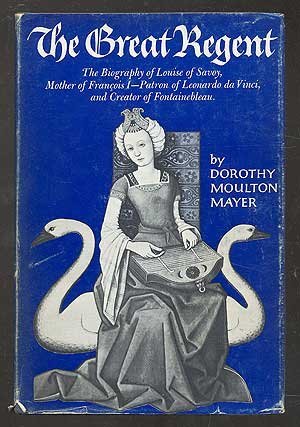
Book Review: “The Great Regent: Louise of Savoy, 1476-1531” by Dorothy Moulton Mayer

The Great Regent book cover

The difficult thing about researching and writing about French history can sometimes be finding sources when you don’t read the language. Completely by chance, I found this biography of Louise of Savoy in English and was thrilled. This book was written in 1966 and published by Funk and Wagnalls. The author herself has an interesting story.

Dorothy Moulton Mayer was an accomplished English singer. She married a German born philanthropist, Robert Mayer who was one of the founders of the London Philharmonic Orchestra. From the 1950’s on, Dorothy wrote several biographies including on Queen Marie Antoinette, painter Angelica Kaufman, violinist and composer Louis Spohr and this one on Louise of Savoy. I really have to admire her determination in writing these biographies.

Louise of Savoy was the mother of King François I of France. This in and of itself is not remarkable. What is significant is the fact that François trusted and relied on his mother so much that she basically ruled France from the time he took the throne in 1515 until her death in 1531. This served two purposes. François could continue to pursue his passions and pleasures such as hunting, conquering Italy and women. And secondly, Louise did an outstanding job when she was in charge of the government.

This can particularly be seen when François and his troops lost the Battle of Pavia in 1525 to the Holy Roman Emperor Charles V during the Italian Wars. François was taken prisoner and kept incarcerated in Spain until March of 1526. Louise was completely in charge in France and worked diligently to release the King. The Treaty of Madrid was brokered and François was released. However, in return he had to give up his two sons as hostages to Charles. Thereafter, Louise had to work even harder to get her grandsons released. She brokered the Treaty of Cambrai in 1529 along with her sister-in-law, Margaret of Austria who was acting on behalf of her nephew Charles V. This was called the Ladies Peace and Mayer gives a detailed description of the proceedings which is fascinating.

I really loved this book. Mayer’s writing is fluid and comprehensive. She gives lots of detail about the life of this remarkable lady including her upbringing under Anne de Beaujeu where she learned her craft and tidbits about her health. Her descriptions of her accomplishments are fair and balanced. Mayer talks about how historians have denigrated Louise’s actions and reputation. Mayer gives her own interpretations.

The book has a comprehensive bibliography of primary sources and there are some outstanding photos of contemporary art depicting Louise. And in the end there is a fascinating appendix. Mayer sent Louise’s handwritten letter to the Emperor Charles V after her beloved son King François was taken prisoner to a handwriting expert. She includes the expert’s interpretation of the writer’s personality. I think you will find the essence of Louise’s character it what he has written. Louise is a lady to admire and I highly recommend this book.

Book Review: “French Musketeer 1622-1775” by René Chartrand

French Musketeers book cover

Who doesn’t love the Musketeers? Ever since the French writer Alexandre Dumas, père wrote his series of historical novels in the 19th Century, people have followed the adventures of D’Artagnan, Athos, Porthos and Aramis and their intrepid valets in books and movies. But were these men just characters in a book or did they really exist? Did the Musketeers really duel and fight amongst themselves? Did they actually fight in wars? And what were their uniforms really like? What sort of equipment was issued to them?

This book from Osprey Publishing answers this and many more questions. Chartrand gives an overall history of the various units of the Musketeers. They fought on horseback and on foot in numerous wars as well as fulfilling their duty as bodyguards for the King. The chief ministers of Louis XIII and Louis XIV, Cardinal Richelieu and Cardinal Mazarin had their own companies of Musketeers. Chartrand says there were many instances of duels being fought between the Kings’ and the Cardinals’ Musketeers. So the duel scenes in the stories have a basis in fact.

There is a chapter in the book regarding the fighting of the Musketeers in sieges, battles and wars. They also performed secret missions for the king. The book is filled with colorful illustrations by Graham Turner as well as copies of various prints and paintings depicting Musketeers from the different eras of their existence. A great deal of the book explains the costume and the equipment of the soldiers and how it changed over time. Also included are a chronology, a list of ranks, a glossary of terms and a bibliography.

The information I found most interesting is the historical basis for the characters in Dumas’ novels. Dumas found a copy of a book which was the basis for all of his stories. It was published in 1700 and called “Memoirs of Mr. D’Artagnan, Captain-Lieutenant of the First Company of the King’s Musketeers, concerning a quantity of private and secret events that occurred during the reign of Louis the Great”, written by Gatien de Courtiz de Sandras. Sandras had been a King’s Musketeer for eighteen years. Chartrand explains that Dumas’ characters of D’Artagnan, Athos, Porthos and Aramis are actually based on real men who served in some form or another as Musketeers or soldiers in other units. Sandras may have met the “real” D’Artagnan at some point so his memoirs possibly contain some actual facts of his life. Of course Dumas used artistic license and fictionalized many aspects of their lives.

I distinctly remember seeing the movie version of “The Three Musketeers” from 1973. My college library had a fabulous collection of most of Dumas’ work in old volumes that had been bound in new covers. I read every book I could get my hands on, devouring them. Not only are they entertaining reading but they give the basic outline of French history during the Renaissance and early modern period. So reading this book was a lot of fun and brought back good memories and I enjoyed the illustrations.

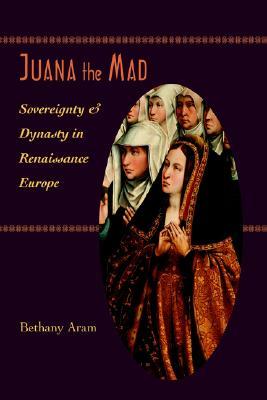
Book Review: “Juana the Mad: Sovereignty & Dynasty in Renaissance Europe” by Bethany Aram

Juana the mad book cover

Earlier this year I read two biographies of Isabella of Castile by Liss and Downey. Liss doesn’t tell us a whole lot about Isabella’s children but Downey has a great chapter on her progeny, especially Juana. So the debate about Juana is whether she was insane or not and Downey writes quite a bit about Juana’s abominable treatment by her father and husband, basically saying Juana was not mad. I was intrigued and looked at the notes and bibliography section and found Downey referenced this book. So I purchased a copy.

Bethany Aram is a professor of Spanish and European history at the Institute of International Studies, Seville, Spain. This book is one in a series of the Johns Hopkins University Studies in Historical and Political Science. Aram spent many years in archival research and draws upon recent scholarship. Aram gives us a biography of Juana’s life along with a study in royal authority in the Renaissance.

Aram puts Juana’s life entirely in perspective for the times. The first section of the book explains several aspects of royal authority in Renaissance Europe. The sovereigns’ household was a microcosm of the government of the country. In this respect, Juana never had control of her own household. It was first controlled by her mother, then her husband, followed by her father and finally her son. Secondly, the sovereign was viewed as having two bodies: their personal bodies and their monarchical body. Juana was held as a virtual captive which didn’t allow her to bodily rule. Thirdly, a sovereign ruled by alternating fear and love. Aram gives a complete explanation of these concepts and how they applied to Juana’s situation.

Aram quotes all primary sources. Throughout the rest of the book, she weaves conventional biographical information along with putting Juana’s life into the context of the times. Juana was third in line for the throne and was not prepared to take the reins of government. When the time came, she was either unwilling or unable to take control. The political situation in Spain was not stable and would have taken a strong monarch to rule.

Aram gives us a jaw-dropping picture of Juana’s treatment by those who wished to control her and rule in her place. The descriptions of her life in Burgundy, her treatment by her husband Philip, her captivity in Tordesillas, Spain by her father and later her son are amazing to read. She had no say in who worked in her household her entire life. Philip was the epitome of the abusive husband, not allowing her enough money to even eat sometimes, let alone run her household.

Under the domination of her father after Philip died, she was a prisoner with no outlet. Some officials tried to get her to sign away her rights as queen but she always found an excuse not to sign. She complained loudly about those who had control of her household and greatly mistreated her. Aram gives an impressive explanation of why Juana held on to the body of Philip. She wanted to bury him in the family mausoleum of Granada for dynastic reasons and for political motivations, her father didn’t agree. Aram says there is only one chronicler who describes Juana opening Philip’s coffin. She explains this might have been to confirm his body was still there, not some kind of macabre obsession.

After the death of Ferdinand, Juana’s son Charles maintained her position in captivity. When a group of rebels gained access to her and tried to persuade her to rule in her own right, she basically signed no documents to that effect and kept her son in power. While her behavior may not have been royal and considered eccentric for the times, it doesn’t appear she was mentally ill. She either didn’t want to rule or was unprepared and chose not to rule.

I found this book fascinating and a real eye-opener. It’s not entirely an easy read as the academic explanations of Renaissance sovereignty are complex and deep. But it sets the backdrop and once the reader gets to the descriptions of Juana’s life, it’s a real page turner. If you want to know the true story of Juana of Castile, I recommend this book.
Book Review: “The Warrior Queens: The Legends and the Lives of the Women Who Have Led Their Nations in War” by Antonia Fraser

The warrior Queens Fraser

Before there was Alison Weir, Philippa Gregory, and other contemporary women historians and writers, there was Antonia Fraser. Many years ago, in her heyday, I read everything she wrote that I could get my hands on. There was “Mary, Queen of Scots, “The Six Wives of Henry VIII”, “King Charles II” and a biography of Marie Antoinette, among others. Her non-fiction books were the gold standard of history. But somehow I missed “The Warrior Queens”.

I’ve always been fascinated by the story of Boudica, the Celtic queen of the Iceni tribe who rose up in rebellion against the occupying Romans in Britain in the mid-first century. I had heard she burned London to the ground! What an amazing story. I had to learn more. Apparently, Fraser felt the same way. The writing of this book was born out by her love of the story of Boudica. Most of the book is dedicated to Boudica’s story, relating it to the lives of other women who led their nations in war. Many of the women in this book I have heard of such as Matilda, Countess of Tuscany, the Empress Matilda of England and her cousin King Stephen’s wife Matilda of Boulogne, the twelfth century Georgian Queen Tamara, Isabella of Castile, and Queen Elizabeth I of England. These are some of my favorite women of history.

Fraser gives us the story of these women leading their troops into war in her inimitable intellectual manner which is very compelling. Her history is fair and balanced, engaging and fun. Her historical arguments make good sense. I especially found the story of the Rani of Jhansi to be captivating. She led her troops against the British during the Indian Rebellion of 1857. I knew nothing about her so it was refreshing to learn of her convictions and bravery.

Her final subjects are Golda Meir and Margaret Thatcher. It is interesting to see Fraser’s perspective on these modern women and their role in war. This book is women’s history at its finest. I can’t recommend it enough. I couldn’t put it down.

Book Review: “Boudicca’s Rebellion AD 60-61: The Britons rise up against Rome” by Nic Field

Boudicca's rebellion book cover

The story of Boudica, the Celtic Warrior Queen has always intrigued me. She rose in rebellion in the first century against the Roman Empire when they occupied Britain and had some success. I wanted to know more. In searching for sources, I found this book was available. The cover has an almost cartoonish drawing so I was a little dismayed. But I was wrong to be concerned. This is a very thorough account of Boudica’s rebellion with lots of valuable information.

Osprey Publishing specializes in military history books. They advertise that their books are “Accounts of history’s greatest conflicts, detailing the command strategies, tactics and battle experiences of the opposing forces throughout the crucial stages of each campaign.” This is certainly the case with this book. Author Nic Fields has an excellent grasp of the history of the Roman military. He details how the soldiers dressed, how the Roman army was organized, what weapons they used, etc. There are photographs of Roman military re-enactors, illustrating what they looked like. There are photos and explanations of archaeological evidence from the era along with maps and drawings.

Fields tells us about the primary sources: Tacitus and Cassius Dio. He gives thorough analysis of both authors, their accounts of the events and the differences and similarities. He explains how the Celts had no written records so we can only go by the Roman version of events. The sections of the book include opposing commanders, opposing armies, opposing plans, the campaign and the aftermath. I especially liked his detailing of the Celtic forces and the type of chariots they used to fight with and how they employed the chariots during battle.

My favorite section of the book talks about the location of the final battle between the Romans and Boudica’s forces. Tacitus and Dio do not give the actual location. The only thing we know is the battle occurred in the Midlands of Britain. Fields has identified a possible location and gives several photographs. This is really fascinating.

As mentioned, the book is filled with photographs. The illustrations of Peter Dennis are fantastic. He incorporates what we know about the Celts and Boudica herself. Certain items in the illustrations are numbered and there is a legend beneath the picture explaining the historical fact behind what you are seeing. I enjoyed the artist’s imagination very much.

So, I learned a lot about Boudica’s campaign against the Romans and this book made the time period come alive. I also learned about Osprey Publishing and will use them as a resource again for military history. I can highly recommend this book.

Book Review: “Autobiography of a Yogi” by Paramhansa Yogananda

book cover Autobiography Yogi

The release of the movie “Awake: The Life of Yogananda” recently sparked my interest in the history of this yogi who brought Hindu spirituality to the West. I’m embarrassed to admit, I had his “Autobiography” on my book shelf for several years. After seeing the movie, I decided it was time to dust the book off and read it.

What an enchanting read this is! Yogananda’s birth name was Mukunda Lal Ghosh and he was born in Gorakhpur, Indian in 1893. The first section of the “Autobiography” tells of his upbringing in a loving and well-to-do family. He gives a moving recounting of the vision he has of his mother just before she succumbs to Asian cholera. He delights in telling us of his numerous adventures in attempting to escape to the Himalayas to find holy men much to the consternation of his father. While he is in school, he willingly tells us he wasn’t a serious scholar but he has many fellow students and teachers who help him through his classes.

He finally convinces his father he wants to study with a guru and joins an ashram. One day, he makes an unexpected errand to purchase items for the ashram and has a fateful encounter with his lifelong guru, Sri Yukteswar. They both know they were destined to be guru and student. The middle section of the book describes their relationship. Sri Yukteswar convinces Yogananda that he is to earn a degree from college as he is destined to bring Hindu teachings to America and he needs the degree to be accepted more readily. As Yogananda applies himself to his studies (not very seriously), he sits at the feet of his guru who initiates him in the mysteries of the Kriya yoga practice and changes his name. The “Autobiogaphy” passes on to us much of the wisdom of this compassionate and gentle teacher.

The rest of the book divulges more adventures with Yogananda traveling to various cities to visit fascinating characters such as yogis and yoginis who never eat, never sleep and fight with tigers. Eventually, Sri Yukteswar reveals to Yogananda he is ready for his journey to America. He sails with trepidation. He barely speaks English and while on the ship he is asked to address an audience. He begins speaking and afterwards, the people tell him he spoke very effectively in perfect, fluid English! He lands in Boston and starts a community there. He then makes his way to California where he begins the Self Realization Fellowship in Encinitas, California.

After many years in the United States, his guru asks him to return to India. He travels through Europe, visiting other spiritual beings and does quite a bit of sightseeing. He finally is reunited with Sri Yukteswar. After their meeting, he journeys to another city and while he is there, his guru dies. He is devastated but finds a way to move on, returning to America to do more work.

In growing up, I remember hearing about mystical men in the caves of the Himalayas and people who climb mountains to find them to learn the meaning of life. I’ve also heard stories of people who can appear in two places at once. Yogananda has written about all this in his “Autobiography” and fully explains these phenomena. Whether you believe it or not, all this makes for wonderful and glorious adventure in reading. Even if you are not a yogi, this is an enjoyable read.