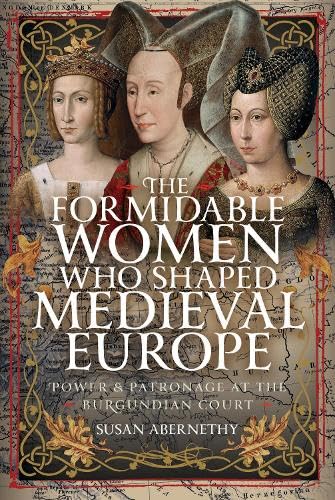
The Formidable Women Who Shaped Medieval Europe: Power and Patronage at the Burgundian Court is now available in the US and Canada.
Purchase the book here: Amazon Canada
Also available around the world at Bookfinder.com
The Formidable Women Who Shaped Medieval Europe: Power and Patronage at the Burgundian Court is now available in the US and Canada.
Purchase the book here: Amazon Canada
Also available around the world at Bookfinder.com

Heidi over at Adventures of a Tudor Nerd: Exploring the 16th Century and Beyond has read and reviewed The Formidable Women Who Shaped Medieval Europe: Power and Patronage at the Burgundian Court. Have a look at her review and order your copy here for delivery by Christmas: The Formidable Women Who Shaped Medieval Europe at Blackwell’s booksellers
Throughout European history, we tend to think about the countries as a whole when it comes to the political sphere of influence. We think of the big countries like France, Spain, Italy, Germany, Austria, and England as having the most impact, but we have to consider that during the Middle Ages, duchies held immense power. Take, for example, the Duchy of Burgundy, also known as the Burgundian Empire. It was a part of France, but that does not mean that the dukes stayed on the side of the French. The Burgundians used their influence to expand and marry into the medieval European families, affecting European history as a whole. While we tend to focus on the Dukes of Burgundy, we should be paying attention to the women of this duchy. That is why Susan Abernethy chose to focus on these women in her latest book, “The Formidable Women Who Shaped Medieval Europe: Power and Patronage at the Burgundian Court.”
I would like to thank Pen and Sword Books and NetGalley for sending me a copy of this book. I enjoyed Susan Abernethy’s first book about Catherine of Braganza. When I heard that she was writing a book about medieval Burgundian women, I was intrigued. I know a little bit about historical figures connected to Burgundy, but I didn’t know much about the history of the duchy itself, so I was excited to learn more.
Abernethy begins by giving her readers a brief history of how Burgundy became a kingdom and a duchy of France. While the history of Burgundy is extensive, we are mainly focusing on the Valois Dukes of Burgundy and the women in their lives. The Valois Dukes of Burgundy were Philip the Bold, John the Fearless, Philip the Good, and Charles the Bold. While this is primarily about the women of Burgundy, it is important to understand the political and military landscape that these women had to deal with in Burgundy and other countries during this time.
The bulk of this book focuses on the women of the Burgundian empire, starting with Margaret of England, Duchess of Brabant, in the 13th century, and ending with Queen Juana of Castile, in the 16th century. We get to hear stories about duchesses and queens, countesses and diplomats, and even a saint. They had to deal with wars, international diplomacy, family drama, and husbands who were not faithful. There were some familiar figures like Mary of Guelders, Queen of Scots, Jacquetta of Luxembourg, Margaret of York, Duchess of Burgundy, and Margaret of Austria, but the majority of these women were new to me, which was very exciting.
It’s a lot of ground to cover, but Abernethy has a way of telling the stories of women comprehensively. I thoroughly enjoyed learning about Burgundy and these extraordinary women who made the duchy an empire. If you are someone who wants to learn about the Duchy of Burgundy, I would recommend you read “The Formidable Women Who Shaped Medieval Europe: Power and Patronage at the Burgundian Court” by Susan Abernethy.

Pen & Sword is having an autumn sale! You can pre-order my upcoming book, The Formidable Women Who Shaped Medieval Europe: Power and Patronage at the Burgundian Court for 30% off. Pre-order your copy today! (UK residents from the Pen & Sword website only until October 31. Book will be released on October 30)
The Formidable Women Who Shaped Medieval Europe: Power and Patronage at the Burgundian Court
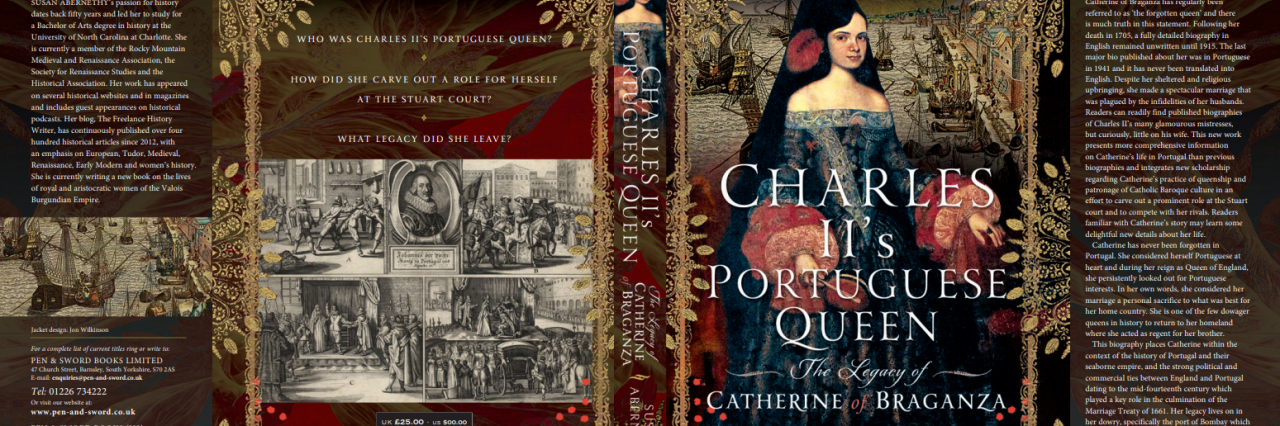
You can also purchase Charles II’s Portuguese Queen: The Legacy of Catherine of Braganza for 30% off

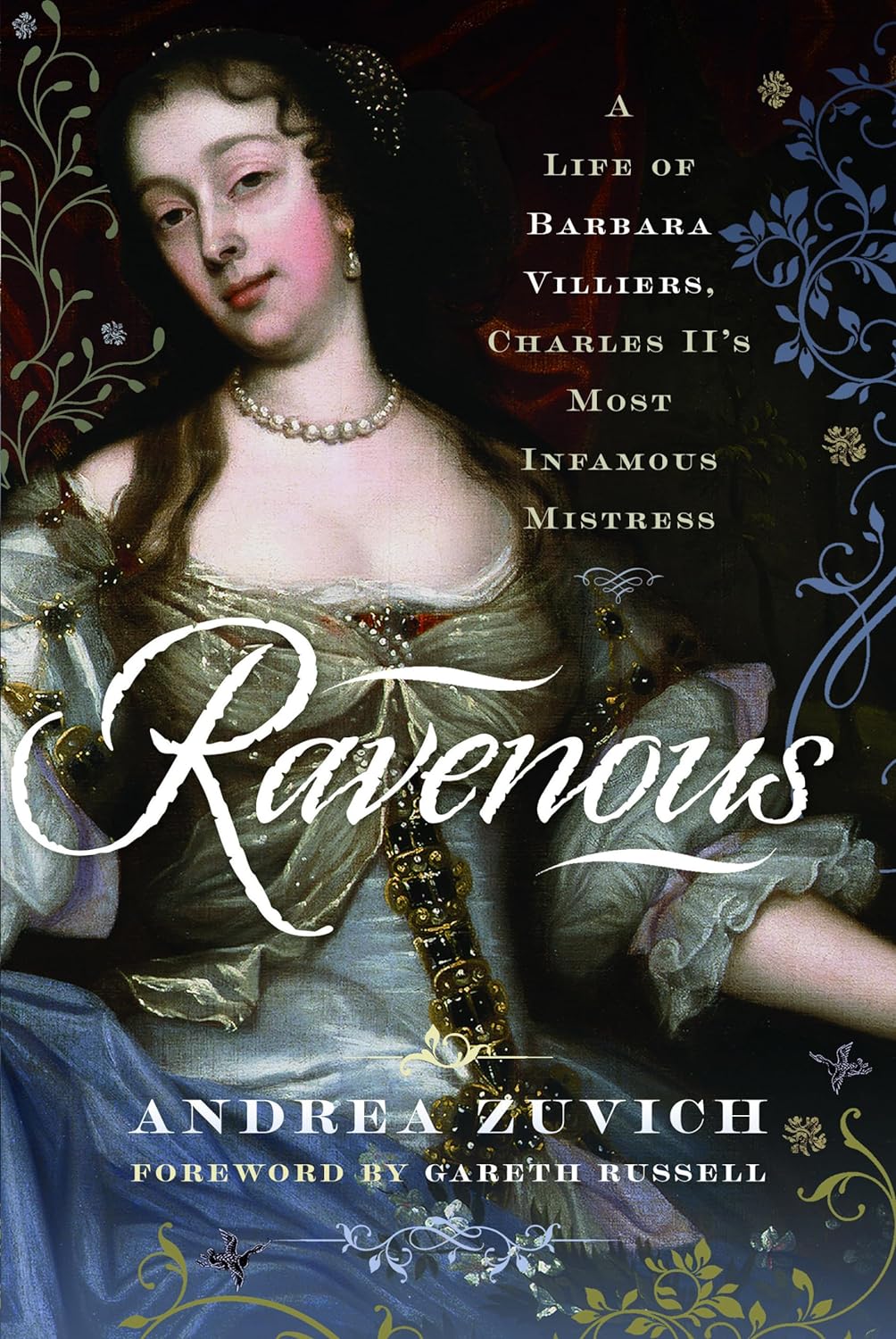
My good friend and historian Andrea Zuvich kindly provided me with a copy of her latest book “Ravenous” which I was happy to read and review. As the title infers, Villers is not a very sympathetic or even likable character. Zuvich’s treatment of Barbara is very even handed, neither extolling her character nor denigrating her in the process. By providing the complex details of Barbara’s life, we get a complete view of her.
Barbara’s family, the Villiers, were integral operators in the Stuart monarchy beginning with the reign of James I. Zuvich gives us some background into the family, and Barbara was related to one of the more minor family members. From the time she was a teenager, she engaged in carnal relations with an aristocratic member of the court. Although this relationship did not result in a marriage, Barbara had a connection with the man throughout her whole life. Early on, Barbara managed to gain access to King Charles II, even while he was in exile and before his restoration to the English throne. By the time this happened, she was Charles’ maîtresse en titre, in the tradition of his grandfather, King Henri IV of France.
This would be Charles II’s longest lasting relationship, especially due to the birth of several children with Barbara, in effect creating a family unit which he supported until his death. Initially, Barbara engaged in political and diplomatic matters at court and as Zuvich explains, played a role in the disgrace of Henry Hyde, Charles’ chancellor, among others. Charles endowed Barbara with various sizable sources of income, something people grumbled about. He also elevated her, first to the title of Countess of Castlemaine and later to the title of Duchess of Cleveland. All of their male children together were given aristocratic titles and the female children made good marriages.
Later in her life, Barbara engaged in behavior, such as taking lovers and gambling large amounts of money which caused embarrassment for Charles, and she slowly disappeared from any meaningful influence and authority at court. Zuvich has found numerous references to debts and lawsuits for collection in Barbara’s name that make for interesting reading. I especially liked Andrea’s take on the relationship between King Charles and his wife, Queen Catherine of Braganza. She is very fair in her treatment of the queen.
Andrea’s research is meticulous, and she obviously went to great lengths to explore the archives to find intriguing nuggets about Barbara’s life. She also investigates and reports on all the many interrelationships between Barbara Villiers and numerous members of the Restoration Court. There is an extensive collection of illustrations in the book, documenting Barbara’s beauty throughout her life. The book is well written and well-researched. For anyone interested in the Barbara and various intrigues and dealings and interactions between courtiers of the Stuart Restoration court, I can highly recommend “Ravenous”.
For US buyers: Ravenous: A Life of Barbara Villers, Charles II’s Most Infamous Mistress
For UK buyers: Ravenous: A Life of Barbara Villiers, Charles II’s Most Infamous Mistress

Set in the 13th century and in the city of Brugge (Bruges) this complex novel of faith, fairness, hypocrisy and the plight of women in a world of men fills in many voids in the contemporary understanding of the role of female mystics and the place of women in the church. Although much is known about the beguines, a sect of female monks prevalent in Europe during the years before Protestantism took hold, the intimate personal view revealed here touches close to the emotional life of these remarkable people.
Aleys is a young girl born to a family of wool merchants who is visited by visions of a divine source urging her to find her way to God. The images she sees are bright, compelling, frightening and profound. When she voices a wish to become part of the Franciscan order her family is taken aback, since she has agreed to marry into a house of wealth that will assure her father a place in the guild he desperately seeks. Lukas, a Franciscan friar becomes her mentor although he is perplexed that she, a mere girl, should be privy to such holy calling when his own dedication and fervor have left him without such divine inspiration. Through a series of miracles Aleys performs and the devious machinations of the local bishop, a jealous and avaricious man who is more concerned with his own promotion within the church than real religious matters she is made an anchorite, sequestered from life in a cell attached to the local church.
How Aleys deals with not only the passionate response of the people of Brugge but the plots devised by the bishop is the meat of the story. It is an intimate look at the joy and sorrow of the true prophet, blessed and cursed with vivid images and an emotional bonding with Jesus, Mary and God. A thread dealing with the clandestine translation of the gospel into Dutch for the benefit of common folk who have only had access to the words of the Bible through priests who often did not understand the Latin or the meaning of the verses complicates the lives of Aleys, the beguines, and Lukas, her tortured mentor.
An understanding of the genesis of saints and martyrs who dominated much of the religious thought of the time is available to the reader who wishes to understand more about Christianity, women and the Church. A potent narrative illuminating the rapture and the pain of the zealots who often found themselves at odds with the established keepers of the faith is limned with skill and clear evidence of extensive research and soul-searching on the part of this author who is an academic as well as a novelist.
Shelf Talker: An intimate look into the lives of religious visionaries who became martyrs and saints as well as the intriguing sect of the beguines, a female sect of monks could easily be the basis of a course on women’s issues and/or comparative religion. Well written, compelling narrative and a gripping personal story of a young girl’s transformation from common to divine.

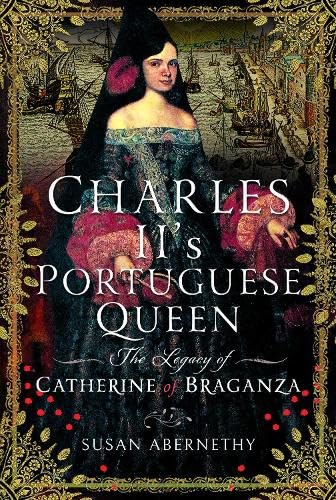
Today is the US release date for Charles II’s Portuguese Queen: The Legacy of Catherine of Braganza. Order your copy today from your favorite bookseller for immediate shipment.
Charles II’s Portuguese Queen: The Legacy of Catherine of Braganza restores this queen to prominence, revealing her political influence, cultural patronage, and enduring legacy in both England and Portugal.

Blackwell’s now has copies of Charles II’s Portuguese Queen: The Legacy of Catherine of Braganza available and they are offering a 10% discount and free shipping to the US. This is the best price yet. Order your copy today!
Amazon is also offering the book at a reduced price for pre-order to the US

Barnes and Noble US is offering members 25% of pre-orders until April 25, 2025. Order your copy of Charles II’s Portuguese Queen: The Legacy of Catherine of Braganza today for delivery on June 30th.

Exciting News! The Freelance History Writer’s debut book Charles II’s Portuguese Queen: The Legacy of Catherine of Braganza is now available for pre-order. Click on the links below and order your copy today.
To order for shipping to the United States:
To order for shipping to the UK and elsewhere in the world:

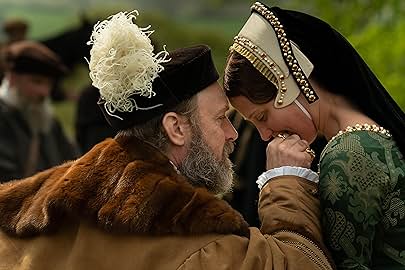
The film Firebrand was a complete disaster. It’s hard to argue with about an hour and ten minutes of the movie but then it completely went off the tracks.
On the positive: The acting was superb. Vikander played the role of Katherine Parr just right, being strong and assertive but scared to death of Henry. Although Jude Law went over the top at the end, for the most part his performance was the consummate portrayal of Henry, possibly even rivalling that of Keith Michell in the 1971 TV series The Six Wives of Henry VIII (my own personal favorite). You could see the charming king at one point and then the tyrannical king in another scene with Law. And the scenes with the ulcerated leg are very realistic.
I loved the actors who portrayed the Seymour brothers with their long beards, as seen in their actual portraits. The actor who played Stephen Gardiner did an excellent job demonstrating how the bishop played the political game with masterful charm. Music and costumes were superb and the scenes of the hunting parties and the banquets which were historically accurate were a joy to watch.
I’m not buying the people who defend the film by saying it’s based on a novel and it’s only fiction. Why spend seventy minutes of the film with perfect settings, look-alike actors, realistic costumes, historically accurate music and perfect storytelling and then go off the rails for the last fifty minutes? And the real story is infinitely better than the hogwash depicted in the film.
The final hour was painful. Without giving away any spoilers, I’m going to have to historically counteract with all my might the ending. See the movie for the reason stated, but be forewarned.
*Full disclosure: I have not read the novel The Queen’s Gambit by Elizabeth Fremantle* upon which the film was based.

 The Freelance History Writer Notes and Reviews
You must be logged in to post a comment.