Book Review: “A History of Spain and Portugal” by Stanley G. Payne

Admittedly, my knowledge of Spanish and Portuguese history is scanty. I’m in the middle of some serious research on Portugal and knowing the history of the two countries is connected, this book looked like a good bet. The book was printed in two volumes and was published in 1973 by the University of Wisconsin Press. Stanley G. Payne has a long and distinguished career as an historian and is considered a specialist in Spanish fascism. His last position before his retirement was chairman of the History Department at the University of Wisconsin-Madison.

As Payne states in the preface, these volumes were written to address the need for a reasonably full and up-to-date comprehensive history of Spain and Portugal which can be used as a textbook for courses in Spanish history or as an interpretive account for other readers. His intention is to give accounts of the political and institutional history, including the church and religion, as well as social and economic history. He does not go into too much detail about literary and art history by design as these subjects are well covered elsewhere.

For each kingdom on the Peninsula, Payne gives succinct details of how the peasants lived, how the nobility came to power, how royalty took over the government, how each kingdom (Leon, Castile, Catalonia, Valencia, Aragon, etc.) came into being and was absorbed into what we call Spain today. He explains the economies of each kingdom. There were sheep and cattle in Castile, trade within the Mediterranean and without by the eastern kingdoms, ironworks in the Basque area, etc. He explains how peasants worked the land, some making rent payments to the overlord and some who owned their land. There were slaves who worked the land. He talks about the soldiers who fought the wars. Payne doesn’t talk much about the actual kings and queens and only mentions a few of the most politically important ones by name.

Payne is very precise in describing the religious situation in the Peninsula. There were pagans initially and then Christians, Muslims and Jews. He chronicles the histories of these people such as how they lived in harmony for the most part until the Catholic Majesties decided they wanted religious harmony and went to war. There were forced conversions or many people were expelled. The Catholic Church was powerful but royalty always had the ability to check this power.

Personally I found this book to be masterful. The history of the Iberian Peninsula is fascinating in and of itself. But Payne’s writing and treatment of the subject matter had me totally captivated. He minces no words here. From the history of the ancients to the modern 20th century, this is a great read. To me the best material deals with the social history. I certainly learned a lot of new vocabulary! It’s not necessarily a definitive work but more of a comprehensive overview. Some may find it a bit of slog but if you stay with it, you will certainly find this work rewarding.

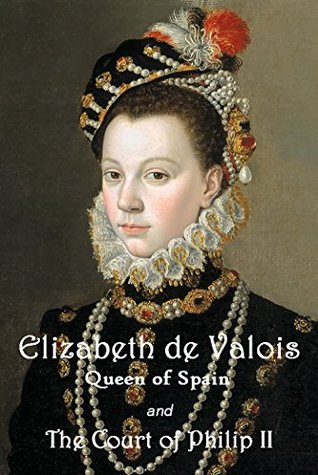
Book Review: “Elizabeth De Valois, Queen of Spain, and the Court of Philip II” by Martha Walker Freer

The subtitle of this book is “From Numerous Unpublished Sources in the Archives of France, Italy and Spain” and it comes in two volumes. As I’ve said on this blog before, I enjoy reading old history books. This one was published in 1857 and is a complete revelation. I just happened to find the first volume electronically by doing a search on Google Books for Elizabeth de Valois. The second volume is available for purchase as a reprint from any reliable bookseller.

From the entry on Martha Walker Freer in the Dictionary of National Biography 1885-1900, Volume 49 written by Elizabeth Lee:

Mrs. Martha Walker Robinson (1822–1888), writer on French history under her maiden name of Freer, daughter of John Booth Freer, M.D., was born at Leicester in 1822. Her first book, ‘Life of Marguerite d’Angoulême, Queen of Navarre, Duchesse d’Alençon, and De Berry, Sister of Francis I,’ appeared in 1854, in two volumes. In 1861 she married the Rev. John Robinson, rector of Widmerpool, near Nottingham, but all her works bear her maiden name. She continued publishing books dealing with French history until 1866. She died on 14 July 1888. Her works are mere compilations, although she claimed to have had access to manuscripts and other unpublished material. Although inferior in style and arrangement to the books of Julia Pardoe [q. v.] on similar subjects, they enjoyed for a time wide popularity. Two of them, ‘Marguerite d’Angoulême’ and ‘Jeanne d’Albret’ (1855), reached second editions. Mrs. Robinson died on 14 July 1888.
Her other works are: 1. ‘Elizabeth de Valois, Queen of Spain and the Court of Philip II,’ 2 vols. 1857. 2. ‘Henry III, King of France and Poland: his Court and Times,’ 3 vols. 1858. 3. ‘History of the Reign of Henry IV, King of France and Navarre,’ part i. 2 vols. 1860; part ii. 2 vols. 1861; part iii. 2 vols. 1863. 4. ‘The Married Life of Anne of Austria and Don Sebastian,’ 2 vols. 1864. 5. ‘The Regency of Anne of Austria,’ 2 vols. 1866.

I had never heard of Freer before this. The work is footnoted and is based on many different sources from different nations. Although this work has some suspect elements of fiction, I found it to be astounding as far as research and retelling of the story of Elizabeth de Valois. She basically recounts the entire life of this Queen of Spain who died too young at the age of 23. There are many anecdotes of important moments in her life such as her baptism which was attended by ambassadors from the court of King Henry VIII of England, her state entry into Toledo and an amusing, near calamitous accident involving her carriage and the long train of her dress. The description of her death and her funeral are very touching.

It seems Freer’s work was written with one main mission in mind. She wanted to dispel the myth of an affair between Queen Elizabeth and her husband’s mentally unstable son Don Carlos. The book goes into great detail about Don Carlos’ life and death. Freer manages to knock down any idea that there was impropriety or a love affair between these two. There is a great amount of information regarding Elizabeth’s relationship with her mother Queen Catherine de’Medici and she uses many of the letters written by the two women. Unfortunately, Elizabeth was stuck in the middle between her husband and her mother regarding diplomatic maneuvers but for the most part she followed the advice of her husband. The meeting at Bayonne involving the Queen and her mother is meticulously described.

I enjoyed this book and highly recommend it. I have purchased the volumes by Freer on the life of King Henri III of France. Looking forward to reading more.